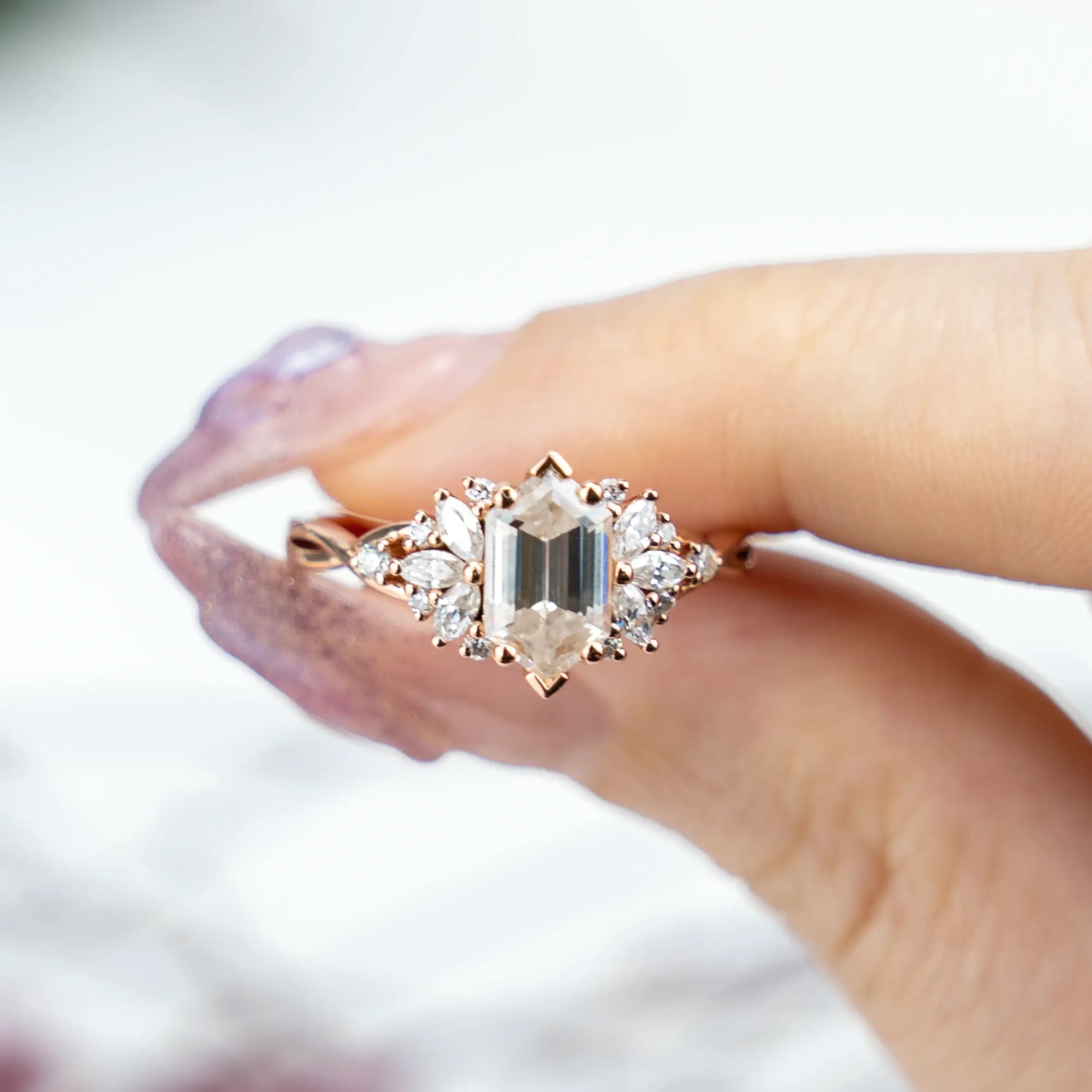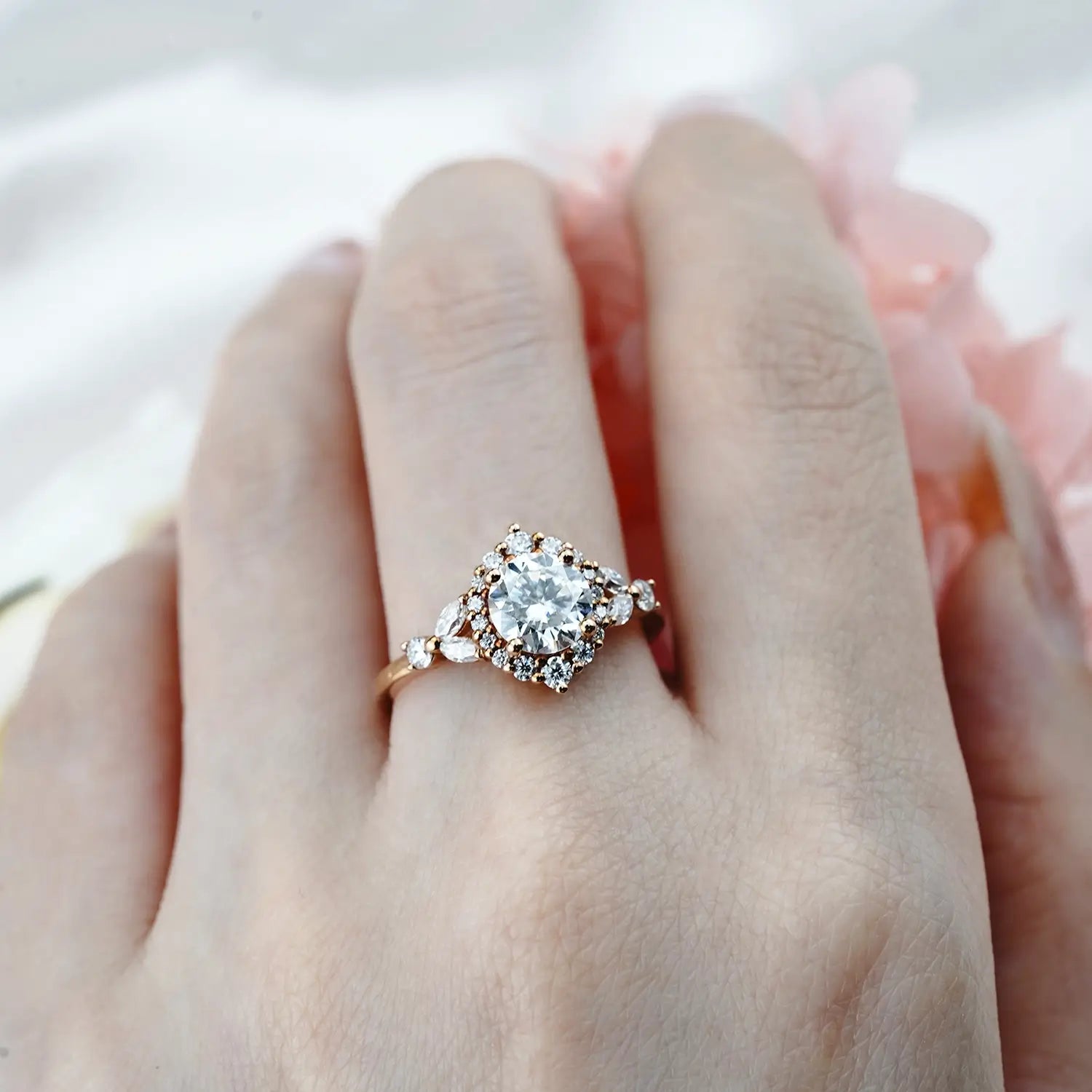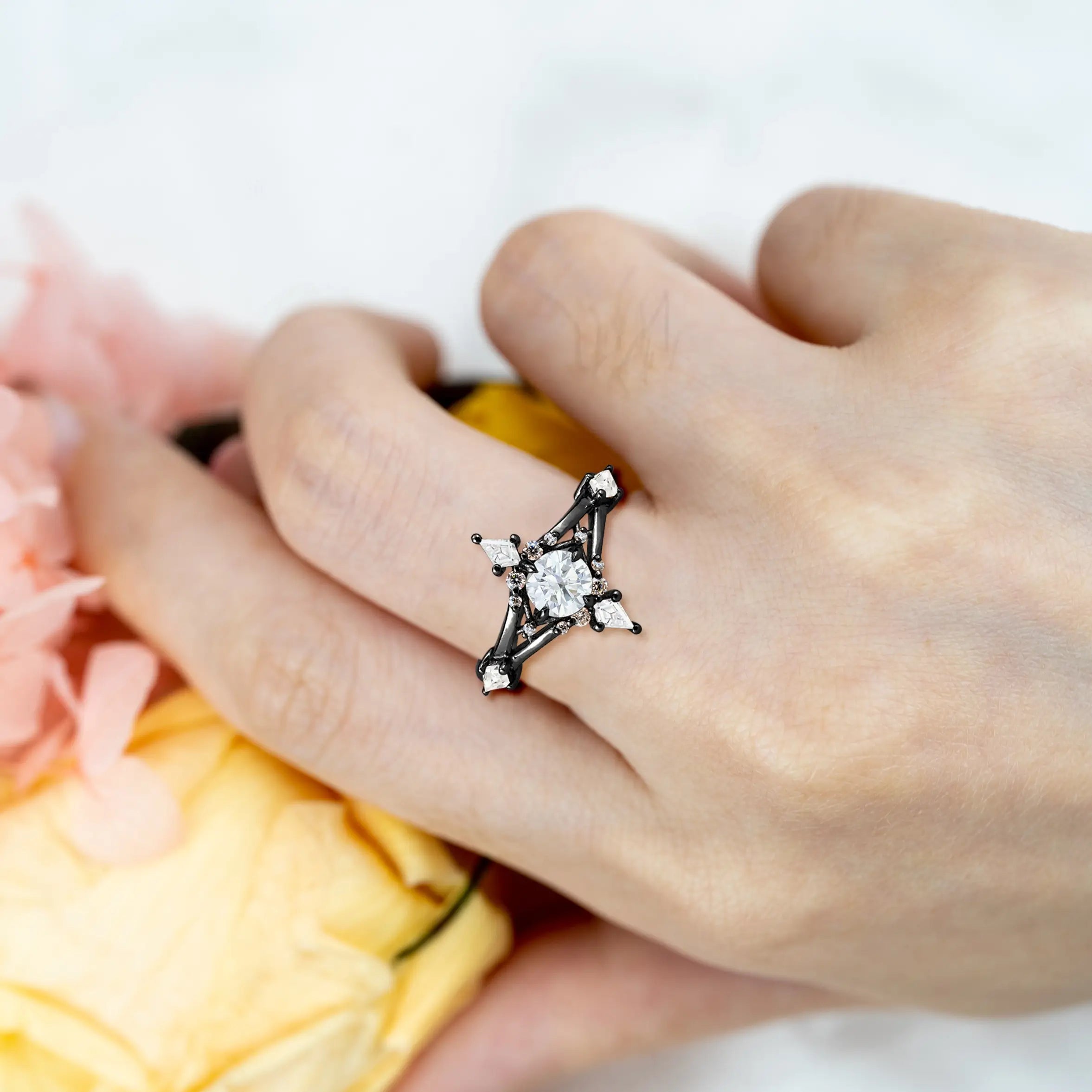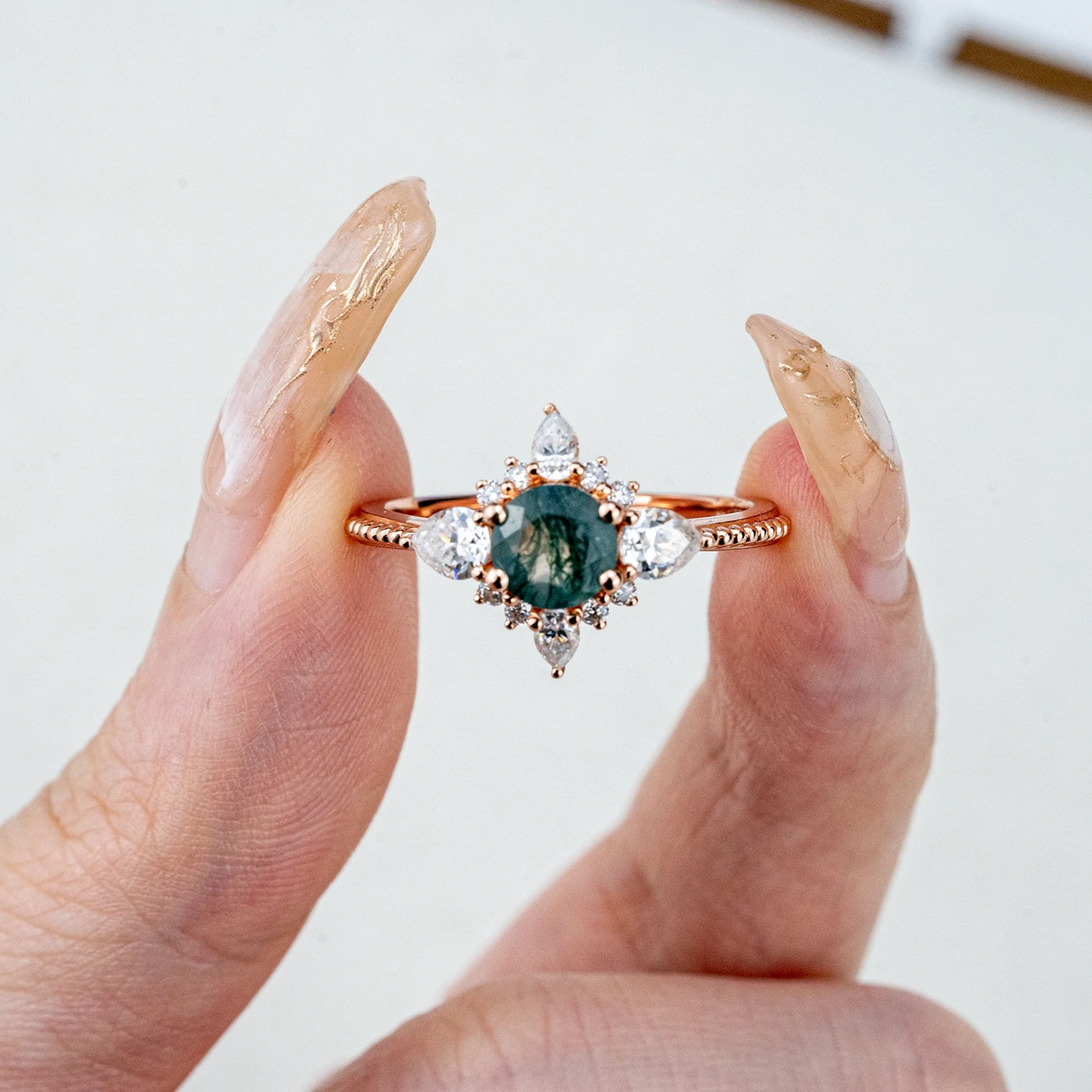

Black gold engagement rings have moved from niche fashion to a hot trend in recent years. Designers and brides seeking an unconventional, romantic edge are drawn to the “inky” metal. Major bridal trend reports now spotlight dark settings – for example, Vogue noted a rise in “soft” diamond shapes set “east or west with black gold” for a classic ring with a modern twist. Likewise, The Knot reports that New York jeweler Eva Fehren and others have perfected this style, loving “the contrast of the inky black metal and the bright white sparkle of a diamond”. Even big retailers are getting on board – James Allen launched a Noir collection of black gold rings in 2025. Industry analysts describe black gold as offering a “bold and contemporary look”, adding fresh diversity for eclectic tastes. In short, black gold – once rare – is now a must-see option for fashion-forward brides who want romance with an edge.
What Is Black Gold?
Black gold isn’t a new element – it’s ordinary 14K or 18K gold that’s been blackened. Gold itself is naturally yellow (or rose/white when alloyed), so achieving black color requires special finishing. In practice, black gold is usually gold (often 750/1000, i.e. 18K) coated with a dark layer. As one jeweler explains, “black gold is real gold, but not in its natural form. To achieve a black finish, gold undergoes special treatments”. For example, Orleone notes, “Black gold is white gold but with a different rhodium plating colour”. In other words, it’s often just white or yellow gold with a black rhodium (or ruthenium) plating. Because the black color comes from a surface treatment, it can wear or fade over time – black rhodium is “merely a coating over another metal” that may develop a patina with wear.

Despite the dark color, the metal beneath is still solid gold. emphasizes that 18K black gold has “all the major characteristics” of 18K gold: it’s a very hard, “very solid” metal that resists everyday shocks and corrosion. In short, the durability comes from the gold alloy itself, not the black color. (However, because of the plating, the appearance may gradually lighten unless re-plated.) Compared to other gold alloys, black gold’s hue is purely cosmetic: white gold uses a silvery rhodium layer, and rose gold uses copper alloying. Black gold instead relies on coatings or treatments to create its trademark charcoal or glossy jet-black surface
How Is Black Gold Made? (Metallurgy and Finishing)
Jewelers create black gold by surface treatments rather than changing the gold’s core metal. The main methods include:

-
Black Rhodium/Ruthenium Plating: The most common approach is to electroplate the gold ring with a black rhodium (or ruthenium) coating. This process is similar to white gold plating, but uses a special black rhodium solution to deposit a thin dark layer. It produces a sleek, metallic black finish, and maintains the jewelry’s gold purity. (One guide notes that, like white gold, black rhodium needs periodic re-plating to stay jet-black.)
-
Oxidation/Patina: Some metalsmiths form a black oxide on gold alloys to get a matte black tone. For instance, gold can be alloyed with cobalt or chromium and then oxidized so that a thin black oxide layer appears on the surface. This “controlled tarnishing” yields a deep, even black color without plating. However, sources caution that no solid gold alloy is truly black inside – even these methods create color mainly on the surface.
-
Laser Surface Treatment: Modern labs use ultrafast lasers to etch microscopic structures onto the gold surface. These nanostructures absorb light, making the metal look perfectly black to the naked eye. The advantage is a permanent color that won’t rub off; the textured surface is extremely durable.
-
True Black Alloys (Rare): In very specialized cases, companies have created castable “black gold” alloys (e.g. by mixing gold with metals like cobalt under inert atmospheres). These are still extremely uncommon and often require a surface patina. As experts note, “there is no bulk metal coloring of gold that yields black – all processes are surface coloration”, whether by plating, oxidation, or PVD.
In summary, the black color almost always comes from what’s on the surface – either an electroplated coat or an oxidized patina. (One wedding guide factoid: “Black gold is treated yellow gold”, usually via rhodium plating.) This is why black gold rings tend to cost a bit more than plain gold: you’re paying for the extra treatment. On the plus side, jewelers report that a good black rhodium layer actually increases scratch resistance, making the ring very durable once plated.
Popular Engagement Ring Styles in Black Gold
Black gold’s dramatic color lends itself to a variety of distinctive ring designs. Some of the most sought-after styles include:
-
Gothic and Alternative: Intricate, dark-romantic designs are a natural fit. Think ornate filigree bands, thorn or vine motifs, and dramatic settings. Black metal amplifies a gothic vibe – for example, pairing a black band with a blood-red ruby or onyx gives a moody, “vampiric” elegance. As jeweler Eva Fehren puts it, black gold “toughens up” a ring that might otherwise be too sweet, making it ideal for brides craving an edgy statement. (Modern bridal shows now often feature “blackened gold” rings with skulls, spiders, or Celtic crosses.)

-
Vintage and Romantic: Black gold can also accent antique-inspired designs. A lacy Victorian-style ring or Art Deco motif looks striking in black, especially next to old-cut diamonds or colored stones. For vintage black gold engagement rings, jewelers might combine black bands with milgrain edges, engraved floral patterns, or bezel-set gems in asymmetrical layouts. These designs blend the charm of heirloom rings with a contemporary twist.

-
Nature-Inspired / Leaf Shapes: Rings featuring leaf and vine shapes, blossoms, or organic curves are very popular among bohemian brides. A black gold ring carved or cast into a delicate leaf pattern offers an earthy, ethereal look. The dark metal accentuates details like veins in the leaf or textured bark, giving a mysterious, romantic black gold leaf ring feel. (Search results for “leaf-shaped black gold ring” show numerous designs where nature motifs meet gothic chic.)

-
Minimalist and Modern: For a sleeker aesthetic, black gold can be used in clean, minimalist designs. Imagine a slender black gold band with a single solitaire, or an understated pavé of small diamonds. The dark metal band provides a subtle but memorable twist on the classic ring. It’s a great choice for luxury minimalists who want something different yet refined. As one jewelry guide notes, black gold’s “modern appeal” makes it “ideal for those who love contemporary, gothic or avant-garde styles.”
-
Custom and Statement Rings: Because black gold is still relatively uncommon, it’s a favorite for bespoke and statement pieces. Custom jewelers use it in sculptural designs – for instance, architectural rings with bold geometric shapes, or rings that resemble art objects. These unique creations underscore the wearer’s individuality. In 2024-25, designers are increasingly offering clients the chance to author their own story through personalized rings, and a blackened band can be a central element of that narrative (as custom experts have observed).
Each of these styles benefits from black gold’s dramatic contrast. One trend expert even suggests using “a halo or channel setting” of diamonds around a black center for balance, or fully embracing the gothic look with ornate filigree and colored gems. In practice, brides often mix elements – a vintage style band here, a nature motif there – to create a “something totally their own” look
Best Gemstone Pairings with Black Gold
One of black gold’s biggest advantages is versatility with gems. Because black is neutral and high-contrast, almost any stone can work beautifully. Experts note that black gold “pairs beautifully with diamonds, colored gemstones, and other metals”. In fact, one engagement guide quips that “black goes with everything” – “if it didn’t, the little black dress wouldn’t have become the wardrobe staple that it is”. Here are some popular combinations:
-
White or Champagne Diamonds / Moissanite: Brilliant white diamonds (or diamond simulants like moissanite) really pop against black metal. The sparkle contrasts strongly with the dark band, creating a dramatic, high-contrast look. Moissanite, in particular, is prized for its fire and nearly diamond-hard durability – a practical yet dazzling match. One jeweler notes that black gold provides a “bold backdrop” for diamonds and gemstones, so a row of pave diamonds or a halo around a solitaire will shine extra brightly.
-
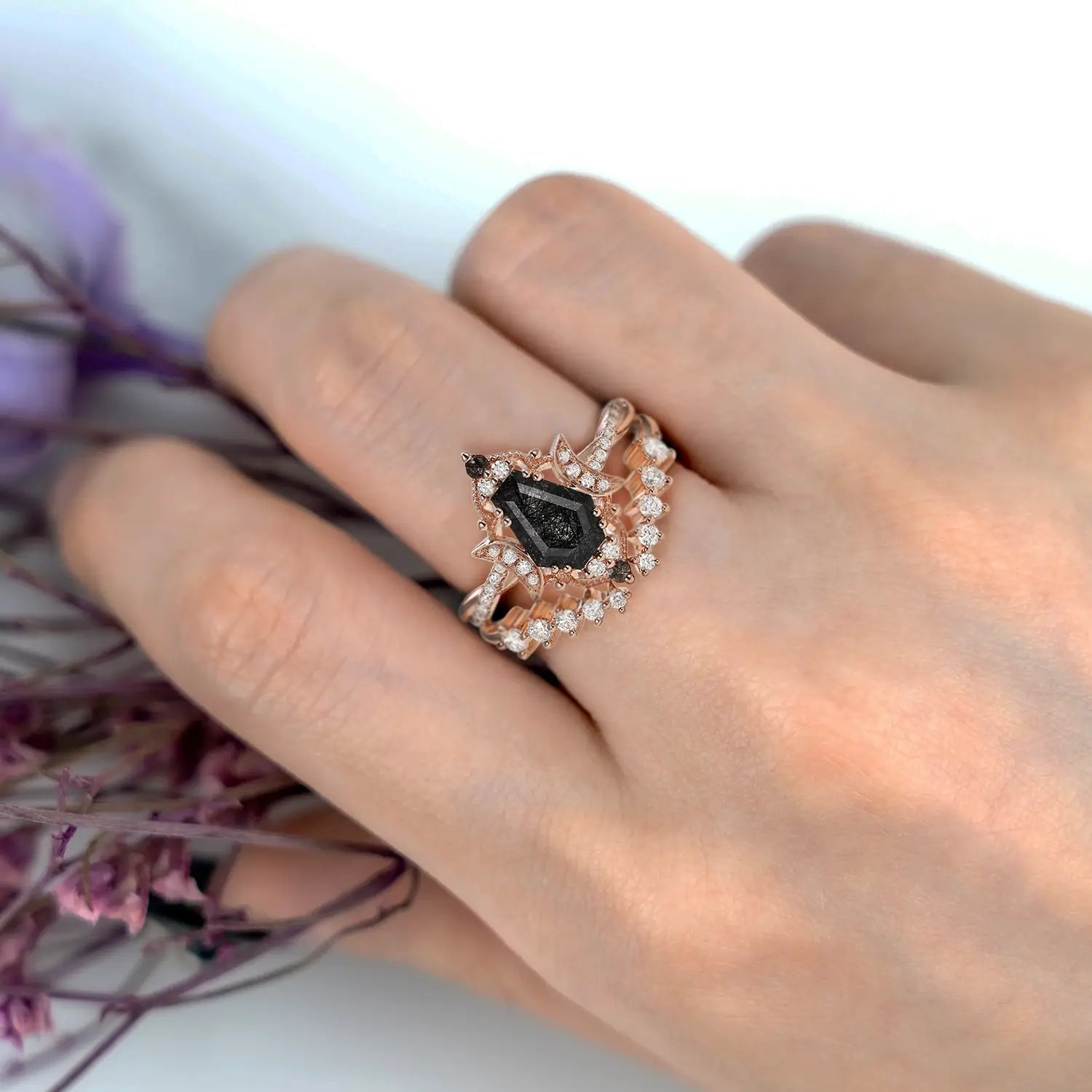
Black Diamonds / Salt-and-Pepper Stones: For a monochromatic effect, black diamonds or salt-and-pepper diamonds (natural diamonds with black inclusions) blend seamlessly with the band. This creates a deep, tonal look that’s very modern and gothic. For example, model Gabbriette’s 2024 engagement ring famously paired an inky black diamond with pave white diamonds, a “tonal” combination that one designer praised as “extremely elegant”. A black gold gothic leaf ring with a smoky or black center stone makes a bold artistic statement.
-
Colored Gemstones: Bright or richly colored gems can also be stunning. Jewel-toned sapphires (blue, teal, peach, or yellow), emeralds, rubies, and even colorful garnets look lush against black. For example, a teal sapphire haloed by black gold gives a romantic pop of jewel-tone color. specifically advises choosing “stones with maximum intensity” like tsavorite or sapphire to contrast with black. Likewise, emeralds or olive tourmalines provide a vivid green contrast, and deep red rubies offer a dark-romance vibe. Opals – with their shifting play-of-color – become even more entrancing on a black canvas. In short, any color “pops” more on black: as one guide puts it, the black band is just like the little black dress of rings.
-
Mixed/Unique Stones: Other gems can add bespoke flair. For a mystical flair, moonstones or alexandrite under a black band seem to glow. For autumnal romance, garnets or citrines paired with black gold evoke candlelit warmth. Some couples even choose lab-grown fancy-color diamonds (pink, blue, etc.) to make a fully personalized statement.
In practice, jewelers often mix a few gemstones in one ring for contrast – for example a white center stone flanked by colored side stones, all set in black gold. The result is a striking, romantic black gold moissanite engagement ring or diamond ring that balances dark metal with bright sparkle. Because black gold is so versatile, you can tailor the palette to suit any style, from gothic glamour to rainbow modern.
Who Suits Black Gold Rings?
Black gold isn’t for everyone’s style, but it’s perfect for several bride personalities:
-
Fashion-Forward Trendsetters: Anyone who wants a ring that stands out. Influencer-driven trends show that many millennials and Gen-Z brides love the “cool girl” factor of black gold. It’s for the woman who writes her own rules and wants an unconventional heirloom. Retail data suggest blackened settings will keep growing; after all, they “offer a bold, modern look” that you rarely see in traditional jewelry. If you want to make a statement with your ring, black gold could be you.
-
Gothic/Alternative & Romantic Souls: Brides with a penchant for gothic, bohemian, or vintage styles gravitate to black gold. Its dark tone complements lace, leather, tattoos, and Victorian-inspired gowns. It’s also popular for themed weddings (vampire-ball chic, forest mystic, etc.). As Eva Fehren notes, black gold “toughens up” a ring that might otherwise be too sweet – perfect for those who embrace a little edge with their romance.
-
Luxury Minimalists: Even minimalists can appreciate black gold. A sleek, simple design in black metal is still subtle yet unique. For a bride who loves clean lines and high-quality craftsmanship, black gold adds quiet luxury. Its dark tone and fine plating give the ring a “mysterious” feel while keeping the overall look understated. Black gold’s scratch resistance (from its rhodium layer) also makes it a sensible pick for someone who wears a minimalist ring every day.
-
Vintage & Old-World Romantics: Brides who adore vintage or antique vibes may choose black gold to give classic designs a twist. For example, a Victorian-inspired ring with a black gold band feels both antique and avant-garde. It’s especially suited to women who love history and artistry – the metal’s unique coloring feels like a story in itself. As one jeweler observed about modern trends, many clients seek designs they “feel they haven’t seen before”, and black gold delivers exactly that sense of novelty.
-
Anyone Craving Contrast: Really, black gold can suit anyone who wants contrast and symbolism. Some say black symbolizes strength, elegance, and mystery – qualities any bride might admire. Because it’s unusual, it’s often chosen by confident, creative individuals – artists, designers, and rebels at heart. (Interestingly, black gold has historically been more common in men’s jewelry, so it also appeals to women who like gender-neutral or masculine-feminine blends.)
In practice, many couples pick black gold rings as a shared style statement. Jewelers note that it especially resonates on both sides of the Atlantic; high-fashion clients in Europe and America alike have embraced the trend. So if the bride-to-be values artistic, vintage, or luxury aesthetics – especially with a touch of drama – black gold could be an ideal choice.
Trend Data and Popularity
While exact sales figures for black gold are hard to isolate, the momentum is clear. The Knot’s 2025 bridal trends article predicts that “blackened gold” rings will break into the mainstream next year, and Vogue’s 2024 report highlighted black gold among the “biggest wedding jewelry trends”. The launch of James Allen’s Noir collection is itself market evidence – it offers multiple black gold engagement styles for the first time. Industry forecasts note that black gold (like other unique alloys) remains niche but is “growing in popularity”, especially among U.S. and European consumers who seek personalized, contemporary designs. In sum, every indicator – expert opinion, media coverage, and new product releases – points to black gold rings becoming significantly more popular in the next few years.
Frequently Asked Questions
-
What exactly is black gold? It’s simply normal gold (usually 14K or 18K) that’s been darkened by surface treatment. Black gold jewelry still contains real gold, but it’s plated or treated so the exterior appears black or dark gray
-
How is black gold made? Common methods include plating with black rhodium/ruthenium, controlled oxidation (forming a black oxide layer), or advanced laser etching. True all-black alloy is extremely rare. Most black gold rings involve an electroplating step on top of standard gold alloy
-
Is black gold durable? Yes, in the sense that its base gold (especially 18K) is hard and corrosion-resistant. However, the black coating can wear off or fade with heavy use. Plated black gold rings may need periodic re-coating to restore the black finish. Overall, proper care (gentle cleaning, avoiding harsh chemicals) will keep it looking good.
-
Does black gold need special care? It’s generally low-maintenance jewelry. Avoid abrasive cleaners or anything that could scratch the plating. Many experts advise cleaning with mild soap and drying, and having the ring replated if it ever starts to lighten. But nothing too drastic – think of it like caring for rhodium-plated white gold.
-
Who should choose a black gold engagement ring? Anyone looking for a distinctive, modern twist on a classic. Wedding specialists say black gold is “a popular choice for those seeking distinctive and modern engagement rings,” because it provides a “bold backdrop” that makes gemstones stand out. It especially suits brides with gothic, vintage, artistic or fashion-forward tastes. If you love contrast and personalization, it could be perfect.
-
Can I use any gemstone with black gold? Yes – black gold is highly versatile. White diamonds, moissanites, or any color stones look great against it. Jewelers often recommend sparkly or intense gems like diamonds, sapphires, emeralds or tsavorites to maximize the effect. Black gold even pairs beautifully with lab-grown or salt-and-pepper diamonds for a truly unique look.
-
How much more does black gold cost? Generally, you’re paying for the same karat of gold (14K, 18K, etc.) plus extra craftsmanship. Many sources note that black gold rings are roughly comparable in price to regular gold rings of the same karat, perhaps slightly higher due to the special plating. But you get the premium of a unique aesthetic and the extra durability of rhodium plating.
-
Will people know it’s gold? Not always at first glance. A few experts warn that casual onlookers may not recognize black gold as gold. This usually isn’t a problem – many wearers actually like the mystery. Just know that unlike yellow gold’s instant shine, black gold’s beauty is subtler and modern.
In conclusion, black gold engagement rings are a striking way to express individuality. They combine the timeless value of gold with a dramatic black finish, creating an artistic and romantic look. As trends indicate, this fashion-forward style is here to stay – offering couples an elegant, unexpected way to symbolize their love