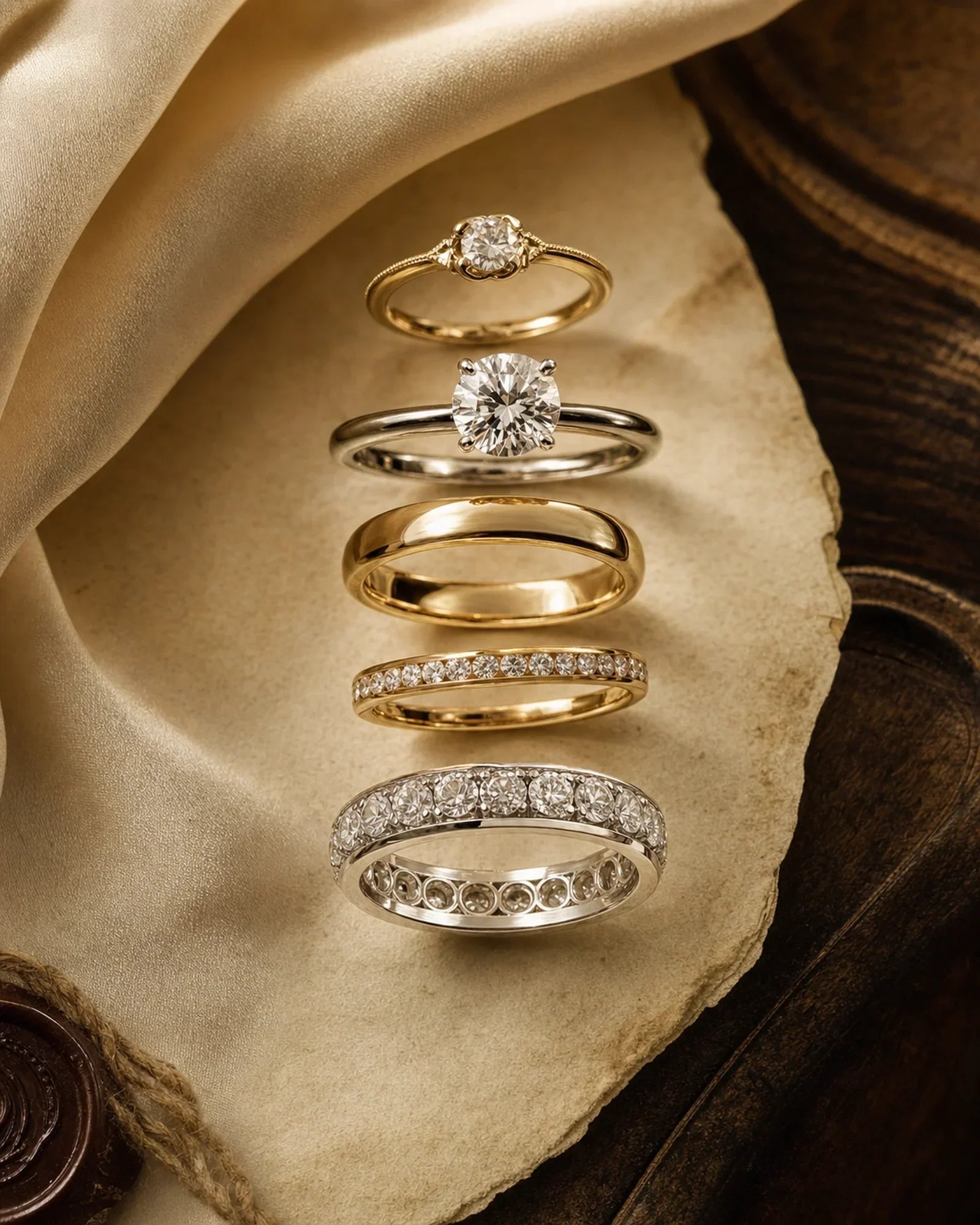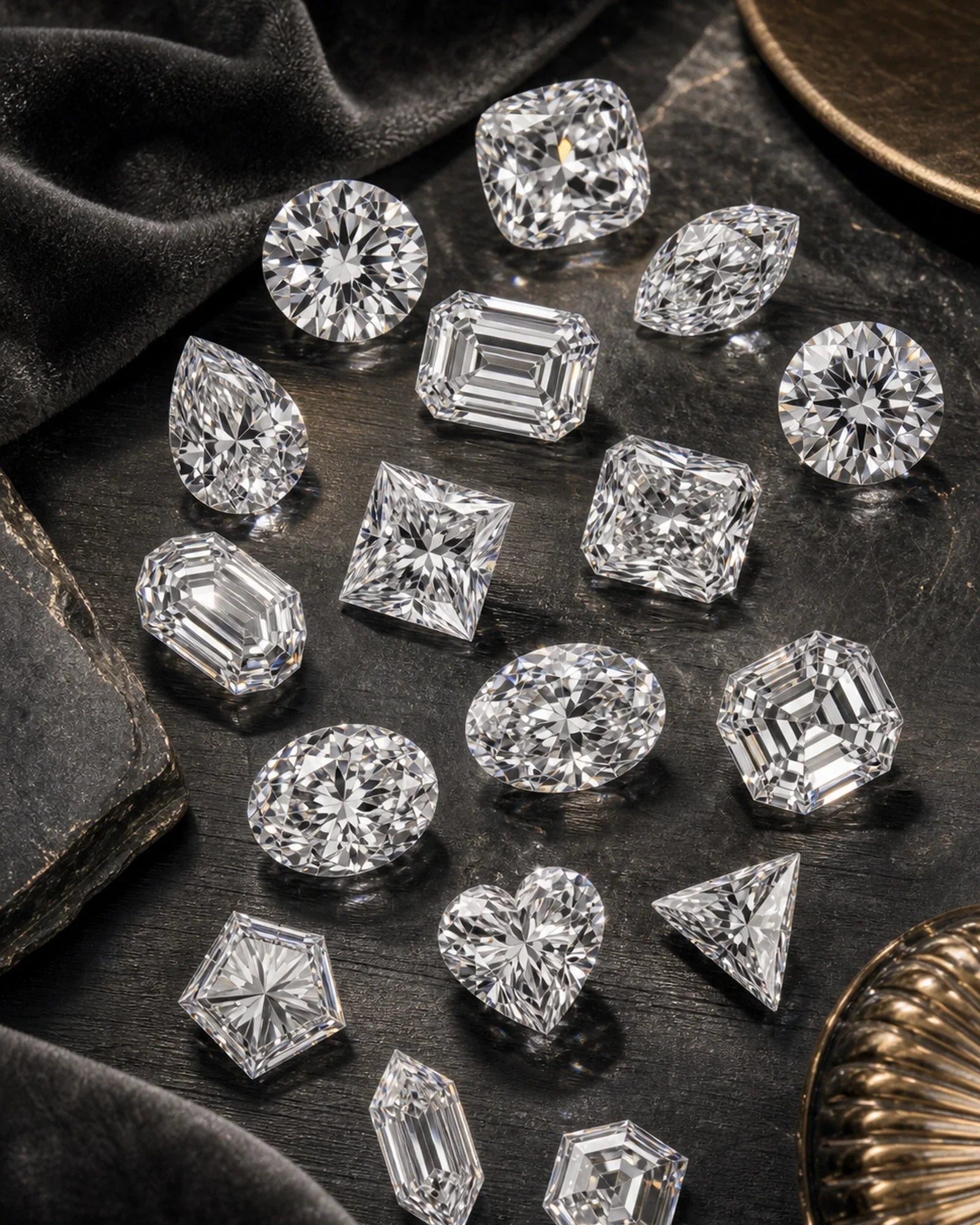

Most shoppers meet moissanite as a bright, transparent white stone. That is still the mainstream choice, especially for engagement rings, because white moissanite gives the familiar bridal look: high brilliance, strong rainbow fire, and a clean center stone that works with almost every setting. But moissanite is not limited to one look. It can appear icy white, slightly warm, grey, black, champagne, yellow, blue, green, or occasionally pink and other fashion colors.
The useful question is not only "which color is prettiest?" It is "what does this color do to the ring?" A colorless oval moissanite feels classic and bright. A grey moissanite feels quieter and moodier. Black moissanite reads bold, graphic, and alternative. Champagne or yellow moissanite warms the whole design. Blue and green moissanite push the ring toward a fashion, nature-inspired, or one-of-a-kind feeling.
This guide explains how moissanite color is created, how the main color families compare, and which ring designs each color supports best.

First, what is moissanite?
Moissanite is silicon carbide, a gemstone material known for very high brilliance and strong fire. Natural moissanite exists, but it is extremely rare in jewelry scale. Nearly all moissanite used in rings today is lab-created, which is one reason it can be cut consistently and offered in a wide range of sizes, shapes, and colors.
Because moissanite is usually compared with diamond, shoppers often borrow diamond language such as colorless, near-colorless, warm, and fancy color. That language is useful, but it is not perfect. Moissanite has its own optical personality. Its rainbow fire can make color appear livelier in some lighting, and larger stones may show warmth more clearly than small stones.
For background on how color grading language works in diamonds, GIA's official diamond color education page is helpful: https://4cs.gia.edu/en-us/diamond-color/. For the mineral identity of moissanite as silicon carbide, Mindat's mineral reference is useful: https://www.mindat.org/min-2743.html.
Why colorless white moissanite is the mainstream choice
Colorless or transparent white moissanite is popular because it delivers the clearest bridal signal. It pairs easily with platinum, white gold, yellow gold, rose gold, pave bands, halos, solitaires, vintage settings, and minimalist designs. If a buyer wants a bright stone that visually sits close to diamond styling, white moissanite is the easiest place to start.
White moissanite also photographs well. It looks crisp in product photos, clear in hand shots, and bright in video. This matters because many engagement ring decisions now begin online. A colorless center stone is easier for most shoppers to understand at first glance than a grey, black, or green stone.
How moissanite color forms
Moissanite color is influenced by the crystal growth process, trace elements, structural defects, and sometimes post-growth treatment. In simple terms, pure and carefully controlled material can look colorless or near-colorless. Small differences in the crystal can create warmth, grey undertones, greenish tones, or other body colors. Some fashion colors may be achieved or stabilized through treatment or coating, depending on the supplier and the color.
That last point matters. Colored moissanite should not be treated as one uniform category. A grey moissanite with body color is not the same buying question as a coated fashion-color stone. A black moissanite may be intentionally opaque or very dark, which changes how it handles light. Blue, green, yellow, and pink moissanite may vary by production method. The buyer should ask whether the color is intrinsic to the material, post-growth treated, or surface-coated, and how that color should be cared for.
Color also changes with size and cut. A small colorless moissanite accent may look nearly icy in most lighting. A large oval or cushion may reveal more warmth. Step cuts such as emerald cuts can show body color more calmly, while brilliant cuts scatter light and fire more actively. This is why a color that looks subtle in a loose stone can feel stronger once it is set in a ring.
The main moissanite color families
Colorless white moissanite
Colorless white moissanite is the most classic choice. It is chosen for brightness, clarity, and maximum design flexibility. It works especially well in moissanite engagement rings, solitaires, hidden halos, oval rings, pear rings, radiant cuts, emerald cuts, and three-stone designs.
The main advantage is versatility. The same white moissanite can feel modern in white gold, warm in yellow gold, romantic in rose gold, or dramatic in blackened metal. The main drawback is that it can feel expected if the setting is too generic. If the buyer wants something more personal, shape, setting, or metal color should do more of the design work.
Near-colorless and warm white moissanite
Near-colorless moissanite may show a soft warmth, especially in larger stones or warmer lighting. This is not always a flaw. Some shoppers prefer a slightly warmer stone because it can look softer, less icy, and more antique. Warm moissanite often pairs beautifully with yellow gold, rose gold, vintage halos, and nature-inspired settings.
The caution is expectation. If the buyer expects a crisp icy-white look, warmth may feel disappointing. If the buyer wants a softer glow, warm white can be more flattering than the coldest colorless material.
Grey moissanite
Grey moissanite sits between bridal brightness and alternative mood. It can look smoky, silvery, stormy, or antique depending on cut and metal. Grey is less stark than black and less traditional than white. It is especially strong in vintage, botanical, celestial, and artistic rings because the color gives the stone atmosphere.
A grey moissanite ring is useful for someone who wants sparkle without a standard white center. It can pair with yellow gold for contrast, white gold for a cool monochrome mood, or blackened metal for a darker statement. The buyer should compare stones carefully because grey can range from pale silver to deep charcoal.
Black moissanite
Black moissanite is not chosen for the same reason as white moissanite. White moissanite is chosen for light return. Black moissanite is chosen for silhouette, contrast, and drama. It can be opaque or near-opaque, so it does not show the same transparent fire as a colorless stone. Instead, it creates a strong graphic center.
Black moissanite suits gothic rings, alternative engagement rings, black gold, claw prongs, floral-noir settings, and high-contrast halos. It is also practical for buyers who want a dark stone with a harder, more durable feel than many softer black gems. The caution is that black moissanite will not satisfy someone who wants diamond-like sparkle. It is a style decision, not a substitute for white brilliance.
Champagne, yellow, and golden moissanite
Champagne and yellow moissanite bring warmth. They can look vintage, sunlit, soft, or quietly luxurious. These colors work well in yellow gold, antique-inspired settings, east-west rings, floral halos, and romantic cluster rings. They are especially useful when the buyer likes warmth but does not want a fully colored gemstone such as citrine or yellow sapphire.
The design risk is metal mismatch. A pale champagne moissanite can look washed out in the wrong white-metal setting, while yellow gold can make the color feel intentional. For many warm stones, yellow gold is not just a metal choice; it is part of the color design.
Blue, green, pink, and other fashion colors
Colored moissanite can be beautiful, but it needs a more deliberate design approach. Blue moissanite can feel icy, modern, or celestial. Green moissanite can feel botanical or forest-like. Pink moissanite can feel romantic and fashion-forward. These colors are usually chosen when the wearer wants the center stone to be visibly different from a diamond-style ring.
Because fashion colors may depend on treatment or coating, ask about color stability and care. Avoid harsh cleaning methods unless the seller confirms they are safe for that specific stone. A colored moissanite ring should be treated as a designed object, not only as a cheaper version of another gem.
Moissanite color comparison
| Color family | Visual effect | Best ring styles | Buying note |
|---|---|---|---|
| Colorless white | Bright, icy, classic, maximum bridal versatility | Solitaire, hidden halo, three-stone, minimalist, classic halo | Best default choice if the wearer wants a diamond-like look. |
| Near-colorless / warm white | Softer, warmer, less icy | Vintage, yellow gold, rose gold, antique-inspired halos | More forgiving and romantic, but not as crisp as colorless. |
| Grey | Smoky, moody, refined, less conventional | Vintage, botanical, celestial, art rings, cluster rings | Compare shade depth; pale grey and charcoal grey feel very different. |
| Black | Bold, opaque, graphic, dramatic | Gothic, black gold, alternative, floral-noir, statement rings | Chosen for silhouette and contrast, not transparent sparkle. |
| Champagne / yellow | Warm, golden, vintage, sunlit | Yellow gold, floral halo, cluster, antique-inspired, three-stone | Works best when the metal supports the warmth. |
| Blue / green / pink | Distinctive, fashion-led, personal | Nature-inspired, celestial, artistic cluster, unique engagement rings | Ask whether the color is body color, treated, or coated. |
Which ring designs work best with each color?
Colorless white moissanite is the easiest to design around. It works in almost every setting because the stone does not compete with the metal. If you want a classic result, choose a solitaire, hidden halo, oval, round, pear, emerald cut, or three-stone setting. For a cleaner look, compare solitaire rings. For more face-up sparkle, compare halo rings.
Grey moissanite benefits from texture and mood. Leaf shoulders, vintage halos, milgrain, bark texture, and cluster accents can make the grey feel intentional rather than dull. It is a natural fit for nature inspired engagement rings because grey can feel like mist, moonlight, or storm light.
Black moissanite needs contrast. Blackened gold, white accent stones, claw prongs, floral frames, and dramatic side profiles all help the dark center read as design rather than absence of sparkle. If the wearer likes a darker romance, compare gothic rings.
Champagne and yellow moissanite work best when the whole ring is warm. Yellow gold, vintage shoulders, old-world halos, and floral details can make the color feel rich. Blue and green moissanite are stronger when the setting leans personal: asymmetry, clusters, leaf detail, or artistic metalwork. These are natural candidates for unique engagement rings.

How metal color changes moissanite
White gold and platinum make colorless moissanite look crisp, icy, and modern. This combination is especially good for emerald cuts, radiant cuts, hidden halos, and minimalist rings. Yellow gold makes the same stone warmer and more romantic. Rose gold softens white and champagne moissanite, but it can exaggerate warmth in stones that already lean yellow.
Black gold or black rhodium changes the entire mood. Even a white moissanite center can look alternative when surrounded by dark metal. With black moissanite, dark metal creates a monochrome statement; with white accent stones, it creates high contrast. This is powerful, but it should be chosen intentionally because it reads much less traditional.
Color and cut shape: what changes on the hand?
Round and oval cuts show brightness easily, so they are safe choices for white moissanite. Pear and marquise cuts can make color more expressive because the pointed ends create movement. Emerald and Asscher cuts show broad flashes and body color more clearly, which can be beautiful for champagne, grey, or blue-green stones. Cushion cuts can make warm tones feel romantic. Hexagon, kite, and shield shapes make color feel more designer-led.
Large stones also reveal more color. A faint warm tone may be barely noticeable in a small accent but clearer in a 3 carat center. A grey stone may look soft in daylight and much deeper indoors. Black moissanite may show small flashes at facet edges, but the overall impression remains dark and graphic.
Six moissanite rings to compare
The rings below are useful comparison points because they show different ways moissanite color and setting language can work together: bright white, architectural white, grey, black-metal styling, halo sparkle, and botanical warmth.


Care notes for colored moissanite
Standard white moissanite is generally easy to care for: warm water, mild soap, and a soft brush are usually enough for routine cleaning. Colored moissanite deserves one extra question: how was the color created? If the stone is coated or specially treated, avoid harsh chemicals, abrasive cleaners, and aggressive ultrasonic cleaning unless the seller confirms the method is safe for that exact stone.
Blackened metal also needs care. Black rhodium or dark surface finishes can wear over time, especially on high-contact areas of a ring. That is not a reason to avoid the style, but it is something to understand before choosing a gothic or black gold design.
FAQ
What is the most popular moissanite color?
Colorless white moissanite is the most popular because it gives the brightest and most traditional engagement ring look. It is also the easiest color to pair with different metals and settings.
Is black moissanite sparkly?
Black moissanite can show facet reflections, but it does not sparkle like transparent white moissanite. It is chosen more for dark contrast, silhouette, and alternative style than for classic brilliance.
Does grey moissanite look dull?
Not necessarily. Grey moissanite can look smoky, elegant, and atmospheric. It looks best when the ring setting supports the mood through vintage, nature-inspired, celestial, or cluster details.
Are colored moissanite stones natural?
Jewelry moissanite is almost always lab-created. Its color may come from crystal growth conditions, trace elements, structural features, treatment, or coating. Ask the seller how the color is produced and how to care for it.
Which moissanite color is best for daily wear?
Colorless and near-colorless moissanite are the safest everyday choices because they are versatile and easy to clean. Grey and black can also work well, but fashion-color or coated stones should be cared for according to the seller's instructions.
Which metal is best for white moissanite?
White gold or platinum makes white moissanite look crisp and icy. Yellow gold makes it warmer and more romantic. Rose gold softens the look, while blackened metal creates a dramatic contrast.
Moissanite color is not a small detail. It changes the entire ring. White is the most versatile and classic. Warm white feels softer. Grey feels atmospheric. Black feels bold. Champagne feels vintage and golden. Blue, green, and pink feel personal and fashion-led. The right choice is the one where the color, metal, cut, and setting all tell the same story.