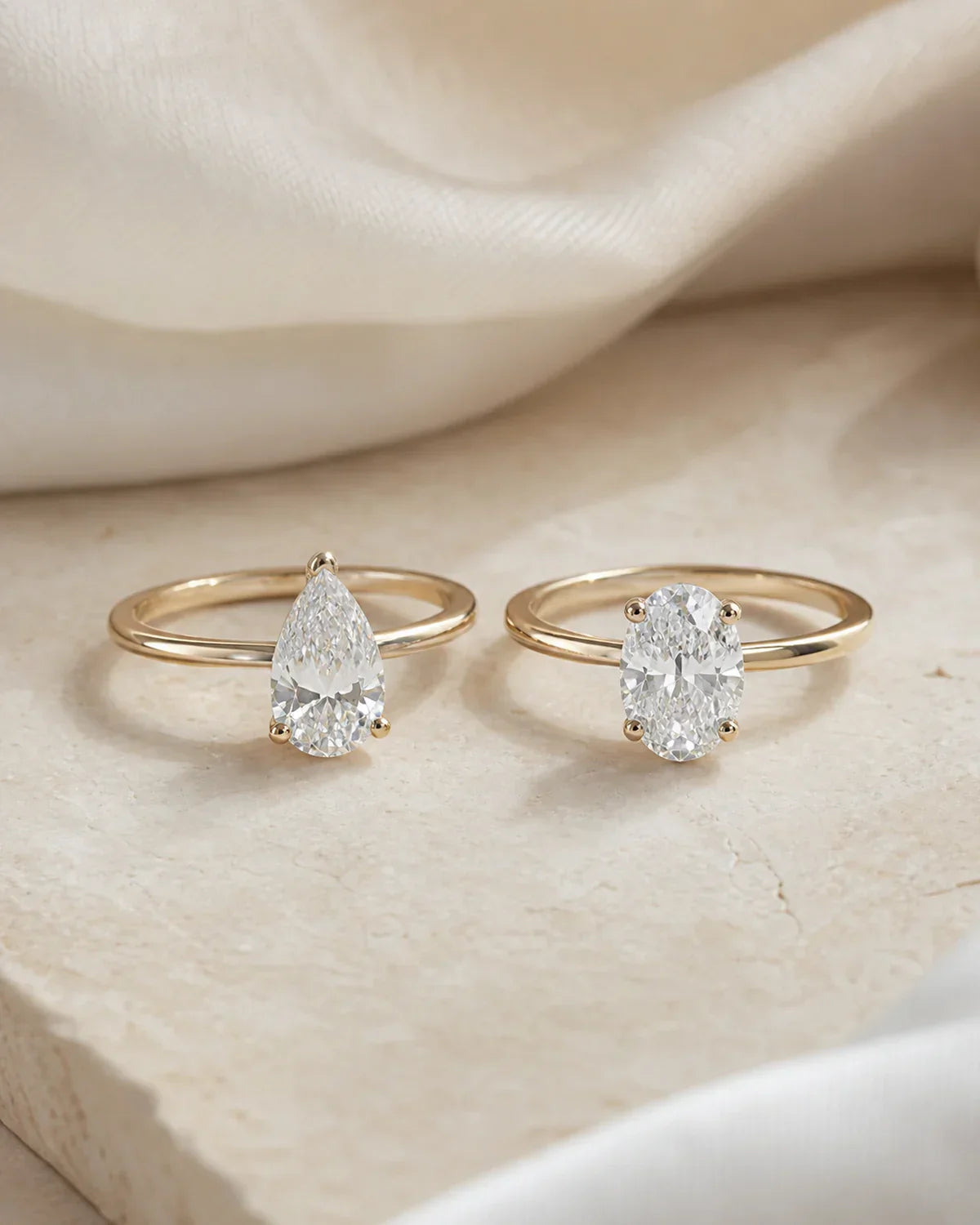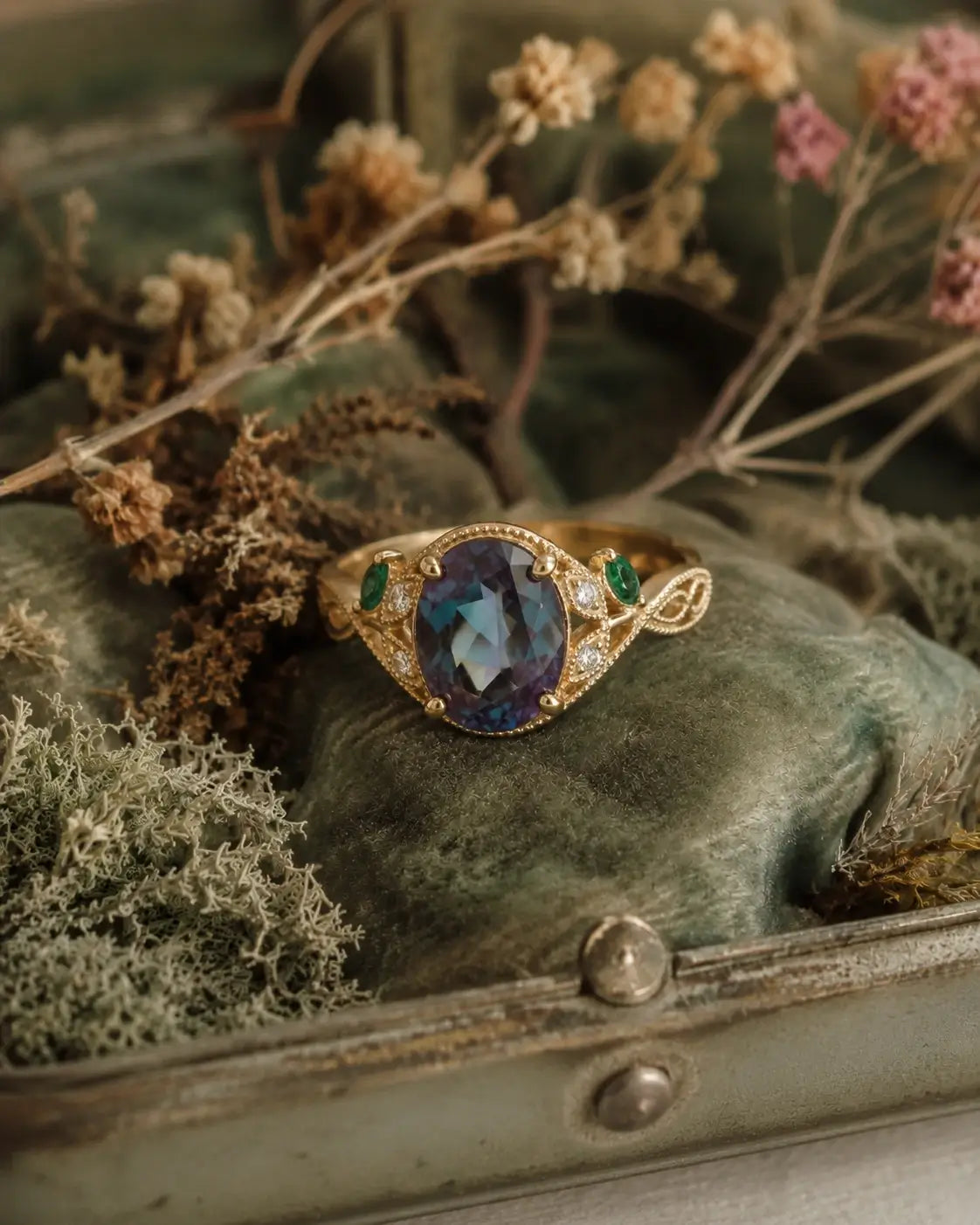

Muitas pessoas acreditam que a beleza de uma gema vem principalmente do seu tamanho. Na realidade, duas gemas com o mesmo peso em quilates podem parecer completamente diferentes depois de engastadas em um anel. Uma pode parecer mais brilhante, maior e mais viva, enquanto a outra parece mais escura, menor ou menos impressionante.
Muitas vezes, o motivo não é a gema em si. É o corte.
O corte da gema influencia como a luz entra e sai da pedra, o tamanho que ela aparenta ter quando vista de cima e quanto de profundidade, brilho e contraste visual ela exibe. Seja você está escolhendo um anel de noivado de moissanite, uma peça de herança com safira, um anel de destaque com alexandrita ou um design com ágata musgo, entender a qualidade do corte pode ajudar você a tomar uma decisão melhor a longo prazo.
Este guia explica como o corte da gema afeta o cintilar, a percepção de profundidade, o tamanho aparente visto de cima, considerações de durabilidade e a aparência geral. Em vez de focar apenas em tendências, vamos explorar os motivos práticos pelos quais algumas gemas simplesmente parecem melhores do que outras.
O Mal-Entendido Mais Comum: Formato e Corte Não São a Mesma Coisa
Muitos compradores usam os termos formato e corte de forma intercambiável, mas eles descrevem coisas diferentes.
Formato refere-se ao contorno de uma gema:
- Corte Redondo
- Corte Oval
- Corte Pera
- Corte Marquise
- Corte Esmeralda
- Corte Princesa
- Corte Hexágono
- Corte Pipa
Corte refere-se a como as facetas da gema são organizadas e proporcionadas. Ele determina com que eficiência a luz é refletida de volta para quem observa. Segundo o Gemological Institute of America (GIA), a qualidade do corte desempenha um papel fundamental no brilho, no fogo e na cintilação de uma gema.
Em termos simples, o formato determina a silhueta. O corte determina o desempenho.
Por Que o Cintilar Acontece: Entendendo o Desempenho da Luz
Quando as pessoas descrevem uma gema como "cintilante", elas geralmente estão observando três efeitos ópticos distintos trabalhando em conjunto.
Brilho
O brilho refere-se à quantidade de luz branca refletida de volta aos olhos. Uma gema bem cortada parece clara e viva mesmo sob iluminação interna comum.
Fogo
O fogo refere-se aos lampejos de cor espectral produzidos quando a luz se dispersa em reflexos de arco-íris. Diamantes e moissanites são especialmente conhecidos por esse efeito.
Cintilação
A cintilação descreve o padrão de lampejos claros e escuros que aparecem quando uma gema se move.
As gemas com melhor desempenho geralmente equilibram as três características, em vez de maximizar apenas uma delas.
Por que algumas gemas parecem opacas mesmo sendo caras
O preço, por si só, não garante beleza.
Uma gema com proporções inadequadas pode deixar a luz escapar pelas laterais ou pela parte inferior, em vez de refleti-la de volta para quem observa. Esse fenômeno costuma fazer a pedra parecer mais escura ou sem vida.
Dois problemas comuns incluem:
Corte muito profundo
Quando o pavilhão é excessivamente profundo, a luz pode escapar antes de retornar aos olhos. A gema pode parecer menor do que seu peso real em quilates e desenvolver áreas escuras no centro.
Corte muito raso
Quando uma gema é cortada de forma muito rasa, pode criar um efeito de "janela". Em vez de ver reflexos, quem observa às vezes consegue enxergar através da pedra.
Nenhum dos extremos é ideal. Proporções precisas geralmente são o que cria o equilíbrio mais atraente entre brilho e profundidade.
Como o corte altera o tamanho visual mais do que o peso em quilates

Uma das maiores surpresas para quem compra anel de noivado é que tamanho visual e peso em quilates não são a mesma coisa.
Certos formatos naturalmente distribuem mais peso pela superfície superior, fazendo com que pareçam maiores do que outras pedras de peso idêntico.
| Formato | Tamanho visual visto de cima |
|---|---|
| Marquise | Muito grande |
| Oval | Muito grande |
| Pera | Grande |
| Esmeralda | Grande |
| Redondo | Médio |
| Almofada | Médio a pequeno |
É por isso que muitos compradores que buscam o máximo impacto visual escolhem cortes alongados, como oval, marquise ou pera.
A relação entre corte e profundidade
A profundidade é um dos aspectos menos compreendidos da aparência de uma gema.
Uma gema com profundidade excessiva costuma esconder peso embaixo do anel, onde não pode ser visto. Embora o peso em quilates possa parecer impressionante, o tamanho visível pode decepcionar.
Uma gema com profundidade equilibrada cria uma combinação mais forte de brilho, contraste e espalhamento visual.
Isso é especialmente importante para anéis de noivado, porque a pedra será vista principalmente de cima.
Quais cortes produzem mais brilho?
Corte brilhante redondo
O brilhante redondo costuma ser considerado a referência em desempenho de luz. Seu arranjo de facetas foi projetado para maximizar o brilho e o fogo.
Corte brilhante oval
Os cortes ovais oferecem bastante brilho e, ao mesmo tempo, criam uma aparência visual maior do que pedras redondas de peso semelhante.
Corte radiant
Os cortes radiant combinam grande brilho com um formato geométrico moderno.
Corte pera
Os cortes pera podem exibir um brilho excelente e, ao mesmo tempo, criar uma aparência alongada e elegante.
Corte brilhante almofada
Os cortes almofada costumam produzir reflexos de luz mais suaves, que muitos compradores associam à elegância de inspiração vintage.
A Ascensão da Lapidação Especializada Moderna: Corte Firework

Nos últimos anos, alguns lapidadores têm experimentado arranjos avançados de facetas projetados para aumentar a complexidade visual e o fogo da gema.
Um termo frequentemente usado no mercado é Corte Firework.

Diferente dos cortes redondo brilhante, oval ou esmeralda, o Corte Firework não é um formato de gema universalmente padronizado. Em vez disso, geralmente se refere a padrões de facetas modificados, projetados para criar maior retorno de luz e contraste visual.
Essas abordagens avançadas de lapidação costumam ser aplicadas a:
- Gemas de Corte Pera
- Gemas de Corte Oval
- Gemas de Corte Marquise
- Cortes Cushion Alongados
A complexidade adicional das facetas frequentemente exige mais tempo de lapidação e maior precisão. O resultado pode ser uma gema que produz reflexos de luz mais intricados quando vista de diferentes ângulos.
A lapidação estilo Firework não torna automaticamente uma gema maior, mas pode fazer a pedra parecer visualmente mais ativa e distinta.
Como o Corte Afeta Diferentes Tipos de Gemas
Moissanite
A moissanite exibe naturalmente forte fogo e brilho. Cortes redondo, oval e cushion costumam maximizar seu desempenho óptico.
Diamante
Os diamantes têm bom desempenho em praticamente todos os formatos, embora a precisão do corte continue essencial para maximizar o brilho.
Safira de Laboratório
Cortes oval, esmeralda e cushion costumam realçar particularmente bem a cor da safira.
Alexandrita de Laboratório
Cortes oval e pera frequentemente destacam o efeito de mudança de cor da alexandrita.
Esmeralda de Laboratório
Cortes esmeralda enfatizam a clareza e a cor em vez do brilho intenso.
Ágata Musgo
A ágata musgo é apreciada por suas inclusões naturais e padrões que lembram paisagens. Cortes oval e kite costumam exibir essas características lindamente.
Pedra da Lua
Cortes cabochão são comumente usados porque realçam o brilho característico da gema.
Opala
Cortes ovais e pera são populares porque evidenciam o efeito de jogo de cores e, ao mesmo tempo, mantêm uma aparência elegante.
Corte, Durabilidade e Uso Diário
O corte influencia mais do que a aparência. Ele também pode afetar a durabilidade a longo prazo.
Formatos com pontas afiadas exigem proteção adicional.
| Formato | Consideração sobre Durabilidade |
|---|---|
| Redondo | Durabilidade excelente |
| Oval | Durabilidade muito boa |
| Almofada (cushion) | Boa proteção nos cantos |
| Pera | Proteja a ponta afiada |
| Marquise | Proteja as duas pontas |
| Princess | Os cantos precisam de proteção |
Para quem tem uma rotina agitada, uma engaste segura costuma ser tão importante quanto a dureza da gema. Designs protetores, como engaste bezel e engaste de garras bem executado, podem reduzir o risco de danos acidentais.
Estilos de Anel de Noivado em Destaque
Exemplos de cortes de gemas abordados neste guia incluem:
- Anel de Noivado Oval ágata musgo Vintage com Halo
- Anel de Noivado Pera Moissanite com Folhas
- Conjunto de Anel de Noivado Moissanite Floral Vintage
- Anel de Noivado Cluster Hexágono Alongado com Esmeralda
- Anel de Noivado Oval Vintage com Esmeralda e Folhas Eduardianas
- Anel de Noivado Oval Alexandrita Três Pedras com Folhas
Como Escolher o Corte Ideal para Suas Prioridades
Se o brilho é sua maior prioridade, os cortes redondo brilhante e oval brilhante costumam ser excelentes escolhas.
Se o tamanho visual é o mais importante, os cortes marquise, oval e pera geralmente proporcionam a maior aparência de face para cima.
Se você prefere uma estética vintage, os cortes almofada (cushion) e padrões de facetas de inspiração antiga podem valer a pena considerar.
Se você prefere um luxo moderno e clean, os cortes esmeralda e step cuts alongados costumam proporcionar um visual sofisticado.
No fim, não existe um corte universalmente perfeito. A melhor opção depende do que você mais valoriza: brilho, tamanho, profundidade, durabilidade, singularidade ou simbolismo.
Perguntas Frequentes
O corte da gema afeta o brilho?
Sim. A qualidade do corte é um dos principais fatores que influenciam o brilho, o fogo e a cintilação.
Qual formato de gema parece maior?
Os cortes marquise e oval geralmente criam algumas das maiores aparências de face para cima em relação ao seu peso.
O corte afeta a durabilidade?
Indiretamente. Formatos com pontas afiadas são geralmente mais vulneráveis a impactos e se beneficiam de engastes protetores.
Qual corte brilha mais?
Os cortes redondo brilhante são amplamente considerados um dos que apresentam melhor desempenho na devolução de luz.
O oval é maior que o redondo?
Com o mesmo peso em quilates, gemas ovais costumam parecer maiores do que gemas redondas.
Qual corte é melhor para moissanite?
Os cortes redondo, oval, almofada (cushion) e pera estão entre as opções mais populares devido ao seu forte desempenho de luz.
Referências
- Gemological Institute of America (GIA). "Diamond Cut and Light Performance."
- Gemological Institute of America (GIA). "Understanding Gemstone Durability."
- Wikipedia. "Brilliant Gemstone Cut"
- Smithsonian National Museum of Natural History. Gem and Mineral Resources.
Título para o Google: Como o Corte da Gema Afeta o Brilho, a Profundidade e o Tamanho Visual: Guia Completo
Meta Descrição: Entenda como o corte da gema influencia o brilho, a profundidade e o tamanho visual. Compare os cortes oval, pera, redondo, esmeralda, marquise e os modernos cortes estilo Firework para escolher a melhor gema para anel de noivado.