
Two colorless oval stones can have the same measurements and still look completely different. One may return broad, crisp flashes; the other may shimmer with hundreds of fine, splintered reflections. The outline has not changed. The facet arrangement has.
The best moissanite cut style is not simply the one that sparkles most under a jewelry spotlight. It is the pattern you enjoy in ordinary light, at normal viewing distance, and in a setting that accommodates the stone's depth. Brilliant, crushed ice, rose cut and old mine-inspired moissanite each make a different trade: brightness, texture, spread, profile or antique character.
Shape and Cut Style Are Different Decisions
Shape is the face-up outline: round, oval, pear, cushion, marquise, emerald, kite or another silhouette. Cutting style describes how facets are arranged across the crown and pavilion. Cut quality then asks how successfully the proportions, symmetry and polish make that arrangement work.
This distinction matters because an oval can be brilliant-cut or modified into a crushed-ice pattern. A cushion can use a modern brilliant arrangement or an old mine-inspired pattern. A pear can be brilliant, crushed ice or rose cut. GIA likewise separates outline from facet arrangement in its explanation of shape and diamond anatomy. Although that reference concerns diamonds, the vocabulary is useful when discussing faceted moissanite.
One caution is especially important: crushed ice is a trade appearance term, not a single standardized facet diagram or laboratory cut grade. Two sellers may use the phrase for visibly different stones. Old mine cut is also used broadly in modern moissanite listings; the product is a newly fashioned stone inspired by antique diamond cutting, not antique mined moissanite.

Quick Comparison
| Style | Typical light pattern | Face-up spread | Profile | Best for |
|---|---|---|---|---|
| Brilliant | Crisp, organized flashes with strong brightness and fire | Balanced; depends on outline and depth | Moderate pavilion depth | Classic solitaires, halos and daily-wear engagement rings |
| Crushed ice | Dense, fine, splintery scintillation | Often generous in elongated shapes, but variable | Usually moderate to deep | Soft modern ovals, pears and cushions |
| Rose cut | Gentle surface shimmer with large transparent facets | Often widest for a given weight | Very low; flat or nearly flat base | Low-profile, bezel, east-west and romantic designs |
| Old mine-inspired | Chunky, slower flashes with strong contrast | Often smaller for a given weight because of depth | High crown and deep pavilion | Vintage, three-stone and hand-finished settings |
Brilliant Cut Moissanite: Bright, Crisp and Familiar
A brilliant cut moissanite uses triangular and kite-shaped facets designed to return light through the crown. In a well-executed stone, the pattern alternates between bright and dark as the ring moves. That contrast creates scintillation: the recognizable on-and-off sparkle many buyers expect from an engagement ring.
Round brilliant is the most orderly example, but brilliant-style faceting also appears in oval, pear, marquise, cushion and other shapes. Moissanite's strong dispersion can produce more spectral color than some buyers anticipate. A crisp pattern makes that fire easy to see under small point light sources, while diffused daylight may emphasize white brightness instead.
Choose it when: you want reliable sparkle, a classic center-stone presence and broad setting flexibility. It works especially well in moissanite solitaire rings, cathedral settings and hidden halos.
Inspect it for: distracting darkness, uneven contrast and, in elongated shapes, a severe bow-tie across the center. A bow-tie is not automatically a defect; the question is whether it stays dark and motionless in normal lighting.
Crushed Ice Moissanite: Fine Sparkle and Soft Texture
A crushed ice moissanite engagement ring breaks reflections into many smaller fragments. Instead of a few bold flashes, it can look like frost, glitter or finely cracked ice. This style is common in elongated cushions, ovals, pears and radiants because the busy pattern can soften the visual concentration through the middle of the stone.
The attractive version feels lively and evenly textured. The disappointing version looks milky, watery or static because too much light escapes rather than returning to the viewer. More facets do not automatically mean more brightness. GIA notes in its diamond buyer guidance that facet number affects reflection pattern, while brightness depends on proportions, polish and symmetry. The same optical principle is useful here even though moissanite is a different material.
Choose it when: you prefer a softer, less geometric look than a crisp brilliant and enjoy small flashes that continue across an elongated outline. A slim halo, delicate three-stone composition or hidden halo can add structure without competing with the internal texture.
Inspect it for: a gray center, transparent dead zones near the ends and a pattern that disappears in diffused light. Ask for video in daylight, room light and shade. A rotating spotlight can make almost any faceted stone look active.
Rose Cut Moissanite: Spread and Glow Over Maximum Sparkle
Rose cuts reverse many modern expectations. They generally have a flat base and a domed crown built from triangular facets, with no conventional deep pavilion. The result is a shallow stone that sits close to the finger and allows skin, metal or a closed-back setting to influence its appearance.
A rose cut moissanite ring does not perform like a small brilliant made wider. Its appeal is broad transparent facets, watery flashes and a quiet antique glow. Because less material is hidden below the girdle, it can present a large outline relative to weight. Millimeter spread can therefore be impressive, but sparkle intensity is lower and body color or backing may be easier to notice.
Choose it when: profile height and visual individuality matter more than maximum scintillation. Rose cuts pair naturally with low bezels, east-west settings, clusters and slender botanical details.
Inspect it for: a weak or uneven dome, overly thick girdle, edge exposure and a setting that leaves a flat base visually unfinished. For a transparent stone, ask what will be visible beneath it. Metalwork, adhesive, dust or skin contact can change the view.
Old Mine Cut Moissanite: Chunky Antique-Inspired Flashes
Old mine cuts developed before modern precision cutting. The familiar look is a softly squared cushion outline, high crown, small table, deep pavilion and open culet. Modern old mine cut moissanite recreates that visual language with more consistent symmetry, although there is no single modern pattern that every cutter must follow.
The flashes are larger and slower than crushed ice scintillation. Dark-and-light contrast is part of the charm; the open culet may appear as a small central shape rather than a flaw. A warmer gold setting, milgrain or engraved shoulders can reinforce the historic character without making the ring costume-like.
Choose it when: you want an engagement ring with visible antique personality and do not mind a deeper center. It suits vintage moissanite rings, three-stone layouts and refined prong baskets.
Inspect it for: excessive depth, an oversized distracting culet, asymmetric outline and a basket that sits higher than your lifestyle allows. Ask for exact depth and side-profile measurements before approving a custom design.
Which Style Looks Largest?
Compare dimensions in millimeters before comparing a carat-equivalent label. Moissanite may be marketed with diamond-equivalent weight, actual weight or only dimensions, and those numbers are not interchangeable.
Rose cut usually gives the greatest face-up area for its weight because it lacks a deep pavilion. Elongated crushed ice stones can also look large, especially in oval and pear outlines, but depth varies widely. A well-proportioned brilliant balances spread with light return. Old mine-inspired stones often carry more material vertically, so they may look smaller face-up than a shallower stone with similar weight.
Do not chase spread alone. A stone cut too shallow can look glassy or reveal a window; one cut too deep can hold unnecessary hidden weight and force a taller setting. Request length, width, total depth and a side view. For elongated shapes, include the length-to-width ratio because two 10 x 7 mm stones do not have the same silhouette as 10 x 6 mm stones.
Match the Cut Style to the Setting

Brilliant with prongs or a hidden halo: prongs leave more of the crown visible, while a hidden halo can add side detail without changing the face-up outline. A classic moissanite halo engagement ring adds more apparent diameter, but its smaller accent flashes may compete with a very fiery center.
Crushed ice with a clean frame: a slim halo or restrained three-stone setting defines an otherwise soft optical texture. Avoid crowding an elongated stone with too many tiny motifs. The outline should remain readable from normal distance.
Rose cut with bezel or low prongs: a fitted bezel protects the perimeter and supports a shallow base. East-west orientation makes the broad spread feel intentional. An open gallery can expose the back for cleaning, but the construction must still support the stone evenly.
Old mine-inspired with a tailored basket: its high crown and deep pavilion need vertical clearance. Four or eight refined prongs, an antique-style bezel or three stone moissanite rings can suit the chunky pattern. Check whether a straight wedding band will sit flush or whether a contour band is needed.
A Better Way to Compare Stones Before Ordering
- Hold shape constant. Compare two ovals or two cushions of similar dimensions. Otherwise outline can overwhelm the cutting-style difference.
- Use three lighting environments. Ask for diffused window light, ordinary indoor light and a shaded view. Spotlight video is useful, but not sufficient.
- Watch at normal distance. Macro reveals facets; arm's-length video reveals whether the pattern reads as crisp, soft, quiet or dark.
- Rotate slowly. Look for even activity across the center and ends rather than one dramatic frame.
- Check the side. Depth determines setting height, comfort, wedding-band fit and whether the stone can sit low.
- Approve the actual specification. Put outline, dimensions, ratio, cutting style, color, setting height and metal into the order notes. A mood-board label alone is not enough.
Six Ring Designs for Shape and Setting Inspiration
The rings below are selected for their distinct outlines and setting structures, not as proof that every pictured center uses one of the four trade styles above. Product specifications should name the exact center-stone faceting before purchase. Available 14K pricing was checked from the current catalog on September 13, 2026.

Elongated Hexagon Cluster Ring
14K options from $920 USD
A recent geometric design for comparing outline with facet character. Confirm the center's exact cutting style before ordering.

Emerald-Cut Hidden Halo Solitaire
14K options from $890 USD
The step-cut outline shows why shape names do not guarantee a brilliant or crushed-ice appearance.

Marquise Minimalist Ring
14K options from $810 USD
An elongated outline in a restrained setting makes bow-tie and end-to-end light return easy to inspect.

Round Moissanite Cluster Set
14K options from $1,180 USD
A round center and textured cluster frame demonstrate how surrounding stones change perceived sparkle.

Vintage Oval Halo Ring
14K options from $960 USD
The oval center and crown-like halo offer a useful reference for antique-inspired framing and band clearance.

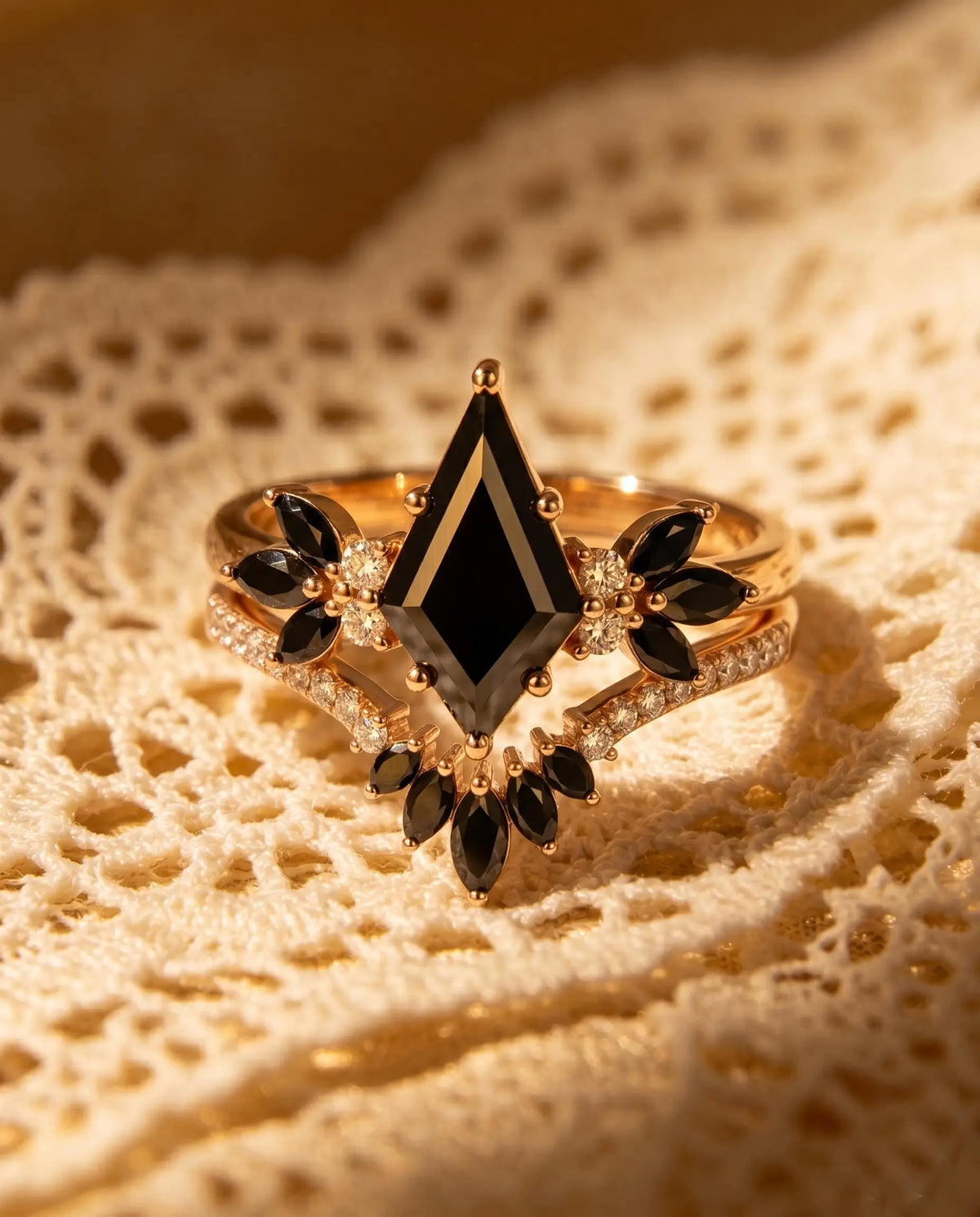
Vintage Kite Cluster Ring
14K options from $930 USD
A nontraditional outline for buyers who value silhouette and setting character as much as internal faceting.
Frequently Asked Questions
Is crushed ice moissanite less sparkly than brilliant cut?
Not necessarily, but its sparkle is smaller and more fragmented. A brilliant usually gives clearer contrast and broader flashes; crushed ice gives denser texture. Poor proportions can make either style look dull, so compare actual videos rather than names.
Does rose cut moissanite look larger?
It often has greater face-up spread for its weight because the base is shallow. It will not usually look brighter than a well-cut brilliant. Choose it for low profile, transparency and antique softness rather than maximum fire.
Is old mine cut the same as cushion cut?
No. Cushion describes a softly squared outline. Old mine describes an antique-associated combination of outline, high crown, small table, deep pavilion, chunky facets and often an open culet. A modern cushion can have several other facet arrangements.
Which moissanite cut style hides color best?
There is no universal winner because material color, stone size, faceting and metal all interact. Dense crushed ice patterns may disguise some body color face-up, while rose cuts can reveal backing and skin more readily. Inspect the exact stone against the intended metal.
Which cut style is best for an engagement ring?
Brilliant is the safest default for someone who wants obvious sparkle and wide setting choice. Crushed ice suits fine texture, rose cut suits low-profile individuality, and old mine-inspired faceting suits chunky vintage character. The right answer is the one that still looks good to you in quiet light, not only under a showroom lamp.