
Most engagement ring buyers focus almost entirely on the center stone. They compare carat size, sparkle, shape, color, and price — yet one of the most important parts of the ring is often overlooked entirely:

The setting.
A gemstone may be extremely durable on paper, but if the setting is poorly engineered, even an expensive ring can develop long-term problems surprisingly quickly.
Loose prongs, chipped corners, bent bands, missing pavé stones, and snagging settings are among the most common issues jewelry repair professionals encounter. Ironically, many of these problems come from rings that initially looked “luxurious” online.
In recent years, ultra-thin bands, oversized center stones, hidden halos, floating settings, and delicate micro pavé designs have dominated social media engagement ring trends. While visually dramatic, some of these designs prioritize aesthetics over structural longevity.
A secure engagement ring is not accidental.
It is the result of careful engineering between:
- Gemstone durability
- Metal strength
- Prong geometry
- Pressure distribution
- Structural thickness
- Lifestyle compatibility
According to durability principles referenced by the Gemological Institute of America (GIA), jewelry intended for everyday wear should balance both gemstone hardness and setting protection. A ring designed only for visual impact may not perform well under years of daily movement, pressure, and accidental contact.
Why Beautiful Rings Sometimes Fail in Real Life
Engagement rings experience constant micro-stress during daily wear.
Typing, lifting bags, holding coffee cups, opening doors, gym equipment, travel, temperature changes, glove friction, and repeated contact with hard surfaces all create gradual pressure on the ring structure.
Most failures do not happen suddenly.
Instead, they happen slowly:
- Prongs wear thinner over time
- Bands gradually distort
- Tiny pavé stones loosen microscopically
- Pointed corners absorb repeated impacts
- Settings shift slightly after years of pressure
This is why jewelry engineering matters just as much as gemstone quality itself.
Common Structural Problems
- Loose center stones
- Bent prongs
- Warped thin bands
- Snagging claws
- Missing side stones
- Chipped gemstone corners
What Usually Causes Them
- Thin metal structures
- Poor setting balance
- Daily impact pressure
- Insufficient edge protection
- Improper resizing
- Weak pavé construction
The Core Engineering Functions of a Ring Setting
A ring setting is not simply decorative metal around a gemstone.
Its engineering role is to:
- Secure the gemstone safely
- Distribute force evenly
- Protect vulnerable edges
- Reduce movement over time
- Maintain structural alignment
- Balance comfort with durability
Well-designed settings minimize stress concentration points — areas where pressure repeatedly accumulates and eventually weakens the ring structure.
This becomes especially important for larger center stones or elongated gemstone shapes.
Prong Settings: Elegant but Engineering-Sensitive
Prong settings remain the most iconic engagement ring style because they maximize light exposure and allow gemstones to appear brighter and larger.
However, prongs also expose more of the gemstone to external impact.
4-Prong vs 6-Prong
4-prong settings expose more of the gemstone visually, creating a cleaner and lighter appearance.
6-prong settings distribute pressure more evenly and provide additional security if one prong becomes damaged.
For active lifestyles or larger center stones, 6-prong structures often offer better long-term protection.
Why Prongs Loosen Over Time
Prongs gradually wear from friction and repeated contact.
Common causes include:
- Daily impact pressure
- Metal fatigue
- Accidental bending
- Improper ring sizing stress
- Repeated snagging on fabrics
Even durable metals like platinum and gold slowly wear under years of use.
Why Certain Gemstone Shapes Need More Protection

Different gemstone shapes distribute pressure differently.
Rounded shapes naturally absorb force more safely because they lack sharp corners.
| Safer Shapes | Higher-Risk Shapes | Why |
|---|---|---|
| Round Cut | Princess Cut | Sharp corners chip more easily |
| Oval Cut | Pear Cut | Pointed tips absorb impact pressure |
| Cushion Cut | Marquise Cut | Elongated ends require protection |
| Emerald Cut | Heart Shape | Vulnerable clefts and corners |
This is why professional jewelers often recommend V-prongs for pointed shapes.
V-prongs act like miniature protective armor for delicate gemstone tips.
Bezel Settings: The Rise of Protective Luxury
Bezel settings are becoming increasingly popular among buyers prioritizing longevity, minimalism, and everyday wearability.
Instead of exposing gemstone edges, a bezel surrounds the stone with a continuous metal rim.
Why Bezels Perform So Well
- Excellent impact protection
- Reduced snagging on fabrics
- Better edge security
- Lower chance of chipping
- Comfortable for active lifestyles
- Ideal for travel and everyday wear
Although bezels slightly reduce light exposure compared to prongs, modern precision-cut moissanite and diamonds still maintain strong brilliance within bezel structures.
Thin Bands vs Structural Reality
One of the largest modern jewelry misconceptions is that thinner always means more luxurious.
In reality, extremely thin bands can become structurally vulnerable under years of pressure.
Very thin engagement rings are more likely to:
- Bend during daily wear
- Lose structural symmetry
- Loosen center stones
- Develop micro-cracks near pavé sections
- Require future reinforcement
Balanced proportions are usually safer than ultra-minimal structures.
For daily wear engagement rings, many jewelers prefer moderate band thicknesses that maintain elegance without sacrificing long-term durability.
Metal Choice Changes Long-Term Performance
Platinum
Platinum is highly valued for engagement ring settings because of its density and durability.
Unlike gold, platinum displaces rather than wears away quickly, helping prongs remain secure longer.
14K Gold vs 18K Gold
14K gold generally offers better hardness for daily wear because it contains a higher percentage of alloy metals.
18K gold contains more pure gold, making it richer in color but slightly softer under long-term pressure.
White Gold Maintenance
White gold engagement rings typically require rhodium replating over time to maintain their bright white appearance.
This maintenance is normal and expected with regular wear.
Best Gemstones for Secure Everyday Wear
Gemstone durability works together with setting engineering.
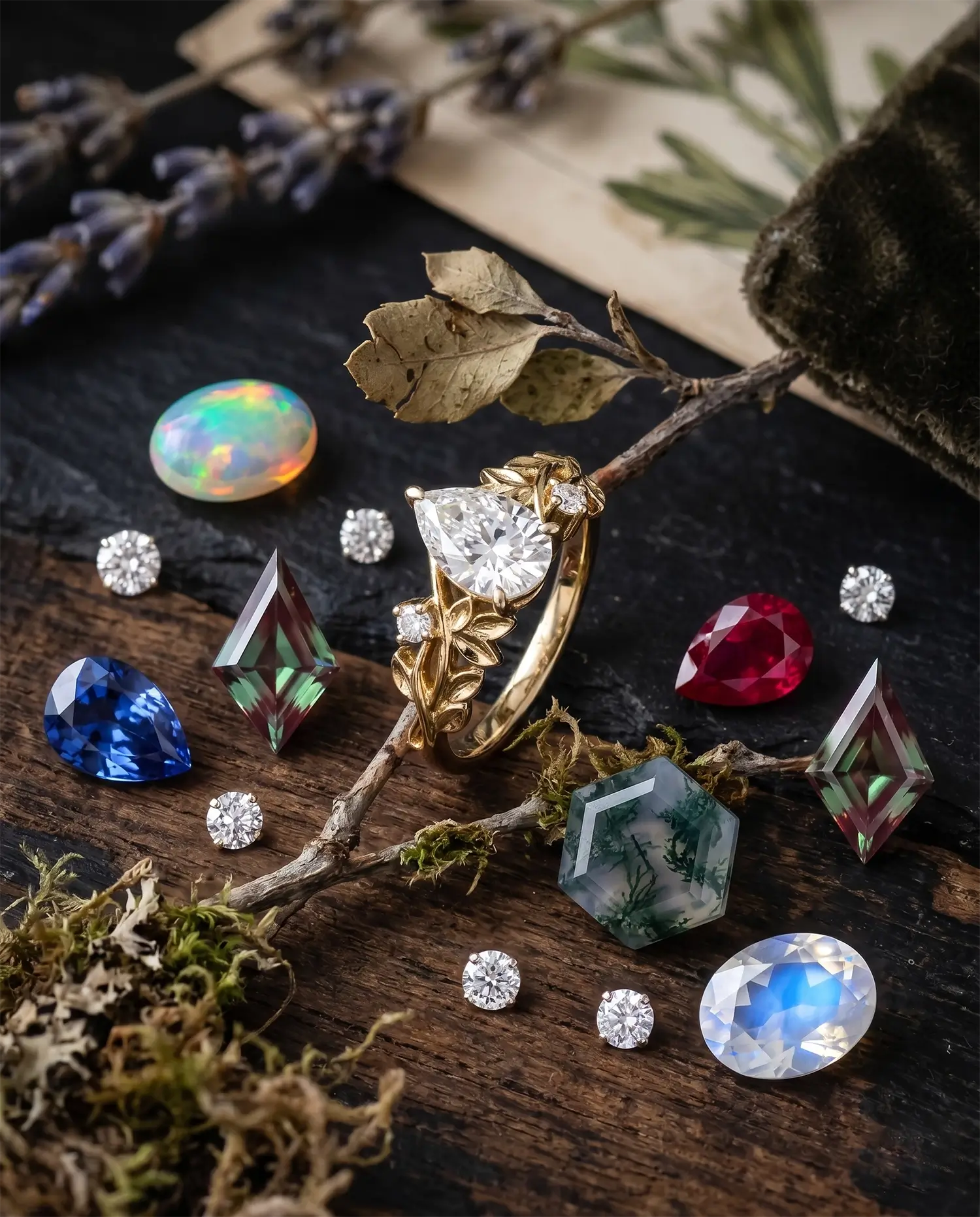
| Gemstone | Mohs Hardness | Daily Wear Suitability | Best Setting Types |
|---|---|---|---|
| Moissanite | 9.25 | Excellent | Prong, bezel, cathedral |
| Diamond | 10 | Excellent | All secure settings |
| Sapphire | 9 | Excellent | Bezel, solitaire |
| Ruby | 9 | Excellent | Protective prongs |
| Alexandrite | 8.5 | Very Good | Low-profile settings |
| Moss Agate | 6.5-7 | Moderate | Bezel recommended |
| Opal | 5.5-6.5 | Higher Maintenance | Protective halo/bezel |
| Moonstone | 6-6.5 | Higher Maintenance | Occasional wear styles |
Secure Engagement Rings Designed for Real Daily Wear

Vintage Bezel Oval Moissanite Leaf Ring
$890

Oval Moissanite Leaf Engagement Ring
$920

Round Blue Sapphire Cluster Ring
$890

Vintage Floral Moissanite Engagement Ring Set
$1,390

Pear Cut Alexandrite Leaf Engagement Ring
$1,390

Ardentia Hexagon Moissanite Flower Cluster Ring
$900
Which Settings Are Actually Most Secure?
| Setting Type | Security Level | Snag Resistance | Best For |
|---|---|---|---|
| Bezel | Excellent | Excellent | Active lifestyles |
| 6-Prong Solitaire | Very Good | Good | Daily wear |
| Halo | Good | Moderate | Luxury appearance |
| Cathedral | Very Good | Moderate | Elegant support |
| Tension | Moderate | Excellent | Modern aesthetics |
Frequently Asked Questions
What is the safest engagement ring setting?
Bezel settings are generally considered the safest because they fully or partially surround the gemstone with protective metal.
Why do engagement ring stones fall out?
The most common causes include worn prongs, thin settings, accidental impacts, poor craftsmanship, and lack of maintenance inspections.
Are 6-prong settings safer than 4-prong settings?
Yes. Six-prong settings usually provide better long-term security because pressure is distributed across more contact points.
Which gemstone shapes chip most easily?
Pear, marquise, princess, and heart-shaped gemstones are more vulnerable because of their pointed edges and corners.
Are thin engagement rings bad for everyday wear?
Very thin bands can become structurally weaker over time, especially with larger center stones or active lifestyles.
How often should prongs be inspected?
Most jewelers recommend professional inspections every 6–12 months for frequently worn engagement rings.
Final Thoughts
A secure engagement ring is not simply about beauty — it is an engineered balance between gemstone durability, metal strength, setting architecture, and long-term wearability.
The strongest engagement ring designs are often the ones thoughtfully built for real life rather than temporary visual trends.
True luxury is not only how a ring looks on the first day. It is how confidently and comfortably it performs after years of everyday wear.