
Il confronto tra anelli di fidanzamento a goccia e ovali è uno dei più utili per chi è attratto dalle pietre allungate. Entrambe le forme possono allungare visivamente il dito, entrambe possono risultare romantiche senza essere troppo tradizionali, ed entrambe offrono una buona resa visiva per il loro peso in carati. La differenza sta nella personalità del profilo e nel modo in cui ogni pietra riflette la luce.
Un anello di fidanzamento ovale appare equilibrato, morbido e continuo. Un anello di fidanzamento a goccia ha più direzionalità: un'estremità arrotondata, una punta affusolata e un profilo a goccia elegante. Se stai scegliendo tra i due, la decisione migliore non riguarda solo la brillantezza. Dipende da quanto allungamento desideri, quanto vuoi che l'anello sia distintivo, come la punta o la curva interagiscono con la montatura e se preferisci simmetria o movimento.
Risposta Rapida: Quale Sembra Più Grande?

Gli anelli di fidanzamento ovali di solito sembrano più grandi in larghezza perché il profilo si distribuisce uniformemente sul dito. La forma non ha punte affilate, quindi l'occhio percepisce l'intera pietra come un'unica superficie continua. Questo è il motivo per cui molti acquirenti scelgono l'ovale quando vogliono la massima resa visiva con una silhouette classica e indossabile.
Gli anelli di fidanzamento a goccia possono sembrare più lunghi e drammatici. La punta allungata estende il profilo, quindi anche quando l'area frontale è simile, la pietra può apparire più allungata dalla punta del dito alla nocca. L'effetto è particolarmente evidente quando la goccia è indossata con la punta verso l'alto o verso il basso in un solitario, un alone o una montatura a foglia.
In parole semplici: scegli l'ovale se desideri una copertura generosa ed equilibrata del dito; scegli la goccia se vuoi una forma più lunga e direzionale con un bordo romantico distintivo.
Se stai ancora esplorando, inizia con la collezione completa di anelli di fidanzamento, poi restringi alle collezioni a goccia e ovale. Questo mantiene il confronto focalizzato su stili reali piuttosto che su profili astratti.
Dimensioni Visive: Copertura del Dito, Lunghezza e Proporzioni

La dimensione visiva dipende da più del peso in carati. Due pietre con lo stesso peso possono apparire diverse perché il taglio distribuisce il peso in modo differente. I tagli ovale e a goccia sono entrambi allungati, il che significa che tendono a coprire più lunghezza del dito rispetto a una pietra rotonda di peso simile. Ecco perché sono popolari tra chi cerca presenza senza aumentare troppo il budget.
Un taglio ovale ha un profilo arrotondato da ogni angolazione. Sulla mano, crea un allungamento nord-sud morbido e una certa larghezza sul dito. È lusinghiero per molte forme di mano perché offre lunghezza senza un punto visivo forte. Se ti piace un anello elegante, calmo e versatile, l'ovale è di solito la forma più facile da indossare ogni giorno.
Un taglio a goccia ha un'asimmetria incorporata nel design. La base arrotondata dona morbidezza, mentre la punta crea lunghezza e direzione. Questo può far sembrare un anello di fidanzamento a goccia leggermente più lungo in lunghezza rispetto a un ovale, specialmente in montature che lasciano visibile la punta. Il compromesso è che la punta necessita di una protezione attenta, di solito con un grilletto a V, un dettaglio a bezel o un'architettura della montatura che protegga la punta dagli urti.
Brillantezza: Come i Tagli Ovale e a Goccia Riflettono la Luce

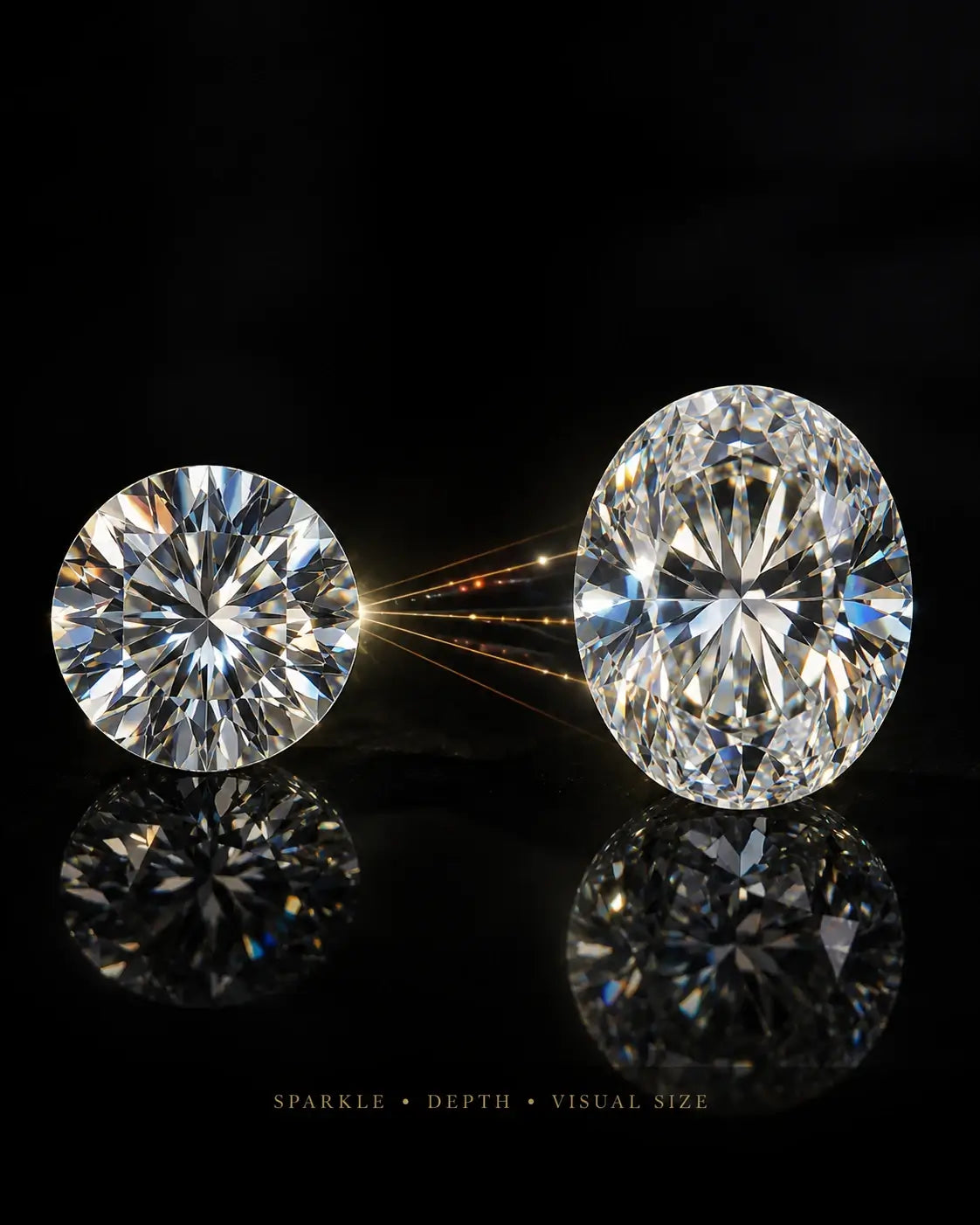
Sia il taglio ovale che quello a goccia sono tagli brillanti, quindi sono progettati per una brillantezza vivace piuttosto che per i grandi lampi a specchio di un taglio a gradini. Nella moissanite, entrambe le forme possono apparire particolarmente luminose perché la moissanite ha un forte fuoco e ritorno di luce. Nell'alessandrite da laboratorio, zaffiro, rubino, pietra di luna, agata muschiata, opale e onice, la brillantezza o luminescenza dipende più dal carattere ottico naturale della gemma e dalla qualità del taglio.
I tagli ovali spesso mostrano un motivo di brillantezza ampio e uniforme. Un ovale ben tagliato può sembrare luminoso al centro e sui bordi, con un luccichio aggraziato mentre la mano si muove. Alcuni ovali allungati possono mostrare un effetto farfalla, una zona più scura al centro causata da come la luce interagisce con le faccette del padiglione. Un leggero effetto farfalla è comune nei tagli brillanti allungati; l'obiettivo è evitare che appaia troppo scuro o fastidioso.
Anche i tagli a goccia possono mostrare un effetto farfalla, e la brillantezza può sembrare più varia perché la pietra combina un'estremità arrotondata con una punta affusolata. L'estremità arrotondata spesso dà una brillantezza morbida, mentre la punta crea lampi più netti. Questo contrasto fa parte del fascino del taglio a goccia. Sembra meno uniforme di un ovale, ma più espressivo.
Personalità dello Stile: Simmetria Morbida vs Direzione Romantica
Gli anelli di fidanzamento ovali sono scelte forti per chi cerca eleganza senza troppo rischio visivo. Funzionano magnificamente in montature solitario, alone, tre pietre, vintage, floreali e ispirate alla natura. Il profilo ovale si abbina facilmente anche a fedi curve, fedi nido e fedi classiche impavide.
Gli anelli di fidanzamento a goccia appaiono subito più distintivi. Il profilo a goccia può essere vintage, celestiale, floreale, gotico o moderno a seconda della montatura. Un alone di moissanite a goccia può sembrare luminoso e romantico; un anello con alessandrite o agata muschiata a goccia può risultare più artistico e personale. Se vuoi che la pietra centrale si annunci come insolita, la goccia ha il vantaggio.
Anche l'orientamento conta. Un anello a goccia indossato con la punta verso la punta del dito tende ad allungare la mano. Indossato con la punta verso il polso, può sembrare più morbido e leggermente più antico. Non esiste una direzione giusta; il miglior orientamento è quello che sembra equilibrato sulla tua mano e funziona con il tuo piano per la fede nuziale.
Durata e Scelta della Montatura
I tagli ovali sono pratici perché non hanno punte esposte. Questo non li rende indistruttibili, ma il profilo arrotondato è più facile da proteggere in montature a griffe, bezel e alone. Se chi lo indossa ha le mani attive, un ovale in una montatura dal profilo basso può essere una scelta comoda per tutti i giorni.
I tagli a goccia richiedono più attenzione alla punta. Una griffe a V, un bordo bezel o un alone possono aiutare a proteggere la punta. Questo è particolarmente importante per gemme più morbide o delicate. La moissanite e le gemme di corindone create in laboratorio come lo zaffiro lab o il rubino lab sono scelte robuste per l'uso quotidiano, mentre pietre come l'opale e la pietra di luna richiedono una manipolazione più delicata e una cura più attenta.
Anche la scelta del metallo influisce sulla durata a lungo termine. Il catalogo prodotti Orleone include opzioni come oro 10K, 14K, 18K e platino 950 su molti stili. Per i consigli dell'articolo, l'oro 14K è un buon compromesso perché bilancia la presenza di metallo prezioso con la durata pratica per anelli quotidiani.
Miglior Abbinamento per Preferenza dell'Acquirente
| Preferenza | Migliore Scelta | Perché |
|---|---|---|
| Dimensione visiva equilibrata | Taglio ovale | Il profilo uniforme offre una copertura ampia e facile da leggere. |
| Silhouette più lunga e drammatica | Taglio a goccia | La punta allunga la forma e aggiunge direzionalità. |
| Classico ma non rotondo | Taglio ovale | La simmetria morbida mantiene l'aspetto senza tempo e versatile. |
| Profilo distintivo e artistico | Taglio a goccia | La forma a goccia appare più insolita a prima vista. |
| Facile abbinamento con la fede | Taglio ovale | La simmetria arrotondata funziona bene con molte fedi curve e dritte. |
| Stile ispirato alla natura o celestiale | Taglio a goccia | La punta si abbina magnificamente con foglie, aloni, lune e grappoli. |
Anelli Orleone Consigliati da Confrontare
Queste selezioni sono prodotti attivi dal catalogo Shopify più recente e utilizzano prezzi varianti 14K dove disponibili. Sono scelti per dare una visione equilibrata delle silhouette a goccia e ovale in moissanite, alessandrite lab e set nuziali. Per una navigazione a livello di collezione, confronta le serie complete di anelli di fidanzamento a goccia e ovali prima di scegliere un singolo design.

Elysia Anello a Goccia Moissanite Halo
Oro 14K da €920,00
Un'opzione moissanite a goccia con alone luminoso e profilo allungato chiaro.

Sylvera Anello a Goccia Moissanite Foglie
Oro 14K da €830,00
Ideale per vedere come gli accenti a foglia rendono il taglio a goccia più organico.

Elariv Anello a Goccia Alessandrite Foglie
Oro 14K da €890,00
Una goccia colorata per chi confronta la personalità della forma oltre la brillantezza bianca.

Aurelia Anello Ovale Moissanite Halo
Oro 14K da €960,00
Un classico ovale con alone per confrontare brillantezza ampia e copertura equilibrata.

Calanthe Anello Ovale Alessandrite
Oro 14K da €990,00
Un ovale a tre pietre che mostra come i dettagli laterali aggiungano larghezza e carattere vintage.

Lavelle Set Nuziale Ovale Moissanite
Oro 14K da €1.380,00
Un set nuziale floreale per giudicare la forma ovale con una fede coordinata.
FAQ
Gli anelli di fidanzamento a goccia o ovali brillano di più?
Nessuna delle due forme brilla automaticamente di più. Entrambe sono tagli brillanti allungati. I tagli ovali spesso appaiono più uniformemente luminosi, mentre i tagli a goccia possono mostrare una miscela più vivace di lampi morbidi all'estremità arrotondata e lampi più netti vicino alla punta. La qualità del taglio, il tipo di gemma e il design della montatura contano più della forma da sola.
Quale forma sembra più grande per il prezzo?
I tagli ovali spesso sembrano più grandi in larghezza sul dito perché il profilo è ampio e continuo. I tagli a goccia possono sembrare più lunghi perché la punta allunga la silhouette. Per la massima dimensione frontale equilibrata, di solito vince l'ovale. Per l'effetto allungante più forte, la goccia è spesso più sorprendente.
Un anello di fidanzamento a goccia è più difficile da indossare?
Un anello di fidanzamento a goccia è molto indossabile quando la montatura protegge la punta. Cerca una griffe a V, un bezel, un alone o un posizionamento attento delle griffe. Se chi lo indossa è duro con i gioielli, un ovale può essere più semplice perché non ha estremità appuntite.
Quale fede nuziale funziona meglio con ogni forma?
Gli anelli di fidanzamento ovali si abbinano facilmente a fedi dritte, curve, impavide e nido. Gli anelli di fidanzamento a goccia spesso stanno meglio con fedi curve, a chevron, aperte o sagomate che rispettano la punta e mantengono l'equilibrio della pila.
Dovrei scegliere a goccia o ovale per un dito corto?
Entrambe possono essere lusinghiere perché entrambe sono allungate. L'ovale dà un effetto allungante più morbido, mentre la goccia può creare una linea verticale più forte. Il dettaglio più importante è la proporzione: evita una pietra così lunga o larga da sopraffare la mano.
Consiglio Finale
Se desideri un anello di fidanzamento che appaia elegante, equilibrato e facile da abbinare, scegli l'ovale. Offre una generosa dimensione visiva, una brillantezza morbida e un'ampia flessibilità di abbinamento con le fedi. Se desideri qualcosa di più espressivo, scegli la goccia. Offre lunghezza, romanticismo e una silhouette che sembra più personale a prima vista.
Il passo successivo più utile è confrontare anelli veri sulla mano. Guarda la pietra centrale frontalmente, di lato e in movimento. Nota se il tuo occhio preferisce la simmetria continua dell'ovale o la punta aggraziata della goccia. La forma giusta dell'anello di fidanzamento è quella che rimane bella anche dopo che la prima brillantezza si è calmata e immagini di indossarlo ogni giorno.