
Un anello di fidanzamento con perla ha il potere di fermare lo scroll. Sembra morbido, romantico, un po' antico e un po' ribelle accanto al solitario di diamanti. È esattamente per questo che gli anelli con perle stanno tornando di tendenza: non sembrano la risposta predefinita.
Ma la domanda che conta non è se le perle siano belle. Lo sono. La vera domanda è se un anello di fidanzamento con perla sia pratico per l'uso quotidiano. La risposta onesta è: a volte, per la persona giusta, con le giuste aspettative. Per molti, però, la perla è meglio come anello di fidanzamento occasionale, anello della mano destra, anello per il weekend del matrimonio o un pezzo simbolico indossato con più cura di un anello con gemma dura.
Se ti stai chiedendo "gli anelli di perla sono durevoli", la risposta breve è no rispetto a diamante, zaffiro, rubino o moissanite. Le perle sono gemme organiche. Il loro bagliore deriva dalla madreperla, e quella madreperla è ciò che le rende vulnerabili a graffi, abrasioni, sostanze chimiche e urti. Questo non le rende una scelta sbagliata. Le rende una scelta che richiede un diverso tipo di stile di vita.

Perché gli Anelli di Fidanzamento con Perle Sono Così Attuali
Il rinnovato interesse per gli anelli con perle non è casuale. Il gusto per gli anelli di fidanzamento si sta spostando verso un'individualità più morbida: pietre colorate, silhouette antiche, dettagli ispirati alla natura, pietre centrali più piccole, fasce scolpite e pezzi che sembrano personali piuttosto che perfetti algoritmicamente. La perla si adatta perfettamente a questo mood.
Una perla non brilla nel senso del diamante. Risplende. Quel bagliore appare silenzioso, intimo e d'altri tempi. Inoltre, si fotografa diversamente dalle pietre sfaccettate, il che aiuta a spiegare perché gli anelli con perle sembrano freschi in un feed pieno di diamanti a taglio brillante e ovali allungati. Una perla può far sembrare un anello di fidanzamento meno un simbolo di status e più un oggetto privato con una storia.
C'è anche una ragione di moda. Le perle hanno superato le classiche collane e gli orecchini da giorno del matrimonio. Ora appaiono in gioielli scolpiti, stili con metalli misti, abbigliamento ispirato al coquette, look nuziali moderni ed estetiche revival vintage. Un anello di fidanzamento con perla attinge da tutte queste correnti contemporaneamente.
Per esplorare il look stesso, gli anelli di fidanzamento con perle sono utili perché la categoria mostra la gamma: singole perle semplici, aureole floreali, accenti di perla e moissanite, grappoli vintage e montature ispirate alla natura. La gamma di stili è ampia. La questione della durabilità, tuttavia, rimane la stessa.
Gli Anelli di Perla Sono Abbastanza Durevoli per l'Uso Quotidiano?
Le perle sono molto più morbide delle gemme che la maggior parte delle persone associa agli anelli di fidanzamento. Sulla scala di durezza Mohs, le perle sono comunemente elencate tra 2,5 e 4,5, a seconda del tipo di perla e della superficie. A confronto, il quarzo è 7, lo zaffiro e il rubino sono 9, la moissanite è circa 9,25 e il diamante è 10. Questo divario non è piccolo.
La durezza Mohs misura la resistenza ai graffi. Non misura tutto sulla durabilità, ma per gli anelli è importante perché le mani toccano maniglie, scrivanie, chiavi, attrezzi da palestra, pentole, cerniere e custodie di telefoni tutto il giorno. Una perla può subire usura superficiale da contatti che non influenzerebbero visibilmente una pietra più dura.
La pagina descrizione della perla GIA è un utile riferimento neutro perché spiega che le perle sono gemme organiche costruite da molluschi, non cristalli estratti. Quell'origine è il punto: la bellezza di una perla deriva dalla madreperla stratificata, e la madreperla necessita di un trattamento più delicato rispetto alle gemme cristalline.

Quindi, un anello di perla può essere indossato ogni giorno? Può, ma "ogni giorno" deve significare qualcosa di realistico. Se chi lo indossa lavora a una scrivania, si toglie gli anelli per le faccende domestiche, evita il contatto con profumi e lozioni, conserva i gioielli con cura e accetta che la perla potrebbe aver bisogno di essere sostituita in futuro, può funzionare. Se chi lo indossa vuole un anello che possa rimanere durante allenamenti, cucina, pulizie, giardinaggio, viaggi, disinfettante per le mani e sonno, la perla è la pietra centrale sbagliata.
I Principali Rischi: Graffi, Opacità, Sostanze Chimiche e Urti
Il primo rischio è l'abrasione superficiale. Le perle possono perdere la loro lucentezza liscia quando vengono strofinate contro materiali più duri. Anche un portagioielli leggermente ruvido, un anello impilato o il contatto ripetuto con il bordo di un tavolo possono contare nel tempo.
Il secondo rischio è l'esposizione chimica. Profumo, lacca per capelli, lozione, crema solare, detergenti domestici, cloro e l'uso frequente di disinfettante non sono amici delle perle. Possono influenzare la superficie e ridurre la lucentezza. Ecco perché la cura dell'anello di perla spesso inizia con una semplice regola: le perle dovrebbero essere l'ultima cosa che si indossa e la prima che si toglie.
Il terzo rischio è l'impatto. Una perla non è solo più morbida; può anche essere danneggiata da urti diretti. Una perla montata a griffe che si trova alta sulla mano è particolarmente esposta. Una montatura più bassa, pietre circostanti protettive o un design che nasconde la perla più vicino alla fascia possono aiutare, ma nessuna montatura trasforma la perla in zaffiro.
Il quarto rischio è la gestione dell'umidità. Le perle non devono essere essiccate in condizioni estreme, ma anche immergerle, fare la doccia, nuotare e la pulizia a ultrasuoni sono cattive abitudini. La guida alla cura delle perle GIA fornisce una buona base conservativa: pulizia delicata, conservazione morbida e evitare metodi di pulizia aggressivi.
Per Chi è Davvero un Anello di Fidanzamento con Perla?
Un anello di fidanzamento con perla è ideale per chi già tratta i gioielli con cura. Questa persona si toglie gli anelli prima di lavare i piatti, sollevare pesi, applicare prodotti per la cura della pelle, fare lavori domestici o dormire. Non le dispiace un anello che richiede attenzione. Potrebbe anche piacere l'idea che una perla sia un materiale che sembra vivo piuttosto che un oggetto indistruttibile.
È anche una buona scelta per chi prevede di ruotare gli anelli. Molte coppie moderne non si aspettano che un solo anello faccia tutto. Un anello di perla può essere il pezzo romantico di fidanzamento, mentre una fascia semplice, un anello con gemma a basso profilo o un anello con pietra più dura gestiscono viaggi e giorni attivi. Questo approccio è molto più realistico che forzare la perla in un ruolo che non serve naturalmente.
La perla si adatta anche a guardaroba nuziali vintage, botanici, romantici e morbidi. Sta particolarmente bene con oro giallo, oro rosa, seta, pizzo, raso, maglieria fine e dettagli di ispirazione antica. Se chi la indossa ama le texture calde e l'eleganza a bassa lucentezza, la perla può sembrare più personale di una pietra altamente brillante.
Chi Dovrebbe Probabilmente Evitare la Perla?
Chiunque voglia un anello di fidanzamento "indossa e dimentica" dovrebbe evitare una pietra centrale di perla. Se vuoi indossare il tuo anello sotto la doccia, in palestra, mentre pulisci, mentre fai giardinaggio o durante viaggi imprevedibili, la perla diventerà stressante. Un anello non dovrebbe far sembrare la vita quotidiana una lista di pericoli.
La perla non è ideale nemmeno per chi ama impilare molto. Una fascia vicina più dura può sfregare contro la perla o la sua montatura. Se l'impilamento è importante, tieni l'anello di perla separato, scegli una fascia sagomata che non tocchi la perla o scegli una pietra centrale più dura.
Potrebbe non essere la scelta migliore per le persone emotivamente attaccate a condizioni impeccabili. Le perle sviluppano segni di usura più facilmente delle gemme più dure. Alcuni trovano questo poetico. Altri lo trovano frustrante. Sappi che tipo di utilizzatore sei prima di sceglierne una.
Cura dell'Anello di Perla Che Conta Davvero
Una buona cura dell'anello di perla non è complicata, ma deve essere costante. Pulisci delicatamente l'anello con un panno morbido e pulito dopo averlo indossato. Conservalo separatamente in modo che non sfreghi contro diamanti, zaffiri, bordi metallici o maglie di catene. Non gettarlo in un piatto portagioielli condiviso.
Evita pulitori a vapore e macchine a ultrasuoni. Evita sostanze chimiche aggressive. Evita di immergere l'anello a meno che un gioielliere non dia indicazioni specifiche per la montatura. Se la perla sembra opaca, non cercare di lucidarla aggressivamente a casa. Le perle non sono diamanti; la superficie è il gioiello.
Aiuta anche programmare controlli professionali occasionali. Griffe, colla, coppe, perni e montature decorative possono allentarsi nel tempo. Con gli anelli di perla, la montatura fa parte del piano di durabilità. Una montatura sicura, più bassa e ben progettata è molto più pratica di una perla alta ed esposta tenuta come un oggetto da esposizione.
Migliori Alternative Quotidiane Se Ami il Mood della Perla
Se ami la morbida romanticità della perla ma vuoi meno preoccupazioni, cerca pietre più dure che creano un effetto emotivo simile. È qui che gli anelli di fidanzamento alternativi diventano veramente utili. L'obiettivo non è imitare esattamente la perla. L'obiettivo è preservare la sensazione: gentile, personale, leggermente non convenzionale e meno prevedibile di un solitario tradizionale.
La moissanite è una delle alternative pratiche più forti. Ha un'alta resistenza ai graffi, una forte brillantezza e di solito funziona bene per l'uso quotidiano di fidanzamento. Un anello di moissanite con accenti di perla può anche darti un po' del mood della perla mentre lascia che la pietra più dura faccia il lavoro della pietra centrale. Se la durabilità è l'ansia principale, gli anelli di moissanite sono un punto di confronto sensato.
Lo zaffiro è un'altra eccellente opzione, specialmente per chi vuole colore senza sacrificare la robustezza quotidiana. Lo zaffiro blu è classico, ma lo zaffiro di laboratorio e lo zaffiro colore fantasia possono sembrare più moderni. Per un anello romantico ma più resistente, gli anelli con zaffiro spesso hanno più senso della perla come pietra principale.
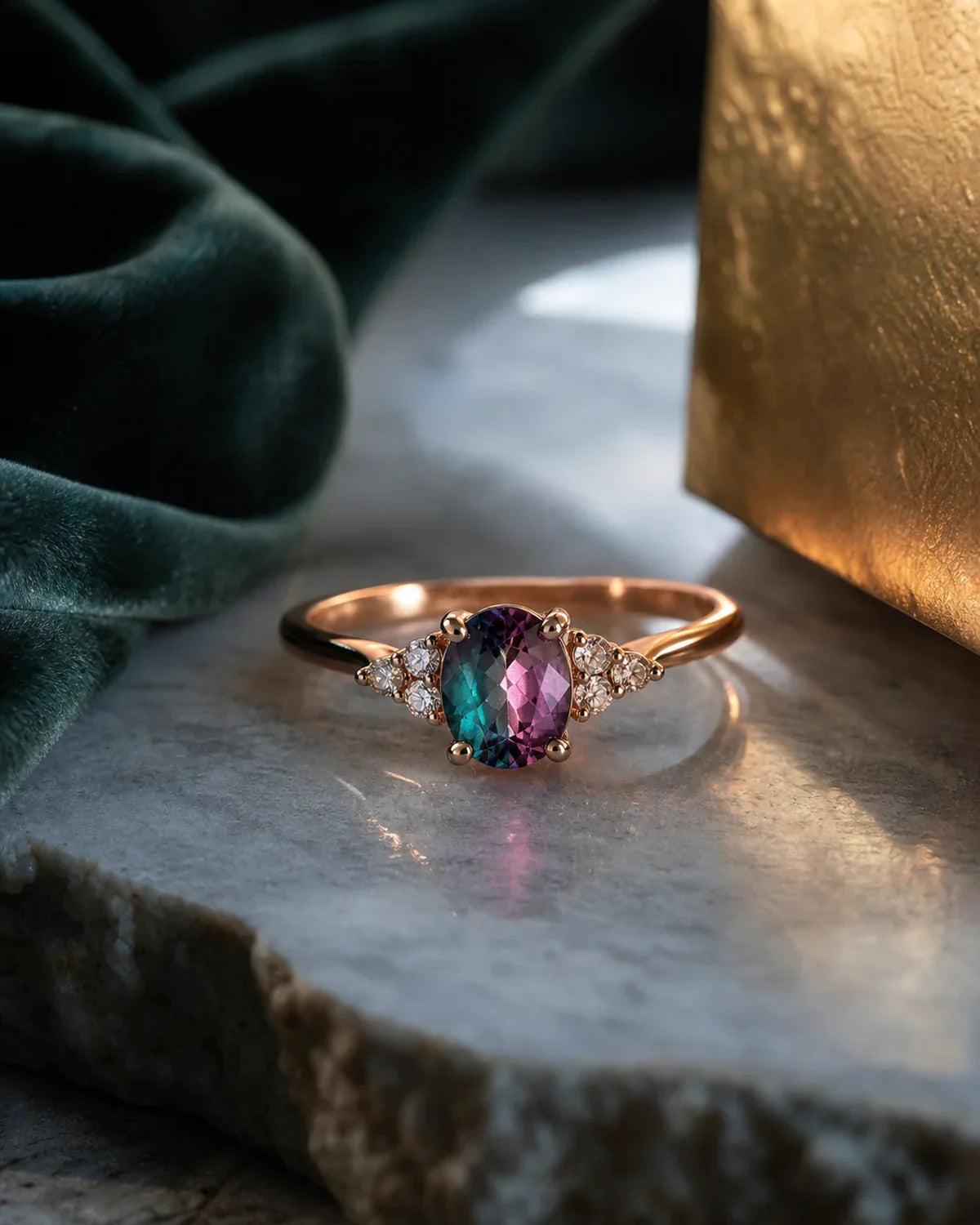
L'alessandrite offre un diverso tipo di magia: cambiamento di colore, profondità e un aspetto meno comune. L'agata muschiata porta morbidezza attraverso il motivo piuttosto che il bagliore. Il diamante e il diamante sale e pepe offrono la più alta resistenza ai graffi del gruppo, anche se il loro mood visivo è più netto della perla. L'opale e la pietra di luna possono sembrare sognanti, ma sono ancora pietre più morbide, quindi non sono la soluzione migliore se il problema che stai risolvendo è la durabilità.
Stili da Confrontare
Gli anelli qui sotto sono punti di confronto, non risposte valide per tutti. I primi due mostrano il look della perla stesso. I restanti sono alternative più forti per gli acquirenti che vogliono romanticità, colore o individualità con meno ansia per l'uso quotidiano.

Anello con Perla Akoya Elara
Oro Rosa 14K da €650,00
Uno stile floreale morbido con perla per chi indossa con cura e vuole il look al suo massimo romanticismo.

Anello Aureola Fiore di Perla
Oro Rosa 14K da €1.130,00
Un design aureola incentrato sulla perla che sembra nuziale, decorativo e da trattare con delicatezza.

Anello Edenia Moissanite con Accento di Perla
Oro Rosa 14K da €820,00
Un ponte pratico: moissanite come pietra principale con dettaglio in perla per morbidezza.

Anello Aurora Moissanite Rotondo
Oro Rosa 14K da €820,00
Un'opzione più dura per l'uso quotidiano per acquirenti che vogliono brillantezza senza un solitario standard.

Anello a Grappolo con Zaffiro di Laboratorio
Oro Rosa 14K da €890,00
Un'alternativa in pietra colorata con maggiore resistenza ai graffi rispetto alla perla.

Anello Floreale Celeste Alessandrite
Oro Rosa 14K da €820,00
Un'alternativa distintiva per chi vuole colore, romanticismo e una pietra centrale più resistente.
FAQ: Anelli di Fidanzamento con Perle
Un anello di fidanzamento con perla può essere indossato tutti i giorni?
Sì, ma solo con abitudini attente. Rimuovilo per pulizie, cucina, allenamenti, sonno, doccia, nuoto e qualsiasi attività che possa esporlo a sostanze chimiche o urti. Se sembra irrealistico, scegli una gemma più dura per l'uso quotidiano.
Gli anelli di perla si graffiano facilmente?
Rispetto a diamante, zaffiro, rubino e moissanite, sì. La madreperla è molto più morbida e può subire abrasioni dal contatto con superfici più dure o gioielli vicini.
La perla Akoya è migliore per un anello di fidanzamento?
Le perle Akoya sono amate per la loro lucentezza e l'aspetto bianco classico, ma sono pur sempre perle. Il tipo di perla può influenzare l'aspetto e la qualità, ma non elimina la necessità di un uso attento.
Qual è la migliore alternativa alla perla per un anello di fidanzamento?
Per durabilità, moissanite, zaffiro, rubino, alessandrite e diamante sono scelte più resistenti. Per un mood visivo più morbido, si può considerare anche l'agata muschiata, anche se non è dura come zaffiro o moissanite.
Il Messaggio Finale
Gli anelli di fidanzamento con perle sono di tendenza perché sembrano intimi, aggraziati e piacevolmente diversi. Non sono di tendenza perché sono la scelta più pratica per l'uso quotidiano. Questa distinzione è importante.
Se chi li indossa è delicato con i gioielli e ama l'idea di un anello che richiede cura, la perla può essere significativa e bella. Se chi li indossa vuole un anello che possa muoversi nella vita quotidiana con meno regole, scegli una gemma più dura e prendi in prestito la morbidezza della perla attraverso il design: oro caldo, montature floreali, aureole, pietre laterali o sottili accenti di perla. Il miglior anello non è solo quello che sembra giusto in una foto. È quello che si adatta al modo in cui verrà effettivamente indossato.