
Escolher entre ouro 10K, 14K e 18K pode parecer uma decisão entre bom, melhor e ótimo. Mas esse raciocínio está errado. O quilate indica quanto ouro existe em uma liga metálica. Por si só, ele não diz se uma garra fina vai resistir a uma batida, se uma folha vazada vai entortar, se o ouro branco vai precisar de nova camada de ródio ou se um anel combina com a forma como você usa as mãos no dia a dia.
Ouro 10K, 14K e 18K em resumo
| Liga de ouro | Teor de ouro puro | Característica visual típica | Indicação ideal | Principal contrapartida |
|---|---|---|---|---|
| 10K / 417 | 10 de 24 partes, cerca de 41,7% | Amarelo mais pálido ou rosé; ligas brancas podem parecer mais frias antes do banho | Uso diário com foco em custo-benefício e quem prefere um tom de ouro mais discreto | Menor teor de ouro e maior proporção de metais de liga |
| 14K / 583 ou 585 | 14 de 24 partes, cerca de 58,3% | Cor de ouro reconhecível, sem a saturação total do 18K | Ampla variedade de anéis de noivado, incluindo modelos detalhados e para uso diário | Nem o preço mais baixo, nem o amarelo mais intenso |
| 18K / 750 | 18 de 24 partes, 75% | Amarelo mais intenso; os tons rosé e branco dependem muito da composição da liga | Peças de luxo, com cor marcante e presença robusta | Preço mais alto e, em geral, marcas de superfície mais visíveis |
Os números também podem aparecer como marcas de pureza em milésimos: 417 para 10K, 583 ou 585 para 14K e 750 para 18K. O guia do consumidor da FTC sobre joias de ouro explica que as marcas de quilate indicam a proporção de ouro puro e diferenciam o ouro maciço de produtos banhados ou revestidos. “Maciço” significa que a peça não é apenas uma superfície de ouro sobre metal comum; não significa 24K.
Quilate não é o mesmo que quilate de gema
Karat, escrito K nos Estados Unidos, descreve a pureza do ouro. Carat, escrito ct, descreve o peso da gema. Um anel pode, portanto, ter uma safira de 1,0 ct em ouro 14K. Os números respondem a perguntas diferentes.
O ouro puro 24K é macio demais para a maioria das estruturas convencionais de anel de noivado, por isso os joalheiros combinam o ouro com metais como prata, cobre, zinco, níquel ou paládio. Esses metais de liga influenciam a cor, a dureza, o comportamento na fundição e a forma como a superfície reage ao desgaste. Duas ligas com o mesmo selo 14K podem ter composições diferentes e propriedades de trabalho ligeiramente distintas.

Por que “quilate mais baixo é mais duro” não é uma resposta completa
O ouro de quilate mais baixo contém uma proporção maior de metais não-ouro, e muitas composições comuns de 10K e 14K são mais duras do que composições comparáveis de 18K. Mas dureza é a resistência a riscos ou marcas; tenacidade é a resistência a trincas; resistência diz respeito à deformação sob carga. O comportamento à corrosão e a facilidade de reparo são questões ainda distintas. O anel pronto também depende do processo de fabricação e da geometria da peça.
Um aro de 18K bem proporcionado pode ser mais confiável do que um aro de 10K excessivamente fino. Uma garra de 14K com assento de pedra preciso pode ter desempenho melhor do que uma garra de aparência mais robusta com contato inadequado. Porosidade, superfícies de fundição inacabadas, transições bruscas de fino para grosso e metal insuficiente em uma junção podem comprometer qualquer quilate. É por isso que o guia de anatomia do anel de noivado importa: a escolha do metal e o design estrutural precisam ser avaliados em conjunto.
Quando o ouro 10K faz sentido
O ouro 10K é ouro maciço legítimo, não é banho de ouro. Seu teor de ouro mais baixo costuma torná-lo a opção menos cara entre as três. O 10K amarelo frequentemente parece mais claro e menos saturado, o que pode ser uma vantagem para quem acha o metal amarelo intenso quente demais. Também pode ser prático para uma primeira compra de joia fina ou para um anel cujo orçamento é direcionado à gema central.
O alerta não é que o 10K seja "ruim". É que mais metal de liga significa que a receita exata importa. Compradores com sensibilidade conhecida a níquel ou outros metais devem perguntar o que compõe o ouro branco, em vez de presumir que uma porcentagem menor de ouro seja automaticamente mais suave para a pele. Ao longo de um longo período de uso, oxidação superficial ou mudanças de tom também podem variar conforme a liga e o ambiente.
Por que o 14K é o padrão equilibrado
O 14K fica entre preço, teor de ouro e propriedades práticas de trabalho. Seu tom amarelo é mais quente do que a maioria dos ouros 10K amarelos, mas geralmente menos saturado que o 18K. É amplamente utilizado em anéis de noivado para uso diário, o que também torna conversas sobre ajuste de tamanho, trabalho em garras e alianças combinando familiares para muitas oficinas de reparo.
Para um aro fino, pequenos detalhes em folha ou ombros com pavé, o 14K costuma ser um ponto de partida sensato — não uma permissão para deixar cada parte o mais fina possível. A escala visual delicada deve vir de afilamento, espaço negativo e transições controladas. Áreas de suporte de carga contínua ainda precisam de metal acabado suficiente.
Quando o 18K vale o investimento
O 18K contém 75% de ouro e confere ao ouro amarelo sua aparência mais rica entre as três opções. Pode fazer com que diamantes de tom quente, gemas verdes, rubis e detalhes de inspiração antiga pareçam especialmente intencionais. Compradores que escolhem o 18K geralmente estão pagando por cor e teor de material, não pela promessa de que o anel permanecerá sem marcas.
Riscos superficiais e pequenos amassados são evidências normais de uso em qualquer anel de ouro, mas podem se tornar visíveis mais cedo em muitas ligas de 18K. Isso não torna o 18K inadequado para anéis de noivado. Significa que o design deve evitar fragilidade desnecessária. Um aro substancial, engastes de acentos protegidos e ombros bem sustentados são melhores parceiros para o 18K do que um CAD subdimensionado que se apoia na pureza como sinal de qualidade.
Ouro amarelo, branco e rosé não se comparam da mesma forma
O guia da GIA sobre ouro amarelo, branco e rosé destaca as diferentes famílias de ligas e as marcas de pureza mais comuns usadas em anéis de noivado. A cor do ouro amarelo geralmente fica mais intensa conforme o teor de ouro aumenta, mas as proporções de cobre e prata ainda ajustam o tom final.
O ouro rosé deve seu caráter rosado em grande parte ao cobre. Um quilate mais alto nem sempre parece "mais rosado": com mais ouro amarelo e menos espaço para o cobre, o ouro rosé 18K pode parecer mais quente e com tom de pêssego dourado, enquanto as fórmulas 10K ou 14K podem parecer mais rosadas. A fórmula exata importa mais do que uma amostra genérica encontrada online.
O ouro branco é ligado para uma cor base pálida e geralmente recebe banho de ródio para uma superfície branca brilhante. Após o banho, o ouro branco 14K e 18K pode parecer praticamente idêntico. À medida que o ródio se desgasta na parte inferior e nas bordas, a liga mais quente por baixo pode aparecer. Rebanhar é manutenção, não prova de que o anel é defeituoso. Pergunte se a liga contém níquel caso sensibilidade seja uma preocupação; ligas de ouro branco com paládio e platina são alternativas que vale a pena discutir.

Combine o quilate com a arquitetura do anel
Hastes finas e micro detalhes
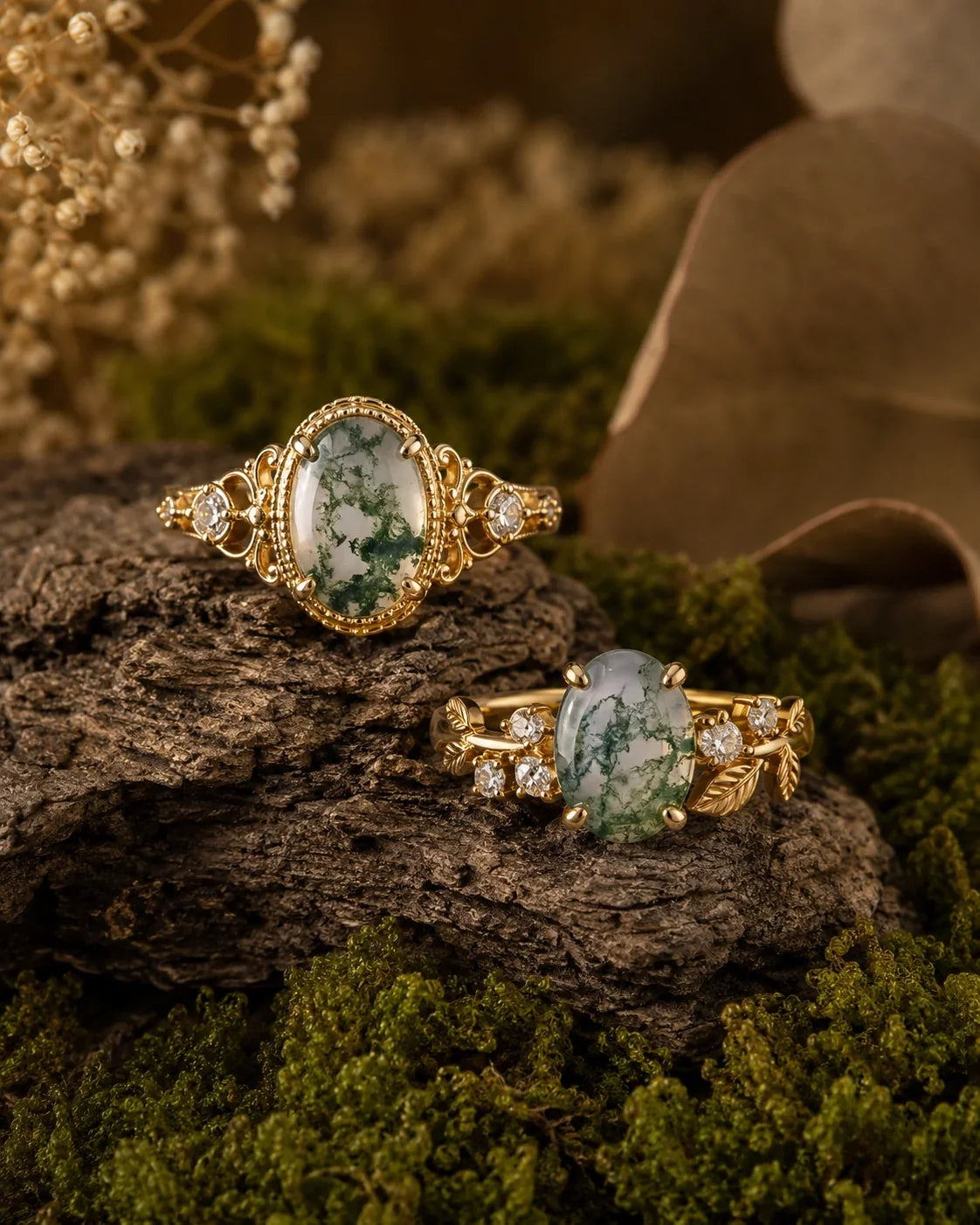
Um anel fino é regido pela sua seção acabada mais estreita. Para anéis de noivado com folhas e vinhas, verifique se os detalhes botânicos são entalhes na superfície de uma haste contínua ou projeções separadas que suportam carga. Pequenas pontas decorativas não devem ser a única conexão entre a cabeça e a aliança. O 14K é um padrão prático, enquanto o 18K pode funcionar quando as dimensões permanecem substanciais.
Filigrana e vazados vintage
Os espaços vazados fazem o metal parecer leve, mas cada ponte entre esses espaços tem uma função. Em designs de anéis de noivado vintage, o milgrain, a gravação e a filigrana devem ser dimensionados para o acabamento e a limpeza futura. O ouro amarelo 18K rico combina com o clima histórico; o 14K pode liberar mais orçamento para acabamento manual. A melhor escolha depende das seções transversais reais.
Garfos, clusters e anéis de três pedras
A segurança dos garras depende da precisão do assento, do metal restante e da inspeção, não de um slogan sobre o quilate. Anéis de cluster adicionam muitos pontos de contato pequenos que precisam de acesso para limpeza. Aros mais largos de anel três pedras precisam de transições suaves nos ombros para que a cabeça não se comporte como uma plataforma pesada sobre uma aliança estreita. Qualquer um dos três quilates pode funcionar quando essas relações estão bem resolvidas.
Empilhamento de alianças e quilates mistos
Você pode usar anéis de 10K, 14K e 18K juntos, mas anéis adjacentes se atritam. Dureza, formato e acabamento superficial diferentes podem fazer uma borda desgastar a outra, especialmente quando uma garra alta ou uma pedra exposta toca a aliança vizinha. Combine os perfis e inspecione os pontos de contato. A correspondência exata de cor é mais fácil quando os dois anéis usam a mesma liga da mesma origem.

Uma matriz de decisão para a vida real
| Sua prioridade | Comece comparando | O que verificar |
|---|---|---|
| Preço mais baixo em ouro maciço | 10K | Divulgação da liga, cor preferida e suporte para redimensionamento |
| Escolha equilibrada para uso diário | 14K | Dimensões acabadas e plano de manutenção das garras |
| Cor de ouro amarelo mais rica | 18K | Expectativas de desgaste superficial e massa estrutural adequada |
| Design botânico muito delicado | 14K primeiro, depois compare com 18K | Dimensões da folha mais estreita, ponte, haste e base das garras |
| Aparência branca brilhante | Ouro branco 14K ou 18K | Liga subjacente, teor de níquel e serviço de ródio |
| Pele sensível | Liga sem níquel conhecida ou platina | Composição real, não apenas o selo do quilate |
Seis estruturas de anel para comparar em 10K, 14K e 18K
Esses exemplos são úteis porque o metal desempenha funções diferentes em cada design. Compare a estrutura completa primeiro, depois escolha o quilate e a cor. Os preços listados refletem a opção disponível em 14K no momento da análise.

Solitaire Folha de Salgueiro
14K a partir de US$ 690. Um estudo útil sobre ombros botânicos finos e proteção da ponta.

Conjunto Trio Sylvara
14K a partir de US$ 2.320. Várias alianças tornam a combinação de cores e os pontos de contato especialmente importantes.

Filigrana Esmeralda Eduardiana
14K a partir de US$ 990. A qualidade do vazado depende das conexões finalizadas, não apenas da delicadeza visual.

Anel Floral HexaBloom
14K a partir de US$ 860. O assentamento angular da pedra encontra a metalurgia em forma de pétala.

Cluster Água-Marinha Serelune
14K a partir de US$ 1.330. Um exemplo guiado pela cor, em que o tom do metal muda toda a paleta.

Rubi Escultural Roselune
Ouro 14K a partir de US$ 989. Pétalas tridimensionais mostram por que a espessura da junção é importante.
Perguntas frequentes sobre quilates de ouro
O ouro 10K é bom para um anel de noivado?
Sim, quando você gosta da cor, entende a liga metálica e escolhe um engaste bem estruturado. É ouro maciço e pode ser usado no dia a dia. Não é automaticamente a melhor escolha para pele sensível nem para um design com proporções inadequadas.
O ouro 18K risca mais que o 14K?
Muitas ligas 18K mostram marcas na superfície com mais facilidade do que ligas 14K comparáveis, mas a composição, o acabamento e o uso fazem diferença. Riscos são cosméticos até removerem metal suficiente para afetar uma garra ou uma junção estrutural.
O 14K ou o 18K é melhor para ouro branco?
Os dois podem funcionar. Versões com banho de ródio podem parecer quase idênticas quando novas. Compare a cor da liga por baixo, o teor de níquel, o preço e a necessidade esperada de rebanho em vez de escolher apenas pelo número de quilates.
Um anel de noivado 18K pode ser ajustado de tamanho?
Muitas vezes, sim. A possibilidade de ajuste depende mais do design da haste, das pedras ao redor da aliança, de gravações, do trabalho vazado e da quantidade de alteração necessária. Confirme os limites antes de encomendar um design complexo.
Qual é o melhor ouro para um anel de noivado personalizado com folhas?
O 14K é um ponto de partida prático, enquanto o 18K oferece cor mais rica quando o design tem espessura adequada. Durante a aprovação do projeto personalizado, solicite as medidas em cada folha estreita e em cada conexão com os ombros do anel. A lista de verificação para aprovação de anel personalizado explica quais vistas e dimensões revisar.
A escolha final
Escolha o 10K pelo custo-benefício e por uma presença de ouro mais discreta, o 14K por um equilíbrio versátil, ou o 18K por cor mais rica e maior teor de ouro. Depois, tome a segunda decisão igualmente importante: se o anel foi projetado para a pedra, o engaste e o uso pretendido. Uma recomendação sensata de 14K é útil; uma estrutura calculada, uma liga divulgada e um plano de manutenção realista são melhores.
Para ideias incomuns de folhas, filigrana ou esculturais, compare proporções consolidadas entre os designs de anéis de noivado personalizados antes de aprovar a versão mais estreita possível. O melhor ouro para anel de noivado não é o número mais alto do menu. É a liga e a arquitetura que você consegue entender, manter e apreciar por anos.