
Ein Verlobungsring mit Moissanit wird nicht mit einer einzigen Entscheidung gewählt. Die Anordnung der Steine bestimmt, wohin der Blick gelenkt wird. Die Fassung entscheidet über Tragekomfort und den Abstand zum Ehering. Die Form beeinflusst die wahrgenommene Größe. Dekorative Metallarbeiten bestimmen, ob der Ring minimalistisch, botanisch oder antik wirkt. All diese Entscheidungen unter einem einzigen Etikett zusammenzufassen, ist der Weg, auf dem aus einem schönen Ring der falsche Ring für den Alltag wird.
Dieser Ratgeber beginnt mit den Entscheidungen, die den Tragekomfort verändern, und geht dann zum Stil über. Er ist für alle gedacht, die aktuelle Verlobungsringe mit Moissanit vergleichen – und nicht für jemanden, der noch eine weitere allgemeine Liste mit Glanzversprechen braucht.
Moissanit-Ringstile in 60 Sekunden
| Ihre Priorität | Bester Ausgangspunkt | Wichtigster Kompromiss |
|---|---|---|
| Ein klarer Center-Stein und einfache Reinigung | Solitaire | Weniger sichtbare Breite und weniger dekorative Details |
| Eine hellere, breitere Center-Kontur | Halo | Mehr kleine Steine, Krappen und Reinigungskanäle |
| Ausgewogene Symbolik und horizontale Abdeckung | Dreistein | Übergänge zu Seitensteinen können Tragekomfort und Ringschienen-Passform beeinflussen |
| Eine ungewöhnliche Komposition mit breitem Funkeln | Cluster | Aufwendigere Prüfung, Reinigung und Reparatur |
| Ein Verlobungsring und Ehering, die bereits zusammenpassen | Braut-Set | Weniger Freiheit, später eine völlig andere Ringschiene zu wählen |
| Organische Metallarbeit statt konventioneller Symmetrie | Von der Natur inspiriert | Erhabene Blätter und Zweigspitzen müssen auf Hängenbleiben geprüft werden |
| Milgrain, Kronen und formelle Ornamente | Vintage | Feine Details zeigen Abnutzung und Rückstände früher |
| Gestreckte Fingerabdeckung | Oval | Verhältnis und Bow-Tie-Effekt müssen Stein für Stein beurteilt werden |
In vier Ebenen wählen, nicht in acht getrennten Kategorien
Eine Prüfung der aktuellen Kollektion mit 76 Designs am 30. August 2026 ergab, dass 41 Ringe in mindestens zwei der acht Stilkollektionen gelistet waren. Vierzehn erschienen in drei und zwei in vier Kollektionen. Diese Überschneidung ist hilfreich: Ein ovaler Ring kann zugleich Vintage, Halo und Teil eines Braut-Sets sein. Die Kategorien beantworten unterschiedliche Fragen.
Steinanordnung
Solitaire, Halo, Dreistein und Cluster beschreiben, wie Center- und Akzentsteine die obere Komposition bilden.
Kaufformat
Ein Braut-Set bedeutet, dass Verlobungsring und Ehering als zusammengehöriges Paar entworfen wurden und nicht nur gleichzeitig verkauft werden.
Designsprache
Von der Natur inspiriert und Vintage beschreiben die Formensprache der Metallarbeit. Beides lässt sich auf verschiedene Steinanordnungen anwenden.
Center-Form
Oval ist eine Formwahl. Sie kann in einer Solitaire-, Halo-, Cluster- oder Dreistein-Architektur sitzen und wirkt in jeder anders.

Schritt 1: die Steinanordnung wählen
Solitaire: visuelle Klarheit und einfachere Pflege
Moissanit-Solitär-Designs geben dem Schliff keinen Raum zum Verstecken. Das ist ihre Stärke. Ein gut geschliffener Runder, Ovaler oder Birnenförmiger kann weiße Helligkeit und farbiges Feuer ohne konkurrierende Akzente zeigen. Weniger Steinfassungen bedeuten meist weniger enge Stellen für Lotion und Seife, obwohl der Kragen und die Unterseite trotzdem gereinigt werden müssen.
Ein Solitär ist nicht automatisch flach oder eheringfreundlich. Ein Stiftkopf kann hoch sitzen, aber ein schmales Hindernis hinterlassen; ein niedriger integrierter Kragen kann bequem sein, aber einen geraden Ring blockieren. Untersuchen Sie die Seite, die Brücke und den Kragen-Fußabdruck, statt dem Wort „Solitär" zu vertrauen.
Halo: mehr Umriss, nicht einfach mehr Karat
Moissanit-Halo-Ringe umgeben das Zentrum mit kleinen Steinen oder einer dekorativen Fassung. Ein enger, gleichmäßiger Halo kann die sichtbare Breite von oben vergrößern, während ein floraler oder kronenförmiger Halo die Silhouette dramatischer verändert. Da Moissanit eine starke Dispersion hat, kann ein dichter Halo im direkten Licht besonders lebendig wirken. Käufer, die zurückhaltende weiße Blitze bevorzugen, möchten vielleicht einen feineren Halo, eine glatte Schiene oder ein etwas kleineres Zentrum.
Prüfen Sie die Symmetrie, den Abstand zwischen Zentrum und Halo, gemeinsame Krappen und den Reinigungszugang unter der Fassung. Ein Halo, der von oben präzise aussieht, kann trotzdem niedrige Seitensteine haben, die einen Ehering berühren.
Dreistein: eine Komposition, kein Solitär mit Extras
Dreistein-Moissanit-Ringe funktionieren am besten, wenn die Seitensteine das Zentrum unterstützen, statt mit ihm zu konkurrieren. Verjüngte Birnen verlängern den zentralen Umriss; Runde schaffen einen weicheren Übergang; Marquise-Akzente können einen blattartigen Rhythmus einführen. Prüfen Sie die Höhe und den Winkel aller drei Steine. Wenn die seitlichen Kragen unter den mittleren Kragen fallen, können sie die ersten Kontaktpunkte gegenüber benachbarten Fingern oder einem Ehering werden.
Cluster: verteiltes Funkeln und mehr Designfreiheit
Cluster-Moissanit-Verlobungsringe können ein erkennbares Zentrum rahmen oder eine breitere Komposition ohne einen einzigen dominierenden Umriss aufbauen. Sie sind nützlich für Drachenformen, Asymmetrie, himmlische Layouts und dunkle Akzentsteine. Sie erzeugen auch mehr Krappenspitzen, Steinverbindungen und geschützte Zwischenräume. Wählen Sie Cluster wegen seiner Komposition, nicht weil angenommen wird, dass es haltbarer oder automatisch größer ist.
Schritt 2: Entscheiden Sie, ob der Ehering jetzt gelöst werden sollte
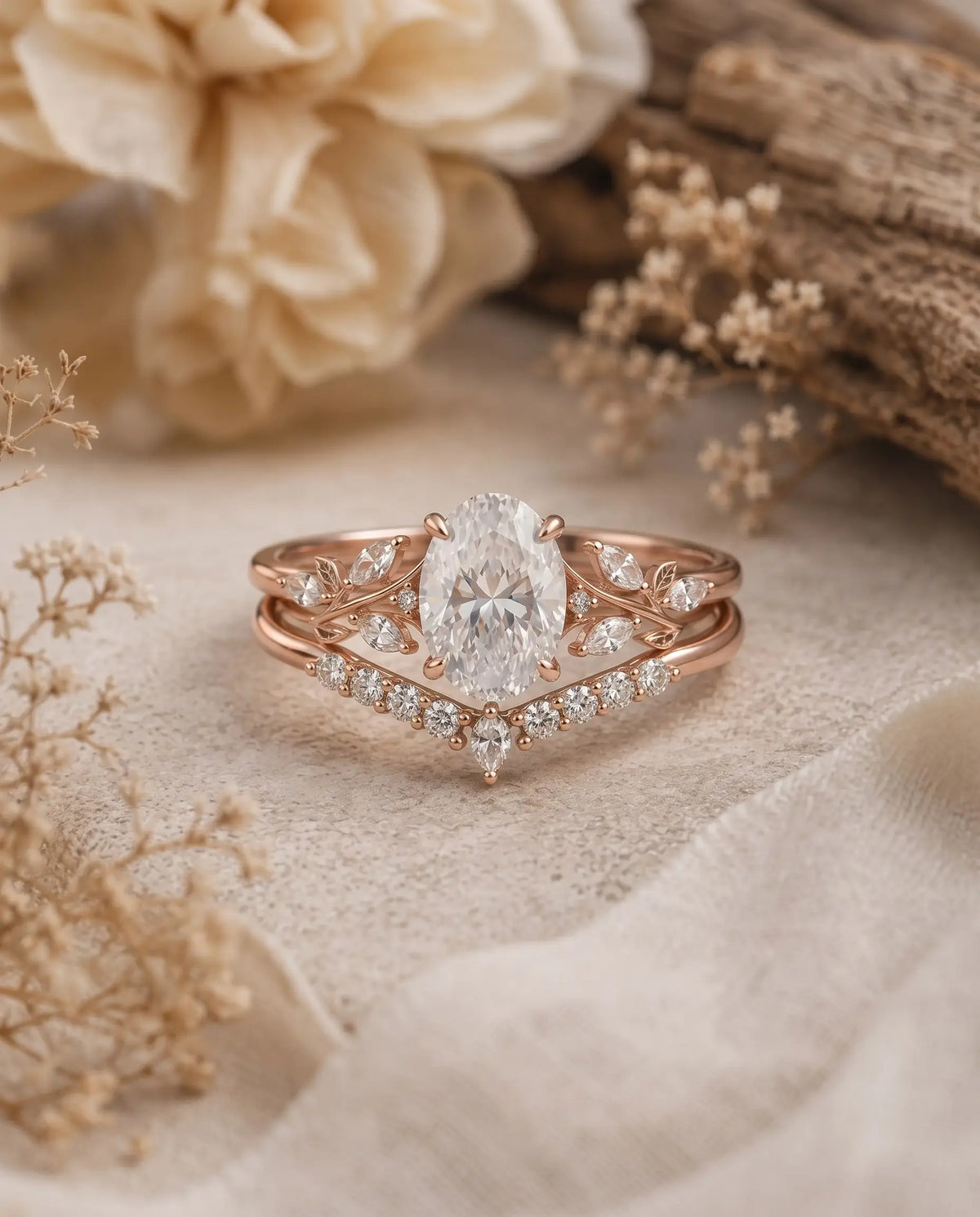
Abgestimmte Moissanit-Braut-Sets sind am wertvollsten, wenn der Verlobungsring-Kopf einen spitzen Umriss, einen niedrigen Kragen, einen breiten Halo oder ein vorstehendes Cluster hat. Ein konturierter Ring kann diesem Hindernis folgen. Ein V-Ring kann eine Birnen-, Marquise- oder Drachenspitze aufnehmen. Ein offener Ring kann lokalen Freiraum um einen breiten Kopf schaffen.
Die passende Dekoration ist zweitrangig gegenüber der passenden Geometrie. Vergleichen Sie den Verlobungsring und den Ehering von oben, von der Seite und von der Handflächenseite. Bestätigen Sie, dass der Ehering nicht auf die Krappen des Mittelsteins drückt, dass sich die Akzentsteine nicht gegenseitig reiben und dass der fertige Stapel über den Knöchel hinweg angenehm zu tragen ist. Der ausführliche Ratgeber zu bündig anliegenden und mit Abstand getragenen Eheringen erklärt, warum ein schmaler, bewusst eingeplanter Zwischenraum sicherer sein kann als erzwungener Kontakt.

Schritt 3: Die Designsprache wählen
Von der Natur inspirierte Moissanit-Ringe nutzen die Ringschiene und die Krappen als Teil des Motivs. Blätter können zu Krapenspitzen werden, eine geteilte Ringschiene kann wie zwei Zweige wirken und Marquise-Akzente können als Blattwerk erscheinen. Die tragbarsten Varianten integrieren diese Details in das tragende Metall. Dünne hervorstehende Zweige mögen in einer Rendering-Ansicht zart wirken, können jedoch an Strickware hängen bleiben oder nach wiederholtem Polieren an Kontur verlieren.
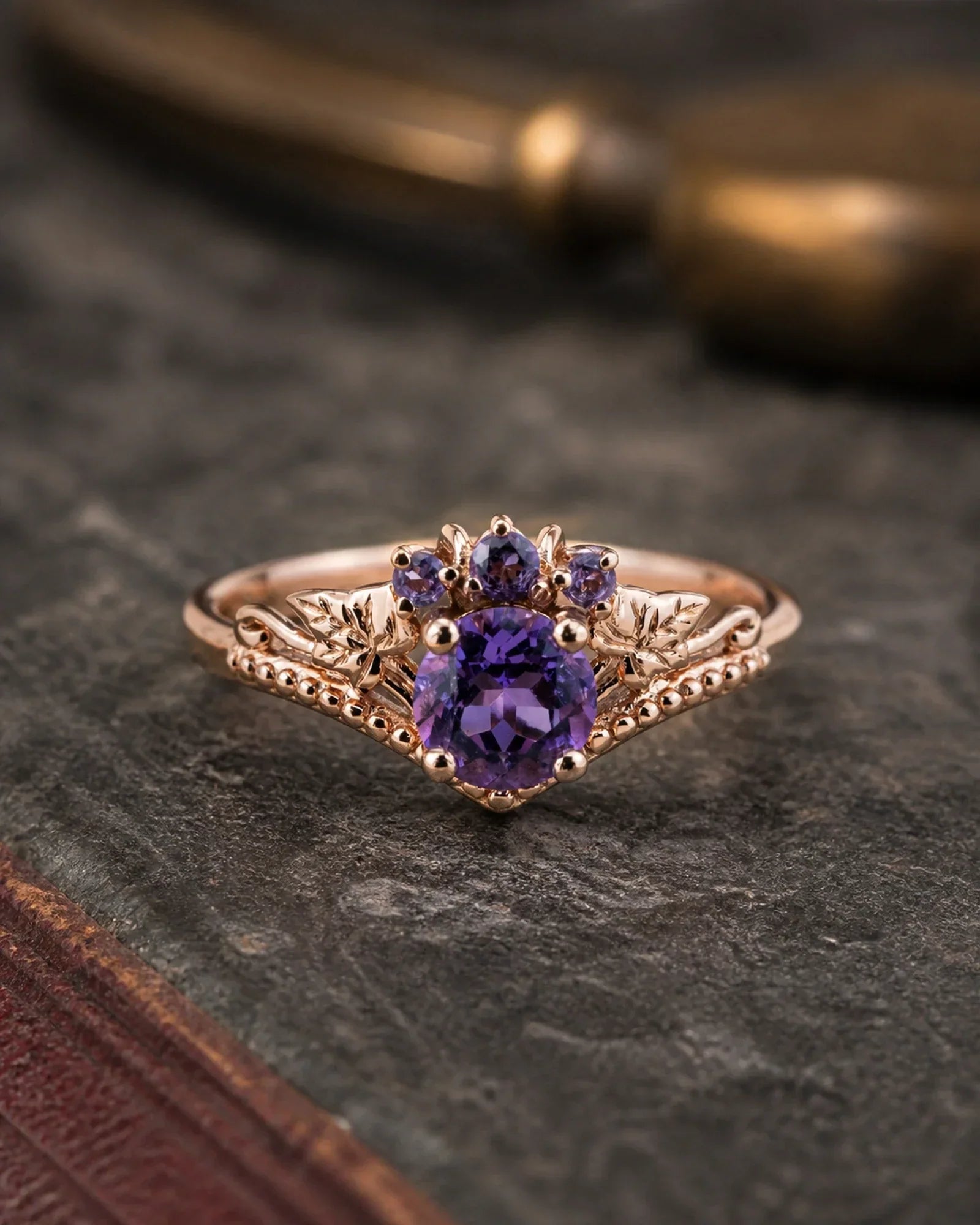
Vintage-Moissanit-Ringe folgen einer anderen Disziplin: formale Symmetrie, Milgrain, gravierte Schultern, Kronenprofile, Art-déco-Geometrie oder Referenzen an antike Schliffe. „Vintage“ sollte die sichtbare Konstruktion beschreiben, nicht nur einen warmen Filter in einem Foto. Feine Perlarbeiten erfordern regelmäßige Kontrolle, da sich Rückstände und Abnutzung auf strukturierten Oberflächen früher zeigen als auf einer glatten, polierten Ringschiene.

Schritt 4: Entscheiden, ob Oval zu Ihnen passt
Ovale Moissanit-Verlobungsringe bieten bei ähnlichem Gewicht mehr Nord-Süd-Abdeckung als ein runder Stein, doch „oval“ ist nicht ein einziger feststehender Look. Ein volleres Oval wirkt klassisch und stabil. Ein schlankeres Verhältnis streckt den Finger stärker, kann jedoch den Bow-Tie-Kontrast leichter erkennbar machen. Das sichtbare Ergebnis hängt vom Facettenmuster, der Beleuchtung, der Steintiefe und der Breite der Fassung ab.
Beurteilen Sie eine Ovalform bei diffusem Tageslicht, bei Innenraumlicht und bei direktem Licht. Drehen Sie den Stein langsam, statt sich auf ein einziges Foto von vorn zu verlassen. Ein dunkles Band, das über die Mitte wandert, kann ein normaler Kontrast sein; eine breite, dauerhaft tote Zone ist etwas anderes. Vergleichen Sie außerdem die Millimeterabmessungen, nicht nur die Angaben in Karat-Äquivalenten. Birnen-, Marquise- und Drachenformen können eine stärkere Richtung ergeben; runde Steine haben in der Regel eine gleichmäßigere Kontur.
Moissanit verändert die Design-Gleichung
Synthetischer Moissanit ist Siliciumcarbid, keine Diamantart. Seine hohe Dispersion erzeugt ein ausgeprägtes farbiges Feuer, und seine Doppelbrechung kann Facettenübergänge in manchen Winkeln doppelt erscheinen lassen. Außerdem hat er eine Mohshärte von etwa 9,25 und eine ausgezeichnete Zähigkeit, was ihn bei solider Fassung für häufiges Tragen geeignet macht. Diese Eigenschaften sind in GIAs Überblick über synthetischen Moissanit dokumentiert.
Diese optischen Eigenschaften wirken sich auf das Design aus. Ein großer Brillant im Zentrum, ein Pavé-Schank und ein dichter Halo mögen im Sonnenlicht berauschend wirken, in alltäglichen Räumen aber visuell unruhig erscheinen. Stufen- oder langgestreckte Schliffe können breitere Lichtblitze und sichtbareren Kontrast zeigen. Graue und schwarze Steine lenken die Aufmerksamkeit stärker auf Silhouette und Metallverarbeitung. Für einen ausführlicheren Vergleich lesen Sie den Leitfaden zu weißem, grauem, schwarzem und farbigem Moissanit.
Fünf echte Design-Wege

Birnen-Solitaire plus passender Band
Dieses Design trennt das klare Birnenzentrum des Verlobungsrings vom dekorativen V-förmigen Band. Es ist ein sinnvoller Weg für alle, die Solitaire-Klarheit wünschen, aber die spitz zulaufende Lücke zum Ehering nicht später lösen möchten. Prüfen Sie, dass das V sowohl an der Birnenspitze als auch an der unteren Krappe genügend Freiraum hat.
Den minimalistischen Birnen-Bridal-Stack ansehen
14K-Option ab 1.060 $ zum Zeitpunkt der Prüfung.

Oval, Halo und Vintage in einer Architektur
Die ovale Form bestimmt die Fingerabdeckung, der Kronen-Halo bestimmt die äußere Silhouette und die Marquise-Schultersteine verstärken die antike Sprache. Es zeigt, warum sich Stilfilter überschneiden. Die entscheidende Frage beim Kauf ist, ob die kleinen oberen Halosteine geschützt bleiben und ob der untere Rahmen Platz für den vorgesehenen Ring lässt.
Den Aurelia Kronen-Halo ansehen
14K-Option ab 960 $ zum Zeitpunkt der Überprüfung.

Dreistein-Breite ohne klassisches Rund-Trio
Der Marquise-Zentrumstein sorgt für Länge, während sich verjüngende Akzente einen sanften Übergang zu den Schultern bilden. Dies ist eine ruhigere Dreistein-Komposition als drei gleich große Rundsteine. Prüfen Sie die Marquise-Spitzen, die Seitenstein-Krallen und die engste Verbindungsstelle des geteilten Rings, statt die Haltbarkeit nur anhand der oberen Kontur zu beurteilen.
Die Radiance Dreistein-Konstruktion ansehen
14K-Option ab 780 $ zum Zeitpunkt der Überprüfung.

Ein Cluster, der seinen passenden Ring benötigt
Die graue Birne, dunkle Marquise-Akzente und der passende untere Cluster erzeugen ein bewusst asymmetrisches Lichtfeld. Ein generischer gerader Ring würde diese Komposition unterbrechen und könnte auf niedrige Akzent-Krallen treffen. Dieser Weg eignet sich für jemanden, der dramatischen Kontrast wünscht und eine aufwendigere Reinigung akzeptiert.
Das Stardust Cluster-Set prüfen
14K-Option ab 1.360 $ zum Zeitpunkt der Überprüfung.

Eine ovale Form getragen von Zweigstruktur
Hier bleibt das Oval optisch schlicht, während überkreuzende Schultern, Blattkrallen und kleine asymmetrische Akzente die natürliche Formensprache liefern. Die entscheidenden Prüfpunkte sind, wo die Verzweigungen auf den Körbchen treffen, ob die Blattspitzen flach genug anliegen, um nicht hängen zu bleiben, und ob ein späterer Ehering der unregelmäßigen unteren Kontur folgen kann.
Den ovalen Cross-Branch-Ring ansehen
14K-Option ab 820 $ zum Zeitpunkt des Tests.
Konstruktionsfragen, die wichtiger sind als Stilbezeichnungen
- Sind alle spitzen Steinenden durch eine Kralle, V-Kralle oder umgebendes Metall geschützt?
- Verbindet die Galerieschiene die Krallen, ohne den Zugang zur Reinigung zu blockieren?
- Wo liegt das schmalste Fertigmaß des Ringschafts?
- Ragen Halo- oder Cluster-Steine unter das mittlere Körbchen?
- Kann ein gerader Ehering die Brücke passieren, oder ist eine Kontur nötig?
- Bleiben Blattspitzen, Kronenspitzen oder Perlarbeiten an einem Strickbündchen hängen?
- Wirkt der Ring in der tatsächlichen Fingergröße optisch ausgewogen?
- Sind die Größen der Ersatz-Akzentsteine für den späteren Service dokumentiert?
Die Referenz zur Anatomie von Verlobungsringen liefert das nötige Vokabular, um diese Details auf Seitenfotos oder in einer individuellen Zeichnung zu prüfen. Käufer, die Blätter, Ranken und florale Metallarbeiten suchen, können zudem den gezielteren botanischen Moissanit-Designratgeber nutzen.
Wer sollte welche Richtung meiden?
Wählen Sie etwas anderes, wenn Sie der Pflegeaufwand bereits jetzt stört. Ein Halo oder Cluster ist eine schlechte Wahl für jemanden, der nicht bereit ist, unter kleine Steine zu bürsten und regelmäßige Inspektionen einzuplanen. Feine vorstehende Verzweigungen sind für häufiges Tragen von Handschuhen nicht ideal. Ein sehr langgezogenes Oval kann an einem kurzen Finger unproportioniert wirken, auch wenn es auf einem beschnittenen Foto elegant aussieht. Ein aufeinander abgestimmtes Set kann jemanden frustrieren, der viele verschiedene, nicht zusammengehörige Eheringe abwechselnd tragen möchte.
Umgekehrt kann ein Solitär für jemanden, der eine breite Fingerabdeckung wünscht, optisch zu ruhig wirken, und ein schlichter gerader Ehering kann einen verzierten Verlobungsring unvollendet erscheinen lassen. Es gibt keine grundsätzlich überlegene Kategorie. Das richtige Design ist das, dessen Kompromisse zum tatsächlichen Alltag der Trägerin oder des Trägers passen.
Häufig gestellte Fragen
Welcher Moissanit-Ringstil wirkt am größten?
Halos und breite Cluster erzeugen meist die größte sichtbare Gesamtkontur. Ein langgezogenes Oval, Birn- oder Marquis-Schliff kann größer wirken als ein Runder mit ähnlichem Gewicht, weil er mehr Fingerlänge bedeckt. Vergleichen Sie Millimeterangaben und die gesamte Fassungsbreite statt nur karatäquivalenter Bezeichnungen.
Ist ein Solitär oder ein Halo leichter zu pflegen?
Ein Solitär hat normalerweise weniger kleine Steine und enge Kanäle, daher sind die routinemäßige Reinigung und Inspektion einfacher. Der eigentliche Fassungskorb ist dennoch entscheidend. Eine kompakte Halo-Fassung mit zugänglichen Öffnungen kann leichter zu reinigen sein als ein aufwendiger Solitär mit geschlossener dekorativer Galerie.
Hat jeder ovale Moissanit einen Bow-Tie-Effekt?
Längliche facettierte Steine zeigen häufig einen gewissen zentralen Kontrast. Seine Breite und Beständigkeit variieren je nach Schliff, Verhältnis und Beleuchtung. Sehen Sie sich Videos und mehrere Lichtsituationen an; lehnen Sie normalen beweglichen Kontrast nicht ab, aber vermeiden Sie ein breites dunkles Band, das dominant bleibt.
Sind Moissanit-Ringe mit drei Steinen angenehm zu tragen?
Sie können es sein, sofern die Seitensteine nicht zu weit zwischen die Finger reichen und ihre Fassungskörbe glatt anliegen. Prüfen Sie die gesamte Kopfbreite, den Überstand der Seitenkrallen und den Übergang der Schultern in den Ringschaft.
Sollte ich ein Moissanit-Brautset zusammen kaufen?
Es ist besonders nützlich bei niedrigen Fassungskörben, spitz zulaufenden Formen, Halos, Clustern und verzierten Schultern. Ein aufeinander abgestimmtes Set nimmt viel Rätselraten ab, aber bestätigen Sie, dass Ihnen die gesamte Stapelbreite gefällt und dass die Ringe weiterhin separat gewartet werden können.
Kann ein Ring zu mehreren Stilkollektionen gehören?
Ja. Ein Ring kann oval in der Form, Halo in der Anordnung, Vintage im Detail und Teil eines Brautsets sein. Nutzen Sie jede Kategorie als Filter für eine Entscheidung, statt zu erwarten, dass ein Ring nur zu einem Label passt.
Beginnen Sie mit der Architektur, nicht mit Adjektiven: Wählen Sie die Steinanordnung, testen Sie die Beziehung zum Ehering, entscheiden Sie sich für die Designsprache und verfeinern Sie dann Form, Farbe und Größe. Diese Reihenfolge lässt Raum für Persönlichkeit und schützt gleichzeitig die Teile des Rings, die jeden Tag funktionieren müssen.