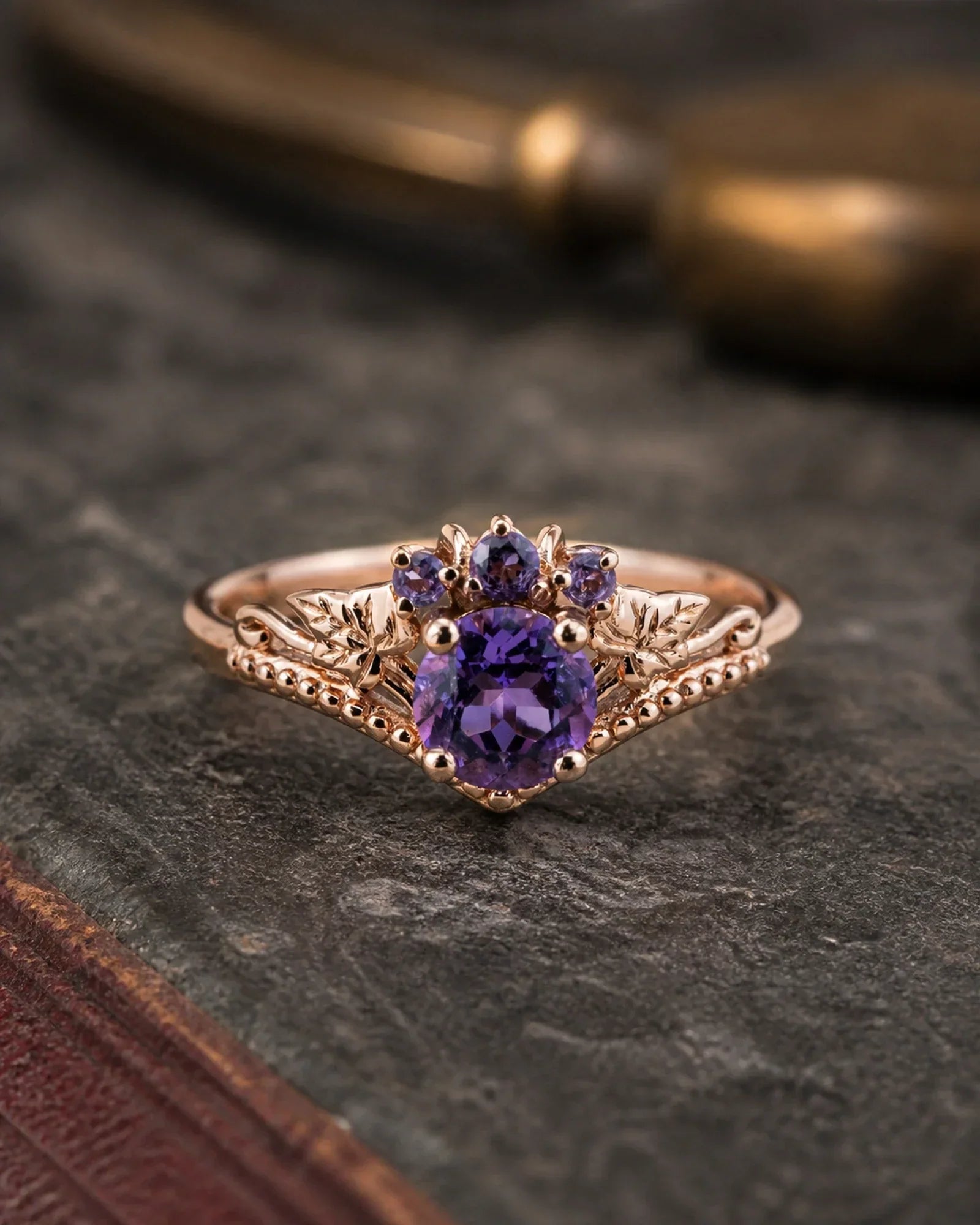

Die Wahl des Moosachats ist oft der einfache Teil. Schwierig wird es fünf Minuten später, wenn ein Ring gleichzeitig als Blatt-, botanischer, Birnen-, Cluster- und Brautring beschrieben wird. Diese Bezeichnungen sind nicht unbedingt konkurrierende Beschreibungen. Sie beschreiben verschiedene Ebenen desselben Objekts: die Form des Mittelsteins, die Metallverarbeitung, die Anordnung der Akzentsteine und ob ein passender Ehering enthalten ist.
Dieser Leitfaden hilft Ihnen dabei, diese Ebenen in der richtigen Reihenfolge zu lesen. Er vergleicht die nützlichsten Kategorien innerhalb von Moosachat-Verlobungsringen, erklärt, wo sich Stile überschneiden, und zeigt, welche Konstruktionsdetails Sie prüfen sollten, bevor Sie einen Ring freigeben.
Kurzratgeber: Welcher Moosachat-Ringstil passt zu Ihnen?
| Stilfamilie | Dafür wählen | Vor dem Kauf prüfen | Kann sich überschneiden mit |
|---|---|---|---|
| Moosachat-Blattinge | Erkennbare Blätter und ein romantisches Naturmotiv | Scharfe Spitzen, offene Zwischenräume und hängenbleibende Kanten | Botanisch, Birne, Dreistein |
| Botanische Moosachat-Designs | Ranken, Blüten, Zweige und üppigere Gartendetails | Ob die Verzierung den Stein unterstützt oder überlagert | Blatt, Cluster, Vintage |
| Vintage-inspirierte Moosachat-Ringe | Milgrain, antike Proportionen und ornamentale Metallarbeit | Reinigungszugang und die Ehrlichkeit der Epochenbeschreibungen | Halo, Cluster, Brautset |
| Birnenförmige Moosachat-Ringe | Eine längliche Kontur mit natürlicher, blattähnlicher Bewegung | Spitzenschutz, Symmetrie und Ausrichtung | Blatt, Halo, Brautset |
| Moosachat-Halo-Ringe | Ein hellerer Rand und eine klarere Kontur des Mittelsteins | Gleichmäßige Steinabstände und freiliegende Kanten | Vintage, floral, versteckter Halo |
| Cluster-Moosachat-Verlobungsringe | Asymmetrie, florale Streuung oder eine künstlerischere Silhouette | Krappen der äußeren Steine und Spalten, in denen sich Rückstände sammeln | Botanisch, Vintage, Brautset |
| Moosachat-Dreisteinringe | Ein klarer Mittelstein mit zwei bewusst gesetzten Seitensteinen | Höhe der Seitensteine und ausgewogene Proportionen | Blatt, Birne, versteckter Halo |
| Moosachat-Brautringsets | Ein Ehering, der auf den Verlobungsring abgestimmt ist | Tragekomfort, Kontaktpunkte und die Wirkung jedes Rings einzeln | Alle oben genannten visuellen Stile |
In vier Ebenen wählen, nicht in acht getrennten Kategorien
Eine sinnvolle Reihenfolge beim Kauf ist Stein, Form, Designsprache, Struktur. Beginnen Sie mit dem individuellen Moosachat, denn sein Muster erzeugt mehr Persönlichkeit als eine kleine Änderung im Detail der Ringschiene. Wählen Sie als Nächstes die Umrissform, etwa Birne, Oval, Kite oder langes Sechseck. Entscheiden Sie dann, ob sich die Metallarbeit blättrig, floral, waldig, minimalistisch oder vintage anfühlen soll. Zum Schluss legen Sie die Steinanordnung und die Beziehung zum Ehering fest.
Klar und luftig, neblig und weich oder dicht und waldartig?
Rund und vertraut, langgestreckt, spitz oder geometrisch?
Blatt, breiter botanisch, vintage oder zurückhaltend modern?
Halo, Cluster, Dreistein, einzelner Ring oder passendes Set?
Das Moosmuster kommt vor der Fassung
Moosachat wird nicht nach derselben visuellen Logik ausgewählt wie ein farbloser Diamant. Klarheit ist nicht automatisch das Ziel. Manche Käufer bevorzugen offene, durchscheinende Bereiche mit einem dunklen Zweig, der den Stein durchzieht; andere wünschen sich ein dichtes Muster, das an ein Blätterdach erinnert. Trübe Bereiche können Atmosphäre schaffen, doch ein undurchsichtiges Zentrum kann Facettenreflexe verdecken. Ein starkes Muster nahe einer Kante kann außerdem eine dünne Spitze optisch schwerer wirken lassen als die gegenüberliegende Seite.
Bitten Sie darum, den tatsächlichen Center-Stein zu sehen, wann immer das Angebot eine Steinauswahl erlaubt. Prüfen Sie ihn bei diffusem Tageslicht, bei direktem Licht und auf der Haut statt nur vor einem hellen Präsentationshintergrund. Ein blasser Stein kann auf Schwarz dramatisch wirken und an der Hand nahezu verschwinden. Bei Sonderanfertigungen sollten Sie den individuellen Stein freigeben, bevor die endgültige Fassung darum herum gefertigt wird.

Blatt und botanisch sind verwandt, aber nicht identisch
Ein Blattring verwendet eine erkennbare Blattform. Sie kann in die Ringschiene geschnitzt, in poliertem Metall nachgezeichnet, aus Marquise-Akzentsteinen aufgebaut oder als Fassung für den Center-Stein genutzt werden. Botanisch ist die weitere Kategorie: Sie umfasst Blüten, Knospen, Ranken, Zweige und blütenblattartige Cluster, auch wenn kein wörtliches Blatt erscheint. Praktisch gesagt: Jeder Blattring kann botanisch sein, aber nicht jeder botanische Ring ist ein Blattring.
Blattdetails funktionieren am besten, wenn sie den Blick zum Mittelstein lenken. Eine glatte, niedrige Blattschulter kann angenehm zu tragen und relativ pflegeleicht sein. Tief getrennte Blätter und sehr feine Rankenspitzen erzeugen mehr Schatten und Charakter, bilden aber auch mehr Kanten, an denen Strickware hängen bleiben kann. Der breitere Leitfaden für Blattmotiv-Designs erklärt den Unterschied zwischen Blattschultern, Rankenbändern und Zweigfassungen, ohne den Mittelstein auf Moosachat zu beschränken.
Botanische Ringe erlauben mehr visuelle Freiheit. Ein Birnenschliff kann zum Herzen einer Blume werden; ein Drachenstein kann zwischen asymmetrischen Knospen sitzen; ein Cluster kann sich wie ein kleiner Zweig ausbreiten. Die Kunst liegt darin, zu wissen, wann man aufhören sollte. Wenn der Achat bereits eine dichte Miniaturlandschaft enthält, bewahren zurückhaltende Akzente meist mehr von seinem Charakter als eine weitere vollständige Lage dekorativer Steine.
Vintage-Stil sollte die Konstruktion beschreiben, nicht nur die Stimmung
Ein neu gefertigter Ring ist vintage-inspiriert, nicht antik. Die Beschreibung wird nützlich, wenn sie auf tatsächliche Designmerkmale hinweist: Milgrain-Ränder, gravierte Schultern, Verschnittfassungen, geometrische Art-déco-Abstände, florale Cluster oder ein warmes Metallprofil, das an eine frühere Epoche erinnert. Eine gewöhnliche Halo-Fassung wird nicht allein dadurch vintage, dass auf dem Foto ein altes Buch zu sehen ist.
Moosachat reagiert gut auf Vintage-Details, weil der Stein im Glanz zurückhaltender ist als Diamant oder Moissanit. Feine Metalltexturen können diesem ruhigen Zentrum mehr Kontur verleihen. Das Risiko liegt in der Dichte. Milgrain, farbige Akzente, eine große Halo-Fassung und ein verzierter Ehering können um dieselbe kleine Fläche konkurrieren. Aus normalem Betrachtungsabstand auf der Hand überzeugt ein dominantes historisches Element meist mehr als fünf Miniatur-Referenzen.
Warum Birnen-Moosachat eigene Kaufregeln braucht
Birne ist sowohl eine Form als auch eine gerichtete Geste. Spitze nach oben streckt den Finger und wirkt traditionell; Spitze nach unten kann eher anhängerartig oder unkonventionell wirken. Das spitze Ende sollte durch einen gut sitzenden V-Prong, einen stabilen runden Prong oder eine passgenaue Zargenfassung geschützt werden. Eine dekorative Spitze nahe dem Punkt ist nicht automatisch struktureller Schutz.
Prüfen Sie, ob die Schultern gleichmäßig auf die Birne treffen und der Stein nicht zu einer Seite kippt. Beurteilen Sie auch die Kontur, ohne sich an ein einzelnes Verhältnis zu binden. Eine breite Birne lässt mehr Raum für sichtbare Einschlüsse und wirkt weicher. Eine lange Birne wirkt dramatisch, konzentriert aber mehr visuelle und physische Aufmerksamkeit an der Spitze. Wenn Sie mit den Händen arbeiten und Schmuck selten ablegen, ist eine freiliegende lange Birne keine besonders verzeihende Wahl für Moosachat.
Halo vs. Cluster vs. Dreistein
Diese Begriffe beschreiben, wie Akzentsteine zum Mittelstein in Beziehung stehen. Eine Halo-Fassung folgt dem größten Teil oder dem gesamten Umfang des Mittelsteins. Ein Cluster gruppiert Akzente zu einer breiteren oder unregelmäßigeren Komposition. Ein Dreistein-Ring gibt zwei Seitensteinen genug visuelles Gewicht, um als bewusstes Trio zu wirken. Kleine Pavé-Steine entlang des Bands machen aus einem Solitär keinen Dreistein-Ring.
| Struktur | Visuelle Wirkung | Praktischer Vorteil | Abwägung |
|---|---|---|---|
| Halo | Definierter Rand und gleichmäßige Helligkeit | Kann Teile der mittleren Kante abfedern | Viele kleine Steine und Krappen, die geprüft werden müssen |
| Cluster | Organische Verteilung, Asymmetrie oder florales Volumen | Kann die Aufmerksamkeit um eine ungewöhnliche Kontur lenken | Äußere Spitzen können hängen bleiben, und Zwischenräume müssen sorgfältig gereinigt werden |
| Drei Stein | Klarer Rhythmus links–Mitte–rechts | Seitensteine können die mittleren Schultern optisch stützen | Ungünstige Proportionen können die Mitte überladen wirken lassen |

Wann ein Braut-Set der bessere Ausgangspunkt ist
Ein Braut-Set ist nicht einfach zwei Ringe, die zusammen verkauft werden. Sein Wert ist geometrisch: Der Ehering ist bereits um die mittlere Fassung gebogen, geöffnet oder abgestuft. Das ist wichtig bei botanischen und Cluster-Designs, bei denen Blätter oder Akzentsteine oft über einen geraden Schaft hinausragen. Eine vorgepasste Kontur kann unschönen Kontakt reduzieren und den Stapel bewusst wirken lassen.
Dennoch sollten Sie beide Ringe separat prüfen. Manche stark skulpturierten Schienen ergeben nur Sinn, wenn sie in die vollständige Komposition eingebunden sind. Entscheiden Sie vor der Bestellung, ob das für Sie wichtig ist. Prüfen Sie, wo die Ringe sich berühren, ob kleine Steine gegen gegenüberliegende Krappen reiben und ob die kombinierte Breite an der Fingerbasis angenehm ist. Der Vergleich für einen komfortablen Braut-Stapel bietet einen tieferen Einblick in gerade, gebogene, offene und Distanzringe.

Fragen zur Handwerkskunst, die Sie vor der Bestellung stellen sollten
Ein natürlich wirkendes Design bedeutet nicht improvisierte Konstruktion. Botanische Ringe erfordern besonders disziplinierte Übergänge, weil Blätter, Seitensteine und Schultern oft auf kleinem Raum aufeinandertreffen. Ein poliertes Rendering kann eine dünne Stütze oder einen unzugänglichen Reinigungsspalt verbergen, daher sollten Sie die Ansichten anfordern, die die Struktur offenlegen.
- Wird genau der abgebildete Moosachat verwendet, den ich freigebe?
- Wie ist eine Birnen-, Drachen- oder Marquise-Spitze geschützt?
- Sind die Blattspitzen abgerundet und nah an der Ringschiene geführt?
- Kann eine weiche Bürste unter den Mittelstein gelangen?
- Stützt die Galerieschiene jeden Hauptkornhalter?
- Wie hoch ist das Seitenprofil über dem Finger?
- Passt ein gerader Ring, oder ist eine Konturform erforderlich?
- Wo berühren sich Verlobungsring und Ehering?
Moosachat gehört zur Quarzfamilie und ist anfälliger für Kratzer als Saphir, Diamant oder Moissanit. Härte ist nur ein Teil der Beständigkeit; auch Zähigkeit und Stabilität spielen eine Rolle, wie in der GIA-Übersicht zur Beständigkeit von Edelsteinen erläutert wird. Keine dekorative Fassung macht einen Stein unzerstörbar. Nehmen Sie den Ring bei starken Stößen, beim Training mit Geräten, bei der Gartenarbeit, bei Chemikalien und in Situationen ab, in denen er gegen eine harte Oberfläche gedrückt werden könnte. Für einen umfassenderen Materialvergleich nutzen Sie den Leitfaden zur Alltagstauglichkeit von Edelsteinen.
Sechs echte Designs, die zeigen, wie Kategorien sich überschneiden
Diese Beispiele sind hilfreich, weil jedes eine andere Designentscheidung veranschaulicht. Es geht nicht darum, den Ring mit der längsten Liste von Bezeichnungen zu finden. Es geht darum zu erkennen, welches Element führt und welche Elemente es unterstützen.
 Verdanelle Blatt-Dreistein mit BirnenschliffBlatt + Birnenschliff + drei Steine. Die Seitensteine sind in die botanischen Schultern integriert statt als separate Halo hinzugefügt.14K ab 920 $
 Flora Wing Botanischer ClusterBotanisch + Birnenschliff + Cluster. Marquise-Moosachat-Akzente wirken wie Blütenblätter und reichen über die klassische Dreistein-Silhouette hinaus.14K ab 860 $
 Everlune Vintage-HaloVintage-inspiriert + Halo. Milgrain, farbige Akzente und eine klar definierte Umrandung erzeugen den historischen Charakter.14K ab 890 $
 Langer Hexagon-DreisteinGeometrisch + drei Steine. Zwei dunkle Drachen-Akzente stützen den länglichen Mittelstein, ohne die Komposition in einen Cluster zu verwandeln.14K ab 790 $
 Celestial Grove Cluster-SetVintage-inspiriert + Cluster + Brautset. Der passgenau geformte Band vervollständigt die Geometrie und bleibt dennoch optisch vom Verlobungsring unterscheidbar.14K ab 1.460 $
 Lyara Birnen-BrautsetBirnenschliff + Brautset. Der geformte untere Band greift die spitz zulaufende Mitte auf, ohne auf Blatt- oder Vintage-Dekoration zurückzugreifen.14K ab 1.360 $
Für wen ist ein Moosachat nicht die richtige Wahl für einen Alltagsring?
Moosachat ist nicht die beste tägliche Mitte für jemanden, der einen Ring niemals abnehmen möchte, regelmäßig mit Werkzeugen oder Gewichten hantiert oder erwartet, dass die Oberfläche so widerstandsfähig ist wie Saphir oder Diamant. Eine Zargenfassung oder ein stützender Halo kann die Kantenexposition verringern, aber das Material selbst nicht verändern. In dieser Situation sollten Sie einen haltbaren, klaren oder grünen Mittelstein in Betracht ziehen und Moosachat für einen Jubiläumsring, ein gelegentlich getragenes Stück oder einen Anhänger aufbewahren.
Für eine sorgfältige Trägerin oder einen sorgfältigen Träger ist die Wahl weniger einschränkend. Wählen Sie eine moderate Steingröße, vermeiden Sie unnötig exponierte Spitzen, halten Sie die Fassung niedrig genug für Ihre Routine und akzeptieren Sie, dass Inspektion und sorgfältige Reinigung zum Besitz dazugehören. Der beste Stil ist nicht der mit dem dramatischsten Foto. Es ist der, dessen Stein, Proportionen und Struktur auch an einem gewöhnlichen Dienstag noch stimmig sind.
FAQ
Was ist der Unterschied zwischen einem Moosachat-Blattring und einem botanischen Ring?
Ein Blattring verwendet sichtbare Blattformen. Botanisch ist weiter gefasst und kann Ranken, Blüten, Zweige, Knospen oder blütenblattähnliche Cluster nutzen. Blattdesigns sind daher ein Teil der botanischen Kategorie.
Ist ein Halo dasselbe wie ein Cluster?
Nein. Ein Halo folgt dem Umriss des Mittelsteins. Ein Cluster gruppiert Akzentsteine zu einer breiteren, floralen oder asymmetrischen Komposition und kann Teile des Mittelsteinumrisses offen lassen.
Welcher Moosachat-Stil lässt sich am einfachsten täglich tragen?
Ein moderater runder oder ovaler Mittelstein in einer niedrigen, gut gestützten Fassung ist in der Regel einfacher als eine große exponierte Birne, Raute oder Marquise. Glatte Blattschultern können praktisch sein; stark getrennte Zweige und äußere Cluster-Spitzen erfordern mehr Sorgfalt.
Braucht ein Birnen-Moosachat eine spezielle Krappe?
Die Spitze benötigt einen bewussten Schutz, üblicherweise eine V-Krappe, eine substanzielle angepasste Krappe oder eine Zargenfassung. Bitten Sie darum, den Steinsitz und die Spitze von der Seite zu sehen, statt nur die Draufsicht zu beurteilen.
Sollte ich zuerst einen Verlobungsring kaufen und den Ehering später ergänzen?
Das können Sie, wenn die Mittelfassung es erlaubt, dass ein gerader Ring darunter durchgeführt wird. Botanische, Cluster- und niedrig profilierte Ringe benötigen oft einen gewölbten oder offenen Ring, daher reduziert die gemeinsame Planung des Paares die Unsicherheit.
Kann ein Ring zu mehreren Moosachat-Kollektionen gehören?
Ja. Ein einzelnes Design kann einen Birnen-Mittelstein, Blattschultern, eine Dreistein-Konstruktion und einen passenden Ehering haben. Diese Bezeichnungen beschreiben separate Aspekte des Rings und keine sich gegenseitig ausschließenden Kategorien.