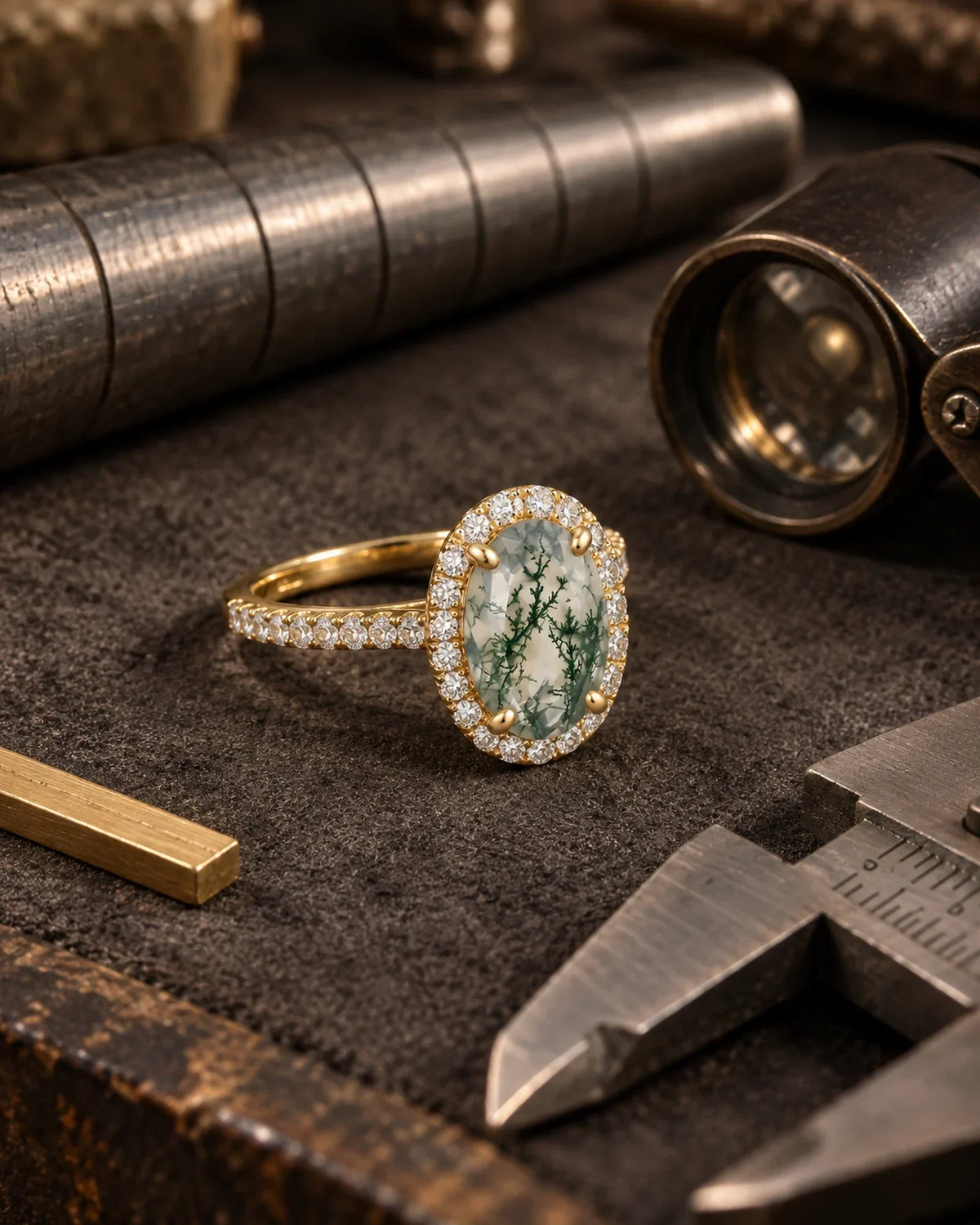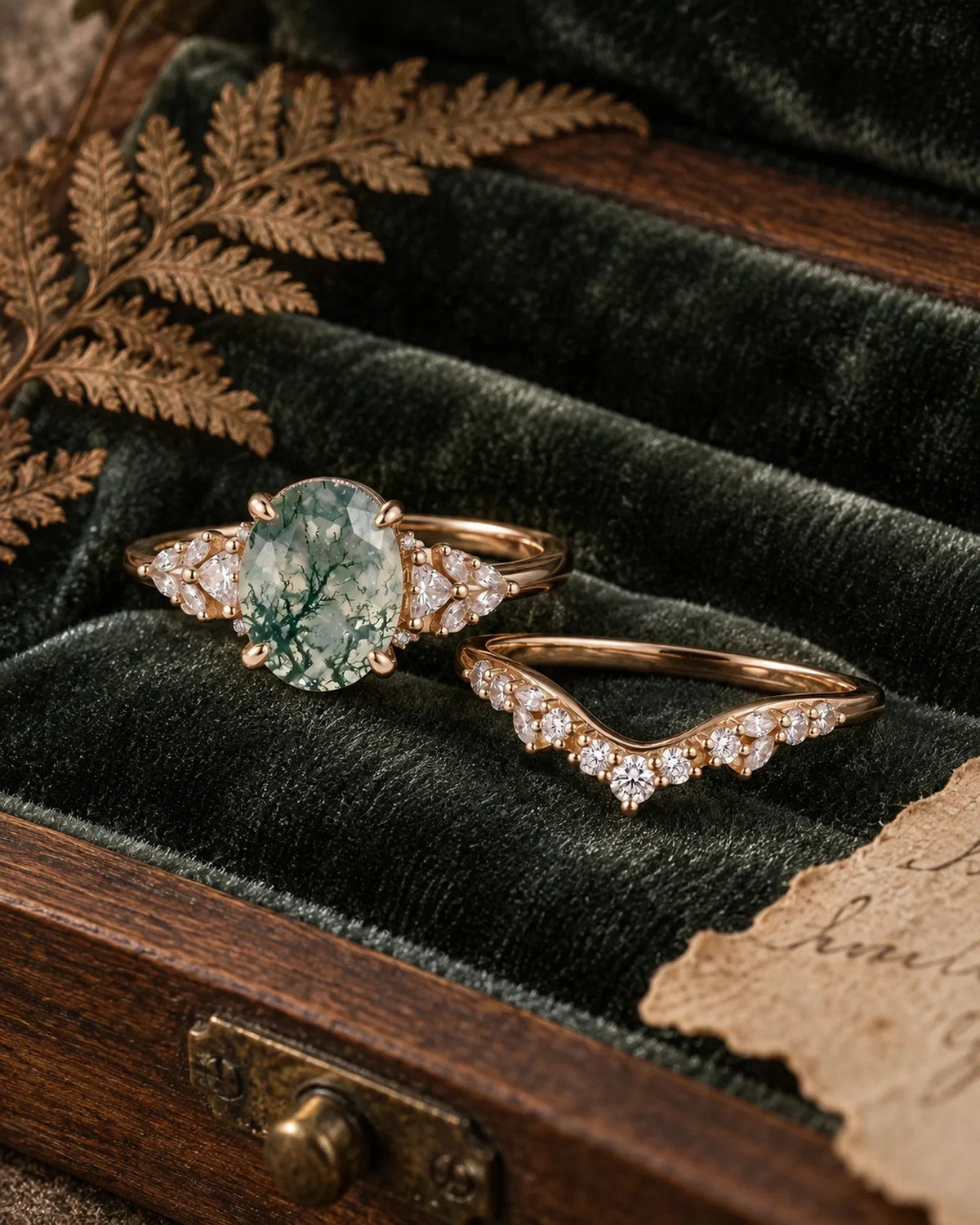

For most budget-conscious buyers, 14K white gold offers a bright white appearance, good everyday practicality and a lower initial price. Platinum 950 suits buyers who prefer a naturally white metal, a heavier feel, no routine rhodium renewal and a high-purity option for sensitive skin. Both can hold an engagement-ring gemstone securely when the setting is engineered and maintained correctly.
Quick decision table
| Decision factor | 14K white gold | Platinum 950 |
|---|---|---|
| Color | Usually rhodium plated for a bright, mirror-white finish; the alloy beneath may look warmer. | Naturally gray-white; usually slightly softer in tone than fresh rhodium. |
| Weight | Lighter on the finger for the same design. | Denser and noticeably heavier when dimensions are equal. |
| Surface aging | Fine scratches plus gradual plating wear at high-contact areas. | Fine scratches gradually create a soft platinum patina. |
| Routine finish care | May need rhodium replating when the underlying color becomes visible. | No plating required when the ring is uncoated; it can be polished if the wearer dislikes patina. |
| Skin sensitivity | Alloy-dependent; some formulas contain nickel. | Platinum 950 is commonly chosen for sensitive skin, but alloy details still matter. |
| Initial price | Usually lower. | Usually higher because of metal cost, density and fabrication requirements. |
| Best fit | Bright-white look, lighter feel, controlled budget, detailed designs. | Natural white color, substantial feel, high-purity preference, long-term white-metal wear. |
What are you actually buying?
White gold is not naturally bright white. It is gold alloyed with metals that reduce its yellow color; formulas may include nickel, palladium, silver, copper or zinc. A 14K mark means 14 of 24 parts are gold, or roughly 58.3% gold. Most modern white-gold engagement rings receive a thin rhodium surface finish that creates the cool, reflective color shoppers recognize.
Platinum jewelry is also an alloy rather than pure elemental metal. “Pt950” means 950 parts per thousand are platinum, with the balance commonly made from metals such as ruthenium, cobalt or iridium depending on the manufacturing system. The GIA white-metal reference explains why the purity mark matters: the word platinum alone does not describe every possible alloy.
Ask for three specifications, not just “white metal”: the karat or platinum fineness, the alloy family and whether the finished ring is rhodium plated. Those answers affect color, skin response, repair procedure and future maintenance.
Color and weight: similar in photographs, different on the hand
Freshly plated white gold is usually the brighter and more mirror-like of the two. Platinum has a natural white-gray color that can look slightly deeper beside rhodium. Neither is objectively better. Rhodium produces a crisp, icy frame around colorless diamond or moissanite; platinum gives white stones a quieter, less coated appearance.
Weight is easier to feel than to see. Platinum is denser, so two rings made to identical dimensions will not weigh the same. A broad platinum band or substantial bridal set can feel reassuringly solid, while the white-gold version feels lighter and may be more comfortable for someone who is sensitive to finger weight. Exact grams depend on ring size, shank width, setting architecture and how the design is manufactured, so percentage claims should never replace a finished-ring estimate.

Durability is not one property
“Which metal is more durable?” sounds simple but combines hardness, toughness, abrasion, bending and surface finish. White-gold hardness varies with its alloy and heat treatment. Platinum alloy behavior also varies. A thin 14K white-gold shank can outperform an underbuilt platinum shank, while a well-proportioned platinum setting can provide an excellent long-term structure.
How white gold wears
White gold develops normal fine scratches. At edges, the underside and areas that rub a wedding band, the rhodium layer can gradually thin. The warmer underlying alloy then becomes visible, often as a subtle color shift rather than a dramatic yellow patch. Replating restores the bright surface but does not repair a thin shank, loose prong or worn gallery joint; those are separate bench repairs.
How platinum wears
Platinum also scratches. With ordinary wear, many small marks displace metal at the surface and create a soft matte haze known as patina rather than removing a large amount of material. Some owners like that calm finish; others periodically polish it. Patina is cosmetic, but deep deformation, thinning or a changed prong angle still deserves inspection.

The GIA overview of ring materials for everyday wear similarly distinguishes white-gold replating from platinum's natural color and recommends periodic prong checks for daily-wear settings.
Prongs, bezels and delicate design work
Platinum is often favored for prongs because suitable jewelry alloys are tough and retain metal well through repeated surface wear. That does not make a platinum prong maintenance-free. A hard impact can still bend it, and polishing or previous repair can change its shape. White-gold prongs are also widely used and reliable when their thickness, alloy and stone seat are appropriate.
For a high center, inspect the prong tips and the points where the basket joins the shoulders. For a halo or cluster, inspect every small bead and shared prong. For a bezel, check that the rim remains continuous and that no gap opens near a gemstone corner. The engagement-ring anatomy reference helps buyers name these parts before asking for service.
Fine botanical details introduce another trade-off. White gold can create a crisp, bright outline around engraved leaves and milgrain. Platinum gives the same motif more weight and develops a softer surface character. In either metal, extremely thin leaf tips, open vines and narrow connection points need sufficient thickness; changing the metal cannot rescue fragile geometry.

Rhodium plating and realistic maintenance
There is no honest universal replating schedule. Wear speed depends on body chemistry, occupation, cleaning products, ring stacking, polishing habits and how much metal contacts hard surfaces. One wearer may notice a color change within a year; another may go several years before caring about it. Replate when the appearance bothers you, not because a calendar says the ring has failed.
Before replating, the jeweler should inspect and clean the ring and discuss how much polishing is appropriate. Repeated aggressive polishing can soften engraved detail and remove metal over time. Platinum normally needs no coating to stay white, though some manufacturers may plate it for a particular finish; confirm what was supplied before assuming future care.
- Have prongs checked whenever the stone moves, catches differently or makes noise.
- Remove either metal before chlorine exposure, heavy lifting and abrasive work.
- Clean gently with mild soap, lukewarm water and a soft brush when the gemstone permits.
- Do not use replating or polishing to disguise a shank that needs rebuilding.
- Inspect stacked rings for contact wear where edges and stones meet.
Nickel sensitivity and alloy questions
Some white-gold alloys contain nickel, while others use palladium-based systems. Rhodium can separate the skin from the underlying alloy while the coating is intact, but plating is not a substitute for knowing the composition when the wearer has a documented sensitivity. Ask whether the offered white gold is nickel-containing or nickel-free and request written material information.
Platinum 950 is commonly described as hypoallergenic and is often the simpler choice for sensitive wearers, but the remaining alloy content and any surface coating should still be disclosed. Skin reactions deserve medical advice rather than guesswork from jewelry color alone.
Which metal is best for a gemstone ring?
For colorless diamond and moissanite, both metals maintain a white visual frame. Bright rhodium emphasizes icy contrast; platinum gives a slightly softer neutral border. Browse white-metal solitaire settings to compare how much of the shank is visible around one center stone.
Blue sapphire, aquamarine and cool green stones often look crisp in either metal. Ruby and alexandrite gain stronger contrast against white metal. Salt-and-pepper diamonds can feel more graphic in bright white gold and more architectural in platinum, especially in protective bezel designs.
For emerald, moss agate, opal and moonstone, metal choice does not cancel gemstone vulnerability. Edge protection, seat accuracy, prong pressure and daily habits matter more. A platinum setting can still expose an opal edge; a carefully designed white-gold bezel can be more practical. Start with the stone's risk profile, then choose the metal.
Complex leaf and floral rings deserve a manufacturing review because metal flows through narrow shoulders, shared prongs and small decorative junctions. Compare nature-inspired engagement rings by side profile, not just top view. For a simpler maintenance path, a well-proportioned design from the broader engagement ring collection may be easier to inspect and refinish.
Six designs that reveal the trade-offs


Prices above reflect the listed material options in the September 2026 catalog snapshot and can change with specifications. Buyers interested in unusual colored stones and structural settings can also explore distinctive gemstone rings. For the separate question of gold purity, see the 10K, 14K and 18K gold comparison.
Choose by buyer scenario
Choose 14K white gold when: the initial budget matters, the wearer prefers a lighter ring, the design has substantial visual detail, and occasional rhodium renewal is acceptable. It is also practical when the buyer wants a crisp white surface but may upgrade or redesign later.
Choose platinum 950 when: natural white color matters, the wearer enjoys a substantial feel, nickel sensitivity is a concern, or the buyer prefers patina to visible plating transition. It is especially compelling for a long-term solitaire or a setting where strong prong and gallery construction justifies the additional metal cost.
Pause and compare samples when: the ring is very wide, the wearer dislikes heavy jewelry, the white-gold alloy is undisclosed, the platinum version changes the dimensions, or a delicate gemstone requires a custom setting. Try the actual width and estimated finished weight rather than choosing from metal names alone.
Frequently asked questions
Is platinum more durable than 14K white gold?
Platinum resists long-term metal loss well and is valued for tough prongs, while 14K white gold can offer good hardness and reliable everyday wear. Design dimensions, alloy and maintenance matter more than a one-word durability ranking.
Does platinum scratch more easily?
Both scratch. Platinum often develops a visible satin patina because fine marks move metal at the surface. White gold also scratches, but bright rhodium can make its aging appear first as a color or gloss change.
How often does white gold need rhodium plating?
There is no fixed interval. Replate when the warmer underlying alloy becomes visible enough to bother the wearer. Daily habits, ring stacking and body chemistry can make the interval vary widely.
Is platinum always safe for metal allergies?
Platinum 950 is commonly selected for sensitive skin, but buyers should still confirm the remaining alloy and any coating. White gold may be nickel-based or nickel-free, so its exact composition is essential.
Which is the best metal for a gemstone ring?
For valuable or daily-wear stones, either can work. The best metal for a gemstone ring is the one paired with the correct bezel, prong thickness, gallery support and maintenance plan. Fragile gemstones still need protective geometry regardless of metal.
The bottom line
The most useful comparison is not luxury versus compromise. White gold exchanges periodic surface maintenance for lower cost, lighter weight and a brilliant rhodium-white finish. Platinum costs more and feels heavier, but stays naturally white and develops patina instead of exposing a different-colored base alloy. Choose after comparing the actual alloy, finished weight, setting dimensions and service plan. That is a better predictor of satisfaction than either metal name by itself.