
Viele Verlobungsringe sehen auf Fotos bemerkenswert ähnlich aus. Sie mögen denselben Edelsteinschliff, dieselbe Metallart und sogar einen vergleichbaren Fassungsstil aufweisen. Doch sobald man sie persönlich sieht, werden die Unterschiede sofort offensichtlich. Manche Ringe wirken raffiniert, ausgewogen und zeitlos, während andere – trotz übereinstimmender Spezifikationen – weniger sorgfältig erscheinen. Der wahre Unterschied liegt nicht allein im Karatgewicht, sondern in der Verbindung von Design und handwerklicher Vollendung.
Die meisten Käufer gehen davon aus, dass der zentrale Stein die Qualität eines Rings bestimmt. In Wirklichkeit spielt die Handwerkskunst eine ebenso entscheidende Rolle. Die Art und Weise, wie ein Ring konstruiert ist, beeinflusst seine Präsenz, seinen Tragekomfort, seine Haltbarkeit und seine langfristige Tragbarkeit. Subtile Details, die online unbedeutend erscheinen, wirken sich dramatisch darauf aus, wie ein Ring über Jahre des täglichen Tragens altert.

Dies wirft eine spannende Frage auf: Warum zeigen handgefertigte Verlobungsringe durchweg mehr Charakter, Tiefe und Raffinesse als massenproduzierte Alternativen?
Die Antwort ist keine Marketingrhetorik. Sie ergibt sich aus der Art und Weise, wie Schmuck hergestellt wird, wie Oberflächen veredelt werden und wie erfahrene Kunsthandwerker nuancierte Probleme lösen, die Maschinen nicht vollständig nachbilden können.
Nicht alle Verlobungsringe werden auf die gleiche Weise hergestellt
Die moderne Schmuckherstellung verbindet oft digitales Design mit traditioneller Handwerkskunst. CAD-Software (Computer-Aided Design) ermöglicht es Juwelieren, hochpräzise Modelle zu erstellen, bevor die Produktion beginnt – was die Konsistenz verbessert und komplexe Geometrien ermöglicht. Ein digitales Modell ist jedoch nur der Ausgangspunkt. Viele massenproduzierte Ringe gehen schnell von CAD zu Guss und Montage über, wobei die Effizienz bei großen Stückzahlen im Vordergrund steht. Während dies für einfachen Schmuck und niedrigere Preisklassen funktioniert, beinhalten handgefertigte Ringe bewusste menschliche Eingriffe nach dem Guss. Erfahrene Juweliere verfeinern Oberflächen, passen Steinfassungen an, prüfen die Symmetrie, verbessern die Proportionen und vollenden jedes Detail von Hand. Diese zusätzlichen Schritte erfordern Zeit, führen jedoch zu einem deutlich überlegenen Ergebnis.

Bei Orleone wird jedes Design mit fortschrittlicher CAD-Technologie entwickelt und dann durch Handfassung und sorgfältige manuelle Handwerkskunst vollendet. Dieser Ansatz verbindet Präzision mit dem seelenvollen Charakter, den nur erfahrene Schmuckarbeit bieten kann.
Was bedeutet „handgefertigt“ eigentlich?
Der Begriff „handgefertigt“ wird oft falsch interpretiert. Er bedeutet nicht unbedingt, dass ein Ring vollständig aus Rohmetall von Hand geformt wurde. Im Edelschmuck bezieht sich handgefertigt auf die maßgebliche Beteiligung erfahrener Kunsthandwerker in kritischen Phasen – Phasen, in denen Urteilsvermögen, Erfahrung und ein geschultes Auge unersetzlich sind:
- Steinfassung (jeder Edelstein wird individuell gesichert und ausgerichtet)
- Krappenanpassung für optimalen Halt und Ästhetik
- Oberflächenveredelung: Mattierung, Hochglanzpolitur oder kombinierte Texturen
- Handaufgetragene Millegriffes, Filigran und naturinspirierte Gravuren
- Qualitätsprüfung von Symmetrie und struktureller Integrität
- Endpolitur, die Brillanz und Tragekomfort erhöht
Warum kleine Details wichtiger sind, als die meisten Käufer denken
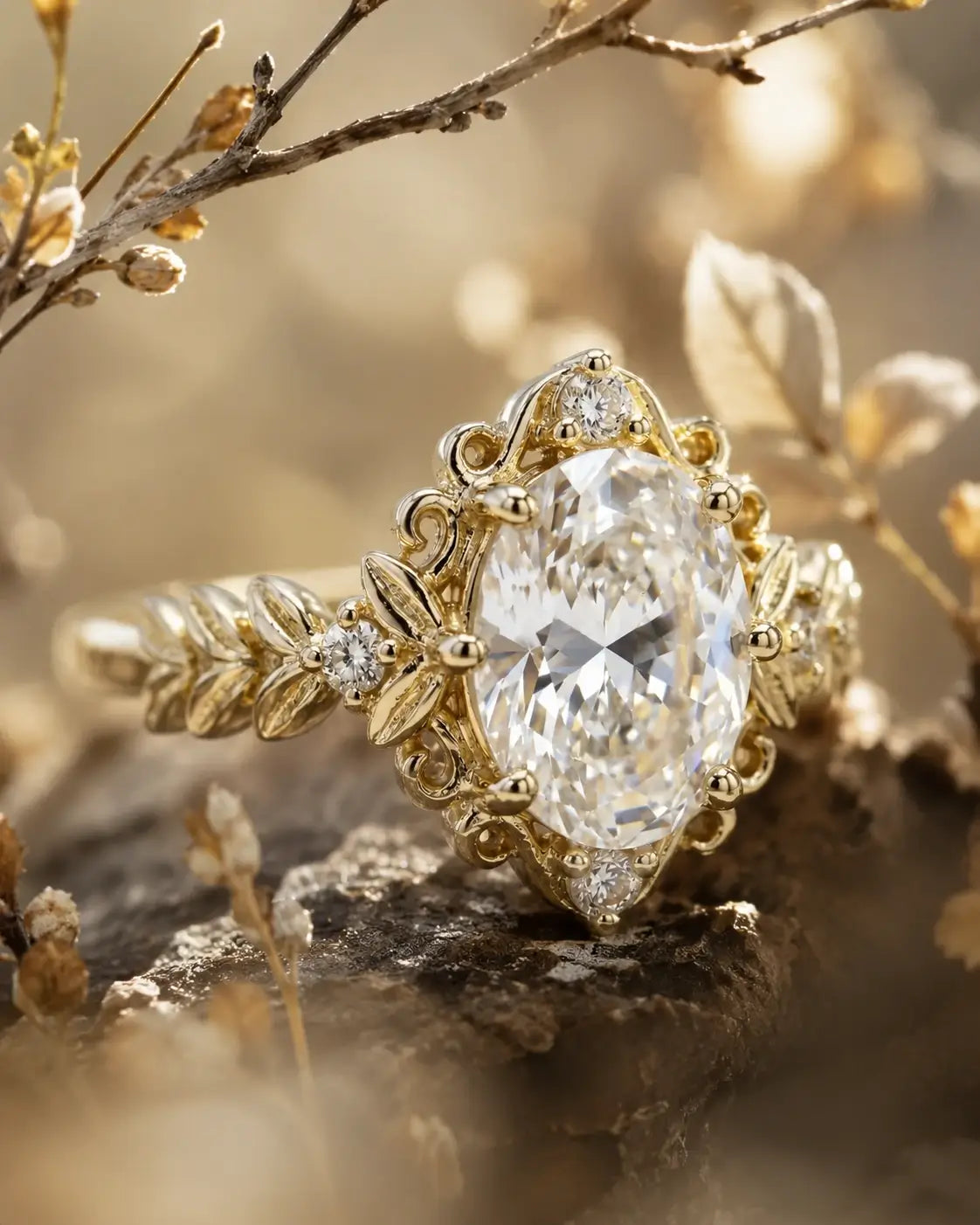
Viele Unterschiede in der Handwerkskunst sind aus der Ferne schwer zu erkennen. Sie werden erst bei genauer Betrachtung oder nach längerem Tragen sichtbar. Betrachten Sie einen vintage-inspirierten Verlobungsring: Der Millegriffes-Rand mag ornamental wirken, aber die Präzision jeder winzigen Perle bestimmt die gesamte Eleganz. Handveredelte Millegriffes erscheinen oft schärfer und raffinierter als maschinell erzeugte Versionen. Das gleiche Prinzip gilt für Filigran, Gravuren, Blattmotive und florale Details. Wenn diese Elemente sorgfältig von Hand verfeinert werden, erzeugen sie Tiefe, Lichtspiel und Charakter, die Fotos nicht vollständig einfangen können.
Die Technik hinter besserer Steinsicherheit
Schönheit ist wesentlich, aber Haltbarkeit ist für einen Ring, der täglich getragen werden soll, ebenso entscheidend. Eine der häufigsten Sorgen von Verlobungsringbesitzern ist der Verlust von Steinen. Entgegen der landläufigen Meinung fallen Edelsteine selten wegen des Steins selbst heraus – die Ursache ist typischerweise Verschleiß an der Fassung. Krappen erfahren im Alltag allmählich Reibung, Stöße und Druck. Handfassung ermöglicht es Juwelieren, genau zu beurteilen, wie ein Edelstein in seiner Fassung sitzt, und Mikroanpassungen vorzunehmen, die die Stabilität verbessern und den Druck gleichmäßig um den Stein verteilen. Keine Fassung ist immun gegen Verschleiß, aber sorgfältige Verarbeitung und gründliche Inspektion reduzieren potenzielle Probleme, bevor der Ring jemals den Kunden erreicht.
Charakter entsteht durch kunsthandwerkliche Fertigung
Luxus wird oft mit Seltenheit verbunden, aber Charakter ist mit Individualität verbunden. Wenn Käufer einen Ring als „persönlichkeitsstark“ beschreiben, reagieren sie typischerweise auf Details der Handwerkskunst und nicht auf die Größe des Edelsteins. Vintage-inspirierte Ringe zum Beispiel weisen handveredelte Blattmuster, organische Texturen, florale Motive und gravierte Elemente auf – visuelle Tiefe, die durch automatisierte Produktion nicht erreichbar ist. Dies ist besonders bei naturinspirierten Verlobungsringen spürbar, bei denen winzige Details enorm zur Gesamtästhetik beitragen. Ein handgefertigter Ring fühlt sich oft weniger wie ein hergestelltes Objekt an, sondern mehr wie ein tragbares Kunstwerk.
Halten handgefertigte Ringe länger?
Es gibt keine allgemeingültige Antwort; die Langlebigkeit hängt von Metallart, Edelsteinhärte, Fassungsstil, täglichen Tragegewohnheiten und Wartungshäufigkeit ab. Hochwertige Handwerkskunst trägt jedoch direkt zur langfristigen Haltbarkeit bei, indem sie Steinsicherheit, strukturelle Balance und Verarbeitungsqualität optimiert. Bei Orleone behalten die meisten Damen-Verlobungsring-Designs Schaftbreiten von etwa 1,7 mm oder mehr, je nach Design, mit einem Mindestdickenstandard ab etwa 1,3 mm. Diese Abmessungen balancieren Tragekomfort, visuelle Eleganz und strukturelle Integrität. Selbst der feinste Ring profitiert von regelmäßigen professionellen Inspektionen – eine der effektivsten Methoden, um die Lebensdauer von Edelschmuck zu verlängern.
Welche Edelsteine profitieren am meisten von erfahrener Handwerkskunst?
Moissanit
Moissanit ist einer der haltbarsten Edelsteine für Verlobungsringe, die heute erhältlich sind. Seine Härte und Brillanz machen ihn ideal für den täglichen Gebrauch, und präzise Handfassung maximiert die Lichtleistung und gewährleistet gleichzeitig langfristige Sicherheit.
Moosachat
Moosachat wird für seine natürlichen Einschlüsse und einzigartigen Muster geschätzt. Da er weicher als Moissanit oder Diamant ist, werden schützende Fassungen und sorgfältige Handwerkskunst zunehmend wichtiger, um seine organische Schönheit zu bewahren.
Smaragd
Smaragde enthalten oft natürliche innere Merkmale. Durchdachtes Fassungsdesign hilft, empfindliche Bereiche zu schützen und gleichzeitig die satte grüne Farbe des Steins zur Geltung zu bringen.
Alexandrit
Alexandrit wird für seine dramatischen Farbwechseleigenschaften geschätzt. Präzise Steinpositionierung ermöglicht es Trägern, diese optischen Effekte unter verschiedenen Lichtverhältnissen zu schätzen – eine subtile Kunst, die durch erfahrene Handfassung perfektioniert wird.
Handgefertigt vs. Massenproduktion: Ein praktischer Vergleich
| Faktor | Handgefertigter Ring | Massenproduzierter Ring |
|---|---|---|
| Detailqualität | Überlegene Verfeinerung, handveredelte Oberflächen | Einheitlich, aber ohne Tiefe |
| Steinfassung | Individuell für jeden Edelstein angepasst | Standardisiert, weniger präzise Passform |
| Charakter | Unverwechselbar, subtile Variationen spiegeln die Hand des Kunsthandwerkers wider | Konsistent, aber anonym |
| Produktionsgeschwindigkeit | Länger, mit Geduld gefertigt | Schneller, hohe Stückzahleffizienz |
| Designkomplexität | Größere Flexibilität für komplizierte Details | Durch Fertigungsgrenzen eingeschränkt |
Wie man Handwerkskunst vor dem Kauf bewertet
Wenn Sie Verlobungsringe vergleichen, achten Sie auf mehr als nur Spezifikationen. Prüfen Sie:
- Krappensymmetrie und -ausrichtung
- Steinzentrierung und gleichmäßige Abstände
- Konsistenz der Oberflächenveredelung
- Gravurpräzision und Flüssigkeit
- Millegriffes-Konsistenz (falls vorhanden)
- Galeriestruktur und versteckte Details
- Allgemeiner Tragekomfort
Diese Faktoren verraten oft weit mehr über die langfristige Zufriedenheit als die Edelsteinabmessungen allein.
Außergewöhnliche Beispiele für handgefertigte Verlobungsringe
Die folgenden Designs zeigen, wie handgefertigte Details – Blattmotive, Vintage-Gravuren, florale Architektur, organische Texturen und sorgfältig veredelte Fassungen – Charakter schaffen, der über den zentralen Stein hinausgeht.

Ovaler Moosachat · Vintage Halo
$930

Birnenförmiger Moissanit · 14K Gold Blatt
$1.060

Vintage Floral Moissanit Set
$1.390

Sechseckiger Smaragd · Moderner Cluster
$980

Ovaler Smaragd · Edwardianisches Blattfiligran
$990

Alexandrit Dreistein · Blattmotiv
$990
Häufig gestellte Fragen
Sind handgefertigte Verlobungsringe stärker als massenproduzierte Ringe?
Nicht automatisch. Die Stärke hängt von der Metalldicke, dem Fassungsdesign, der Edelsteinart und der Qualität der Handwerkskunst ab. Handveredelung verbessert die Präzision und Steinsicherheit, aber Materialien und Wartung bleiben wesentlich.
Warum kosten handgefertigte Ringe oft mehr?
Sie erfordern mehr Arbeit, mehr Inspektion und mehr Zeit von erfahrenen Juwelieren. Komplexe Details wie Gravuren, Millegriffes, Filigran und individuelle Steinfassung erhöhen die Produktionszeit erheblich.
Können handgefertigte Ringe Steine verlieren?
Ja. Jeder Ring kann irgendwann Wartung benötigen. Regelmäßige professionelle Inspektionen helfen, abgenutzte Krappen oder lose Steine zu erkennen, bevor sie zu ernsthaften Problemen werden.
Welcher Edelstein eignet sich am besten für den Alltag?
Diamanten, Moissanit, Saphire und Rubine gelten aufgrund ihrer Haltbarkeit und Kratzfestigkeit allgemein als die beste Wahl für den täglichen Gebrauch.
Sind Moosachat- und Smaragd-Verlobungsringe für den Alltag geeignet?
Sie können täglich getragen werden, profitieren aber von mehr Pflege als härtere Edelsteine. Schützende Fassungen und achtsame Tragegewohnheiten verlängern ihre Lebensdauer.
Worauf sollte ich bei der Bewertung der Ringhandwerkskunst achten?
Achten Sie auf Steinausrichtung, Krappenkonsistenz, Symmetrie, Verarbeitungsqualität, Gravurdetails und allgemeinen Tragekomfort.
Bedeutet handgefertigt vollständig handgemacht?
Nicht unbedingt. Viele moderne handgefertigte Ringe kombinieren CAD-Design, Gusstechnologie und traditionelle Handveredelungstechniken.
Abschließende Gedanken
Die meisten Käufer von Verlobungsringen konzentrieren sich zuerst auf Karatgröße, Edelsteinart oder Metallfarbe. Diese Faktoren sind wichtig, doch sie sind nur ein Teil der Geschichte. Die Details, die dauerhafte Schönheit schaffen, kommen oft von der Handwerkskunst – Steinausrichtung, Gravurqualität, Fassungspräzision, Verarbeitungsarbeit und Gesamtbalance beeinflussen, wie ein Ring über Jahre hinweg aussieht und sich verhält.
Handgefertigte Verlobungsringe heben sich ab, weil sie erfahrenen Juwelieren erlauben, die Details zu verfeinern, die Maschinen oft übersehen. Das Ergebnis ist nicht unbedingt ein größerer Edelstein oder ein teurerer Ring, sondern vielmehr ein Ring mit mehr Charakter, stärkerer visueller Tiefe und einer persönlicheren Verbindung zu der Person, die ihn trägt. Für Käufer, die ähnliche Designs vergleichen, ist Handwerkskunst oft der Unterschied zwischen einem Ring, der online einfach schön aussieht, und einem, der sich jedes Mal außergewöhnlich anfühlt, wenn er getragen wird.