
Une bague de relation ne suit pas un script imposé. Certains couples commencent par une bague de promesse, passent à une bague de fiançailles, échangent des alliances, puis ajoutent une bague d’anniversaire ou une bague éternité. D’autres sautent des étapes, combinent les significations ou construisent un stacking de bagues lentement au fil des ans. La question utile n’est pas « quelles bagues chaque femme devrait-elle recevoir ? » mais « quelle bague correspond à ce moment, à cette relation et à la vie quotidienne de cette personne ? »
Ce changement de perspective compte. L’ancienne idée des quatre bagues est mémorable, mais elle peut faire ressentir les bijoux comme une liste de cases à cocher. Dans les conversations d’achat réelles, les gens posent des questions plus pratiques : Une bague de promesse est-elle trop sérieuse ? Une bague de fiançailles est-elle différente d’une alliance ? L’alliance doit-elle s’ajuster parfaitement contre la bague de fiançailles ? Une bague éternité complète est-elle confortable ? Une bague d’anniversaire peut-elle être portée au même doigt ? Ce guide répond à ces questions de manière plus complète.
En résumé : une bague de promesse exprime un engagement avant la demande ; une bague de fiançailles marque une intention claire de mariage ; un anneau de mariage symbolise la cérémonie et l’union quotidienne ; une bague d’anniversaire célèbre une étape importante ; et une bague éternité est généralement un jonc orné de pierres précieuses symbolisant un amour durable. Le meilleur choix dépend du moment, du symbolisme, du confort, du budget et de la façon dont la bague sera portée avec d’autres bijoux.

Le parcours moderne des bagues de relation
La séquence la plus courante est : bague de promesse, bague de fiançailles, anneau de mariage, bague d’anniversaire et bague éternité. Mais cette séquence n’est pas une règle absolue. Un couple peut ne jamais utiliser de bague de promesse. Un autre couple peut acheter des anneaux de mariage assortis avant de choisir une bague de fiançailles formelle. Une personne mariée peut préférer une bague d’anniversaire plutôt qu’une bague éternité classique, car elle est plus confortable, plus facile à redimensionner ou plus personnelle.
D’un point de vue design joaillier, la plus grande erreur est de choisir chaque bague isolément. Une bague qui semble magnifique seule peut ne pas bien s’empiler avec la pièce suivante. Un chaton haut, une large halo, un serti ras, un jonc courbé ou un sertissage éternité complet peuvent tous affecter la façon dont l’ensemble repose sur le doigt. Lorsque les bagues sont destinées à être portées ensemble, il est important de considérer la future pile dès le début.
Bague de promesse : un engagement avant une demande formelle
Une bague de promesse est généralement offerte avant les fiançailles. Elle peut signifier la loyauté, une intention à long terme, une relation sérieuse ou un avenir partagé qui n’est pas encore prêt pour le mariage. Elle est courante dans les relations jeunes, les relations à distance, les couples qui économisent pour une future demande et ceux qui souhaitent un marqueur significatif sans annoncer des fiançailles.
Le point important est la clarté. Une bague de promesse ne doit pas ressembler accidentellement à une demande, sauf si c’est l’intention. De nombreuses déceptions surviennent parce que celui qui offre pense « cadeau significatif », tandis que celui qui reçoit pense « fiançailles ». C’est pourquoi une bague de promesse fonctionne souvent mieux lorsqu’elle est plus petite, plus symbolique ou plus personnelle qu’une bague de fiançailles traditionnelle avec pierre centrale.
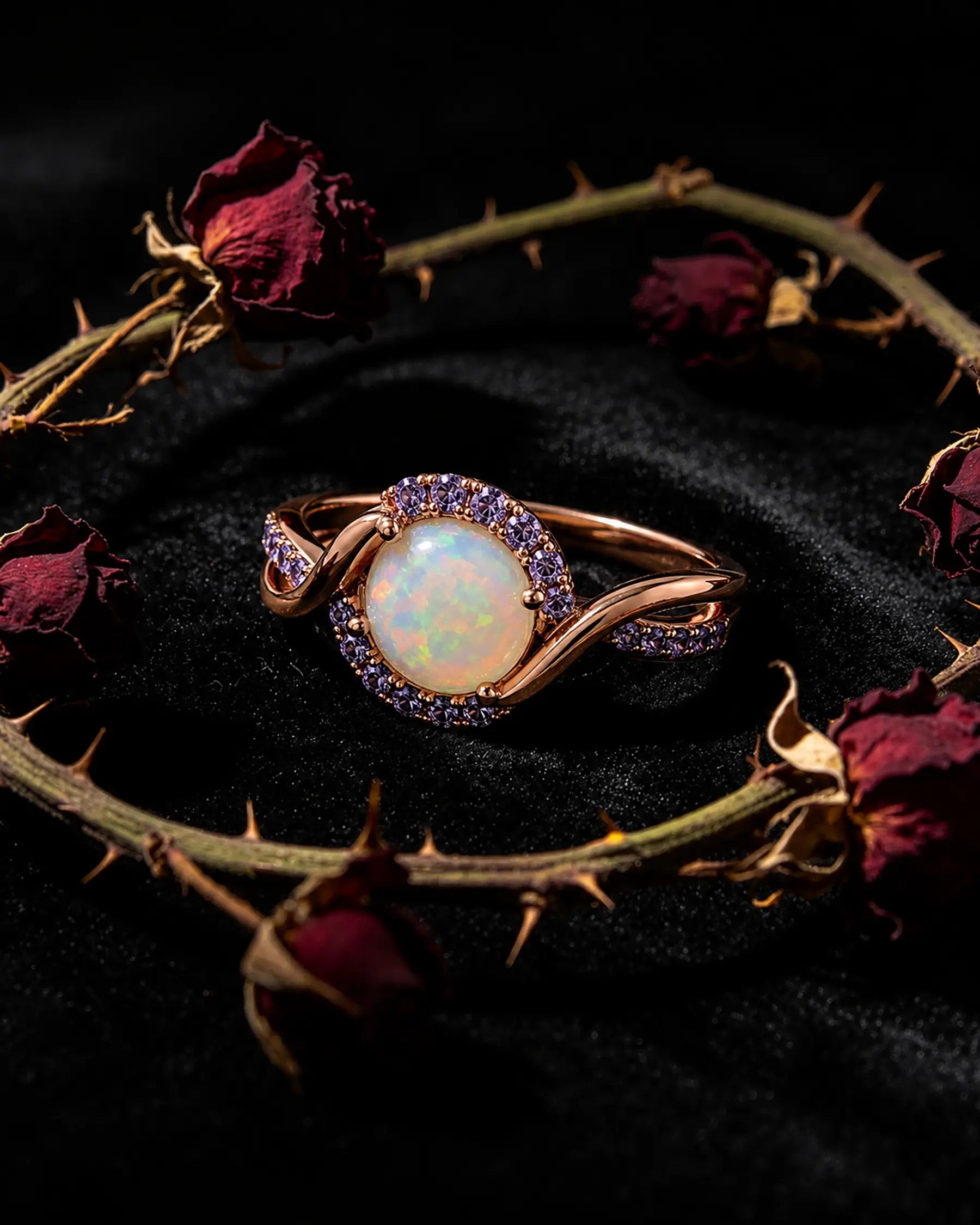
Les choix populaires pour une bague de promesse incluent les bagues fines ornées de pierres précieuses, les bagues de pierre de naissance, les petites bagues en moissanite, les bagues gravées, les motifs en cœur, les détails infinis et les délicats designs à deux pierres. Une bague de promesse peut se porter à n’importe quelle main. Si le couple souhaite éviter toute confusion avec une bague de fiançailles, la main droite est souvent le choix le plus sûr. Après les fiançailles, elle peut être déplacée sur un autre doigt, intégrée à une pile de bagues, ou conservée comme une pièce sentimentale distincte.
Bague de fiançailles : une intention claire de se marier
Une bague de fiançailles est différente car elle marque une demande en mariage ou une décision mutuelle de se marier. Elle est plus publique, plus spécifique et généralement plus travaillée au niveau du design qu’une bague de promesse. Pour la plupart des acheteurs, c’est la bague qui reçoit le plus d’attention : pierre centrale, taille, monture, métal, profil latéral, durabilité, et sa compatibilité avec un futur anneau de mariage.
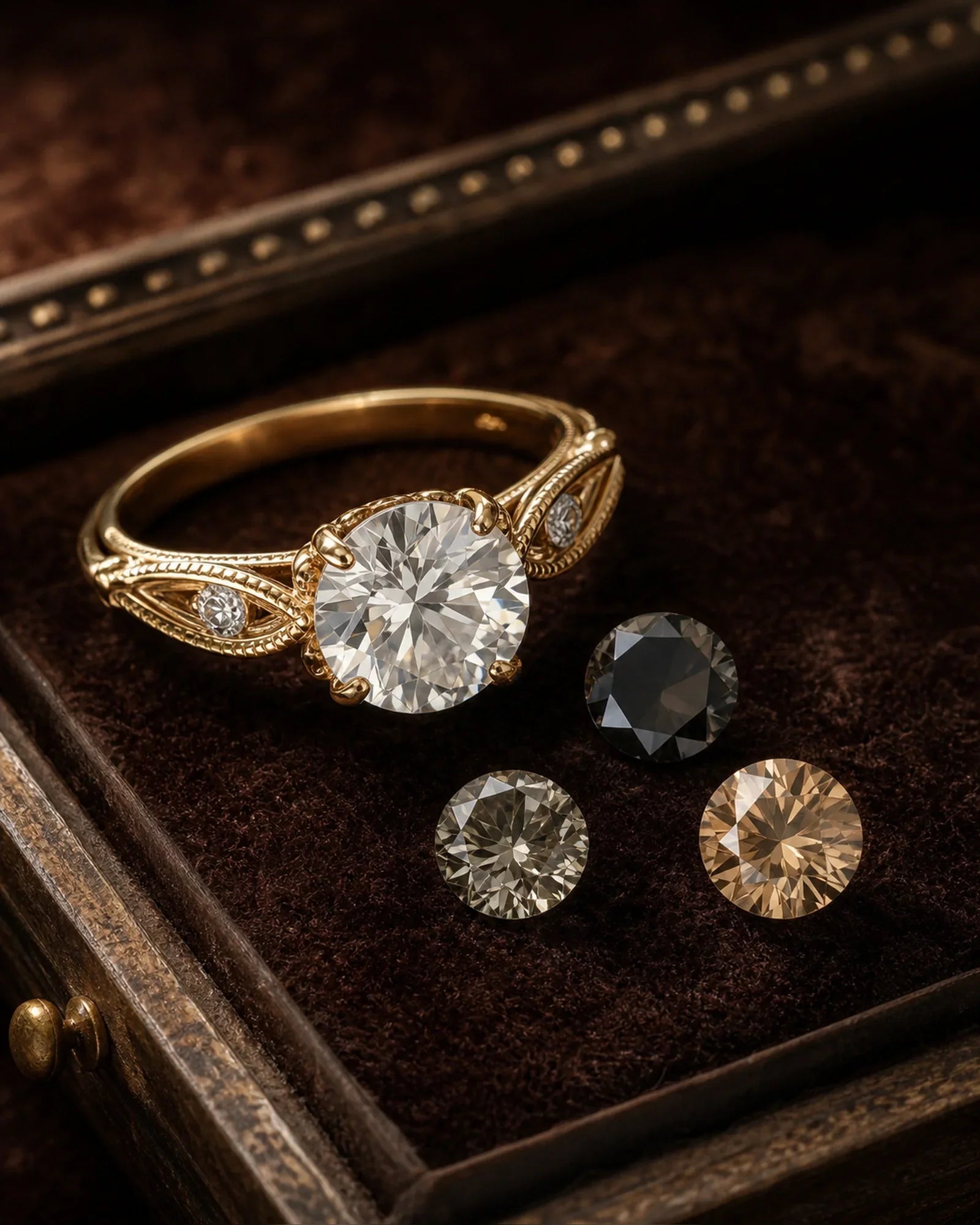
La pierre centrale n’est qu’une partie de la décision. Une bague à profil bas peut être confortable, mais elle peut créer un espace avec un anneau de mariage droit. Un solitaire à profil haut peut permettre à un anneau de s’ajuster parfaitement, mais il peut sembler plus haut sur la main. Un halo peut ajouter du volume visuel, tandis qu’un halo caché apporte de l’éclat sur le côté sans modifier le contour supérieur. Une monture béguin offre une protection, mais elle peut changer la façon dont l’anneau s’emboîte avec la bague.
Pour les acheteurs qui comparent encore les styles, une collection de bagues de fiançailles est le point de départ naturel. L’acheteur doit regarder au-delà de la vue de face. La vue latérale, la hauteur du panier, la largeur du jonc, le style des griffes et l’espace de la galerie influencent tous le confort à long terme et l’empilement futur.
Anneau de mariage : la bague conçue pour le quotidien
Un anneau de mariage est échangé lors de la cérémonie et est généralement porté tous les jours. Pour cette raison, il nécessite une évaluation différente de celle d’une bague de fiançailles. Le meilleur anneau de mariage n’est pas toujours le plus décoratif ; c’est celui qui est confortable, résiste à l’usure quotidienne et s’accorde avec la bague de fiançailles ou avec l’anneau du partenaire.
Les bagues unies sont classiques pour une bonne raison. Elles sont lisses, durables, faciles à nettoyer et faciles à redimensionner. Les bagues avec diamants ou moissanite ajoutent de l’éclat, mais le sertissage des pierres compte. Les griffes partagées peuvent sembler délicates mais exposer les pierres à plus d’usure. Les serti canal peuvent sembler plus lisses. Les bagues pavées sont magnifiques, mais nécessitent des vérifications périodiques car les petites pierres dépendent de minuscules perles de métal.
Lors de l’achat d’anneaux de mariage, l’ajustement contre la bague de fiançailles doit être soigneusement testé. Un anneau droit fonctionne mieux avec les bagues ayant suffisamment de dégagement sous le sertissage central. Un anneau courbé, en chevron ou contour est préférable lorsque la bague de fiançailles a un panier bas, une grande pierre centrale, un halo ou une forme inhabituelle.
Bague anniversaire vs bague éternité : similaires, mais pas identiques
Une bague d’anniversaire est un cadeau marquant. Elle peut célébrer un premier anniversaire, un dixième anniversaire, la naissance d’un enfant, un renouvellement de vœux, une réussite personnelle ou simplement une année significative. Elle ne doit pas suivre un design unique. Il peut s’agir d’un anneau de diamants, d’une bague en pierres de couleur, d’une bague à cinq pierres, d’un anneau courbe, d’une nouvelle alliance ou d’une bague qui reflète les goûts actuels du couple plutôt que le style choisi des années plus tôt.
Une bague éternité est plus spécifique. Traditionnellement, il s’agit d’un anneau orné de pierres précieuses qui se poursuivent tout autour ou sur la majeure partie de la bague. Le symbolisme est facile à comprendre : des pierres continues pour un amour durable. En pratique, de nombreux acheteurs choisissent un demi-anneau éternité car il conserve l’apparence du dessus tout en améliorant le confort, la flexibilité de taille et la portabilité.
Si la bague est destinée à un grand événement, comparez les bagues éternité avec les anneaux de style anniversaire avant de décider. Une bague éternité complète est visuellement luxueuse, mais elle peut être plus difficile à redimensionner car les pierres font tout le tour. Un demi-anneau éternité est souvent plus pratique pour un usage quotidien car le dessous reste en métal lisse.
Éternité complète ou demi-éternité ?
C’est l’une des décisions techniques les plus importantes de tout le sujet. Les anneaux éternité complets semblent parfaits sous tous les angles, mais ils ne sont pas toujours le choix le plus pratique. Les pierres situées sous le doigt entrent en contact avec les bureaux, les poignées de porte, les équipements de sport et les surfaces quotidiennes. Cela signifie une plus grande exposition aux chocs et davantage d’endroits où les griffes peuvent s’user avec le temps.
Les demi-anneaux éternité placent les pierres sur la moitié supérieure visible ou le tiers supérieur de la bague. Ils sont généralement plus confortables, plus ajustables en taille et plus réalistes pour quelqu’un qui souhaite du scintillement sans anxiété d’entretien constante. Les anneaux trois-quarts éternité se situent entre les deux : plus de scintillement continu qu’un demi-anneau, mais moins rigides qu’un design éternité complet.
Le meilleur choix dépend du mode de vie. Si la personne qui porte la bague aime un look luxueux sans couture et a rarement besoin de redimensionnement, l’éternité complète peut être magnifique. Si la bague sera portée quotidiennement, empilée avec d’autres bagues ou redimensionnée à l’avenir, un demi-anneau ou un anneau trois-quarts éternité est souvent le choix le plus judicieux.

Comment créer un empilage de bagues sans qu’il paraisse surchargé
Un bon empilage de bagues a du rythme. Il nécessite généralement un point focal, une pièce de soutien discrète et un accent sentimental. Si chaque bague rivalise pour attirer l’attention, l’empilage peut sembler lourd. Si chaque bague est trop fine et similaire, la signification peut disparaître. Les empilages les plus forts équilibrent le contraste : une bague avec une pierre centrale, un anneau lisse et un anneau texturé ou orné de pierres précieuses.
Commencez par la structure. Si la bague de fiançailles a un chaton surélevé, un anneau droit peut reposer près et proprement. Si le chaton est bas, un anneau courbé peut être nécessaire. Si la bague de fiançailles comporte des feuilles, des branches, des chevrons ou un contour asymétrique, un anneau assorti ou galbé aura généralement un aspect plus intentionnel qu’un simple anneau droit.
Ensuite, considérez les proportions. Une bague de fiançailles fine avec un anneau de mariage très épais peut sembler visuellement instable. Un large halo avec deux anneaux larges peut paraître volumineux entre les doigts. Un anneau éternité complet placé à côté d’une bague de fiançailles délicate en pavé peut provoquer un frottement du métal et des pierres. La superposition doit être testée à la fois pour l’apparence et le mouvement, et non seulement photographiée de dessus.
Pour les acheteurs qui souhaitent résoudre le problème de l’association en amont, les parures de fiançailles sont utiles car la bague de fiançailles et l’anneau sont conçus comme une paire. Pour les acheteurs qui possèdent déjà une bague de fiançailles, les anneaux de mariage assortis et les anneaux de mariage superposables offrent plus de flexibilité.
Scénarios d’achat réels
Si vous souhaitez un engagement sans encore faire la demande
Choisissez une bague de promesse qui soit significative mais sans induire en erreur. Une petite pierre précieuse, un fin anneau en moissanite, un anneau gravé, une pierre de naissance ou un motif délicat suffisent généralement. Évitez une pierre centrale de style diamant de grande taille si la personne qui la porte pourrait l’interpréter comme une bague de fiançailles. La conversation compte autant que le bijou.
Si vous planifiez une demande en mariage
Commencez par la bague de fiançailles, mais anticipez l’étape suivante. Demandez si la personne qui la porte préfère une superposition à fleur de doigt, un anneau courbé ou un espacement plus décontracté. Examinez les profils latéraux, pas seulement les photos de dessus. Une bague peut être magnifique de face et pourtant difficile à associer par la suite.
Si vous choisissez des alliances
Priorisez le confort et la durabilité. Un anneau quotidien ne doit pas accrocher, pincer ou sembler tranchant entre les doigts. Si l’anneau comporte des pierres, renseignez-vous sur leur sertissage et la facilité d’entretien du bijou. Si les deux partenaires souhaitent une connexion visuelle, les alliances pour couple peuvent partager la couleur du métal, la texture, la gravure ou les accents de pierres précieuses sans être identiques.
Si vous célébrez un anniversaire de mariage
Choisissez en fonction de l’étape franchie et du style actuel de la personne qui le porte. Une bague d’anniversaire n’a pas besoin de répéter la bague de fiançailles. Elle peut introduire des pierres de couleur, une nouvelle teinte de métal, un demi-anneau éternité ou un design qui reflète la vie que le couple a construite depuis le mariage.
Choix de métal et de pierres précieuses par type de bague
Pour les bagues de promesse, la durabilité doit correspondre au budget et au symbolisme. L’argent sterling peut être sentimental, mais l’or est préférable pour un port à long terme. Pour les bagues de fiançailles et les alliances, l’or 10K, 14K, 18K et le platine 950 sont des choix courants en bijouterie fine. L’or 14K est souvent un juste milieu pratique car il équilibre durabilité, couleur et coût.


FAQ
Quelle est la différence entre une bague de promesse et une bague de fiançailles ?
Une bague de promesse exprime un engagement avant une demande officielle. Une bague de fiançailles signifie généralement que le couple a décidé de se marier. La différence ne réside pas seulement dans le style de la bague, mais dans le message qu’elle porte.
À quel doigt porte-t-on une bague de promesse ?
Il n’y a pas de règle unique. Beaucoup de personnes portent une bague de promesse à la main droite pour éviter toute confusion avec une bague de fiançailles. D’autres la portent à l’annulaire gauche avant les fiançailles, puis la déplacent ensuite.
Une alliance est-elle la même chose qu’un anneau de mariage ?
Dans le langage courant, oui. « Alliance » désigne généralement un anneau de mariage de forme bande. Certaines alliances sont unies, tandis que d’autres incluent des diamants, du moissanite, de la gravure ou des détails courbes.
Quand offrir une bague éternité ?
Une bague éternité est généralement offerte après le mariage pour célébrer un jalon tel qu’un anniversaire, la naissance d’un enfant ou un grand chapitre partagé. Elle peut aussi être choisie comme bague de stacking personnelle lorsque le symbolisme semble approprié.
Une bague d’anniversaire peut-elle être une bague éternité ?
Oui. Une bague éternité peut être un type de bague d’anniversaire, mais une bague d’anniversaire n’est pas nécessairement un anneau éternité. Il peut s’agir de tout design choisi pour marquer l’occasion.
Toutes les bagues de relation doivent-elles être assorties ?
Elles n’ont pas besoin d’être parfaitement assorties. Elles doivent être compatibles en termes de proportions, de teinte du métal, de confort et de signification. Un empilement mixte peut sembler plus personnel qu’un ensemble parfaitement coordonné si les proportions sont réfléchies.
Un anneau éternité complet est-il pratique pour un port quotidien ?
Cela peut l’être, mais il nécessite plus d’entretien qu’un anneau uni ou une demi-éternité. Les pierres situées sous l’anneau subissent davantage d’impacts et rendent le réajustement plus difficile. De nombreuses personnes qui portent leurs bijoux au quotidien préfèrent la demi-éternité pour le confort et l’entretien.
Une bague de relation ne doit pas imposer un calendrier fixe au couple. La meilleure bague est celle qui rend la signification claire, qui correspond au mode de vie de la personne qui la porte et qui laisse de la place pour le prochain chapitre. Les bagues de promesse, de fiançailles, de mariage, d’anniversaire et d’éternité peuvent toutes être magnifiques ; le véritable art consiste à choisir celle qui appartient à ce moment précis.