
Livraison mondiale
Soigneusement emballé, suivi de bout en bout et livré par des transporteurs internationaux de confiance.
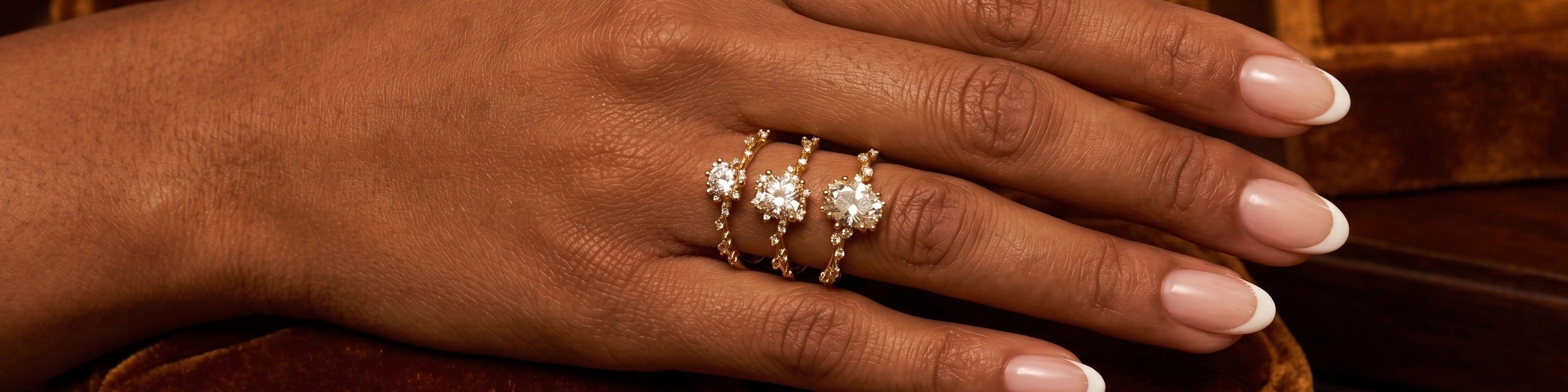
Chez Orleone, chaque bague est fabriquée à la main avec plus de 20 ans d'expertise en joaillerie fine. Notre guide des tailles est élaboré selon les normes de l'industrie et soigneusement vérifié pour garantir précision, fiabilité et une expérience sur mesure sans faille.
Que vous choisissiez une bague de fiançailles, une alliance ou une pièce artisanale unique, ce guide vous assure un ajustement parfait dès le premier porté.
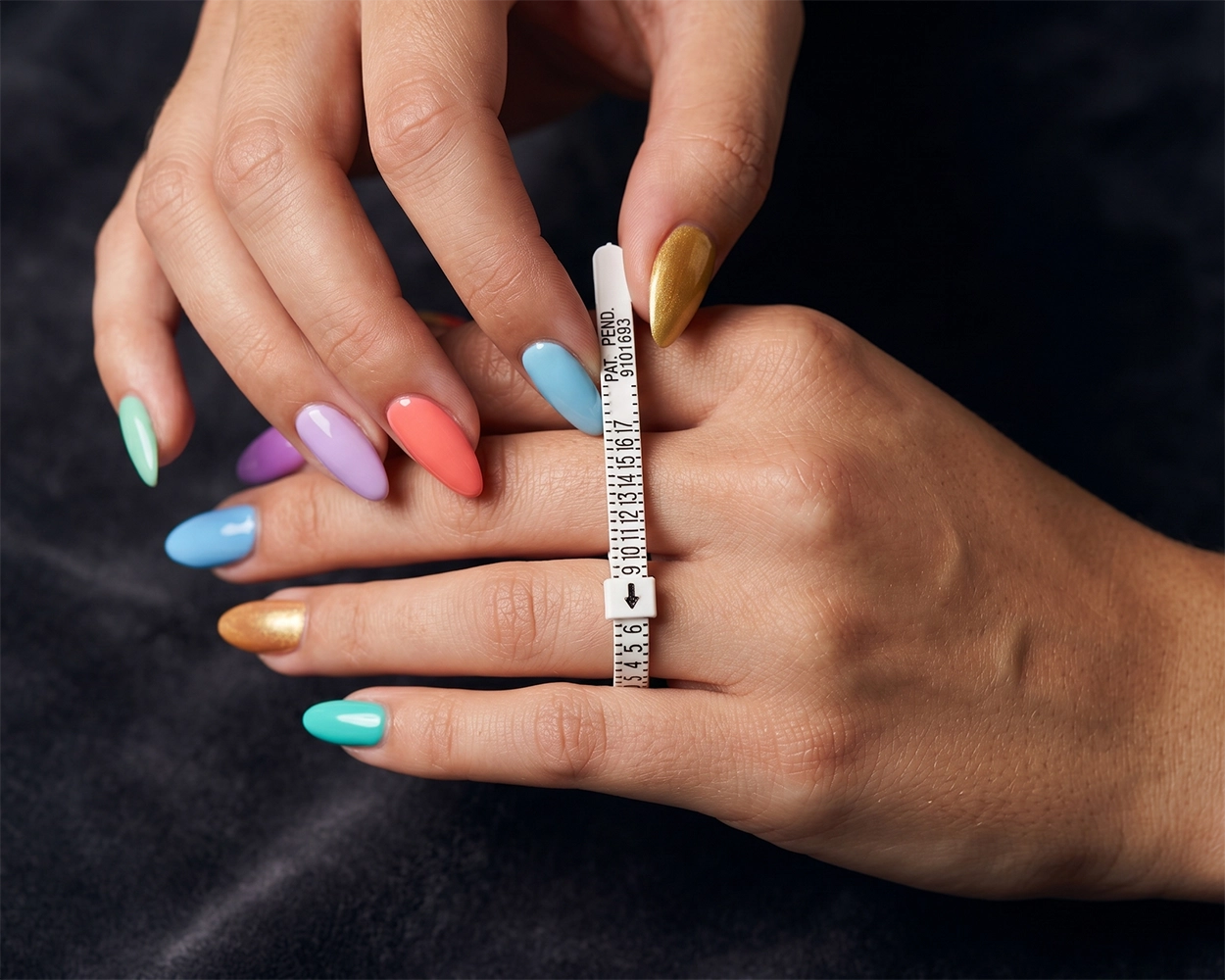
Une taille de bague est un chiffre qui correspond à la mesure intérieure d'une bague, généralement définie par son diamètre intérieur ou sa circonférence.
Aux États-Unis, les tailles de bague vont généralement de 3 à 13, avec des demi et quarts de tailles pour plus de précision.
Une bague bien ajustée doit être confortable tout en étant bien en place. Elle doit passer sur l'articulation avec une légère résistance et reposer à la base du doigt sans serrer. L'ajustement idéal reste en place lors des activités quotidiennes sans causer d'inconfort.
Consultez le tableau ci-dessous pour voir la correspondance entre les tailles US et le diamètre intérieur et la circonférence du doigt, et pour vous aider à convertir les tailles internationales si nécessaire.
Toutes nos bagues suivent le format de taille standard US, cohérent pour les bagues de fiançailles, alliances et bagues de mode.
| Circonférence intérieure | États-Unis / Canada / Mexique |
Royaume-Uni / Australie / Nouvelle-Zélande |
France | Allemagne / Russie |
Inde / Chine / Japon |
Italie / Espagne / Suisse |
|
|---|---|---|---|---|---|---|---|
| PO (pouces) | MM (millimètres) | ||||||
| 1.74 | 44.2 | 3 | F | 44 | 14 | 4 | 4 |
| 1.77 | 44.8 | 3.25 | F 1/2 | 45 | 14 1/4 | - | 4 5/8 |
| 1.79 | 45.5 | 3.5 | G | 45.5 | 14 1/2 | 5 | 5 1/4 |
| 1.82 | 46.1 | 3.75 | G 1/2 | 46 | 14 3/4 | 6 | 5 7/8 |
| 1.84 | 46.8 | 4 | H | 47 | 15 | 7 | 6 1/2 |
| 1.87 | 47.4 | 4.25 | H 1/2 | 47.5 | - | - | 7 1/8 |
| 1.89 | 48.0 | 4.5 | I | 48 | 15 1/4 | 8 | 7 3/4 |
| 1.92 | 48.7 | 4.75 | J | 48.5 | 15 1/2 | - | 8 3/8 |
| 1.94 | 49.3 | 5 | J 1/2 | 49 | 15 3/4 | 9 | 9 |
| 1.97 | 50.0 | 5.25 | K | 50 | 16 | - | 9 5/8 |
| 1.99 | 50.6 | 5.5 | K 1/2 | 50.5 | 16 1/4 | 10 | 10 1/4 |
| 2.02 | 51.2 | 5.75 | L | 51 | - | 11 | 10 7/8 |
| 2.04 | 51.9 | 6 | L 1/2 | 52 | 16 1/2 | 12 | 11 1/2 |
| 2.07 | 52.5 | 6.25 | M | 52.5 | 16 3/4 | - | 12 1/8 |
| 2.09 | 53.1 | 6.5 | M 1/2 | 53 | 17 | 13 | 12 3/4 |
| 2.12 | 53.8 | 6.75 | N | 54 | - | - | 13 3/8 |
| 2.14 | 54.4 | 7 | N 1/2 | 54.5 | 17 1/4 | 14 | 14 |
| 2.17 | 55.1 | 7.25 | O | 55 | 17 1/2 | - | 14 5/8 |
| 2.19 | 55.7 | 7.5 | O 1/2 | 56 | 17 3/4 | 15 | 15 1/4 |
| 2.22 | 56.3 | 7.75 | P | 56.5 | 18 | - | 15 7/8 |
| 2.24 | 57.0 | 8 | P 1/2 | 57 | - | 16 | 16 1/2 |
| 2.27 | 57.6 | 8.25 | Q | 58 | 18 1/4 | - | 17 1/8 |
| 2.29 | 58.3 | 8.5 | Q 1/2 | 58.5 | 18 1/2 | 17 | 17 3/4 |
| 2.32 | 58.9 | 8.75 | R | 59 | 18 3/4 | - | 18 3/8 |
| 2.34 | 59.5 | 9 | R 1/2 | 60 | 19 | 18 | 19 |
| 2.37 | 60.2 | 9.25 | S | 60.5 | 19 1/4 | - | 19 5/8 |
| 2.39 | 60.8 | 9.5 | S 1/2 | 61 | 19 1/2 | 19 | 20 1/4 |
| 2.42 | 61.4 | 9.75 | T | 61.5 | - | - | 20 7/8 |
| 2.44 | 62.1 | 10 | T 1/2 | 62 | 19 3/4 | 20 | 21 1/2 |
| 2.47 | 62.7 | 10.25 | U | 63 | 20 | 21 | 22 1/8 |
| 2.49 | 63.4 | 10.5 | U 1/2 | 63.5 | - | 22 | 22 3/4 |
| 2.52 | 64.0 | 10.75 | V | 64 | 20 1/2 | - | 23 3/8 |
| 2.54 | 64.6 | 11 | V 1/2 | 65 | 20 3/4 | 23 | 24 |
| 2.57 | 65.3 | 11.25 | W | 65.5 | - | - | 24 5/8 |
| 2.59 | 65.9 | 11.5 | W 1/2 | 66 | 21 | 24 | 25 1/4 |
| 2.62 | 66.6 | 11.75 | X | 67 | 21 1/4 | - | 25 7/8 |
| 2.65 | 67.2 | 12 | X 1/2 | 67.5 | 21 1/2 | 25 | 26 1/2 |
| 2.68 | 68.1 | 12.25 | Y | 68 | - | - | 27 1/8 |
| 2.71 | 68.5 | 12.5 | Z | 69 | 21 3/4 | 26 | 27 3/4 |
| 2.75 | 69.7 | 13 | Z 1/2 | 70 | 22 | 27 | 29 |
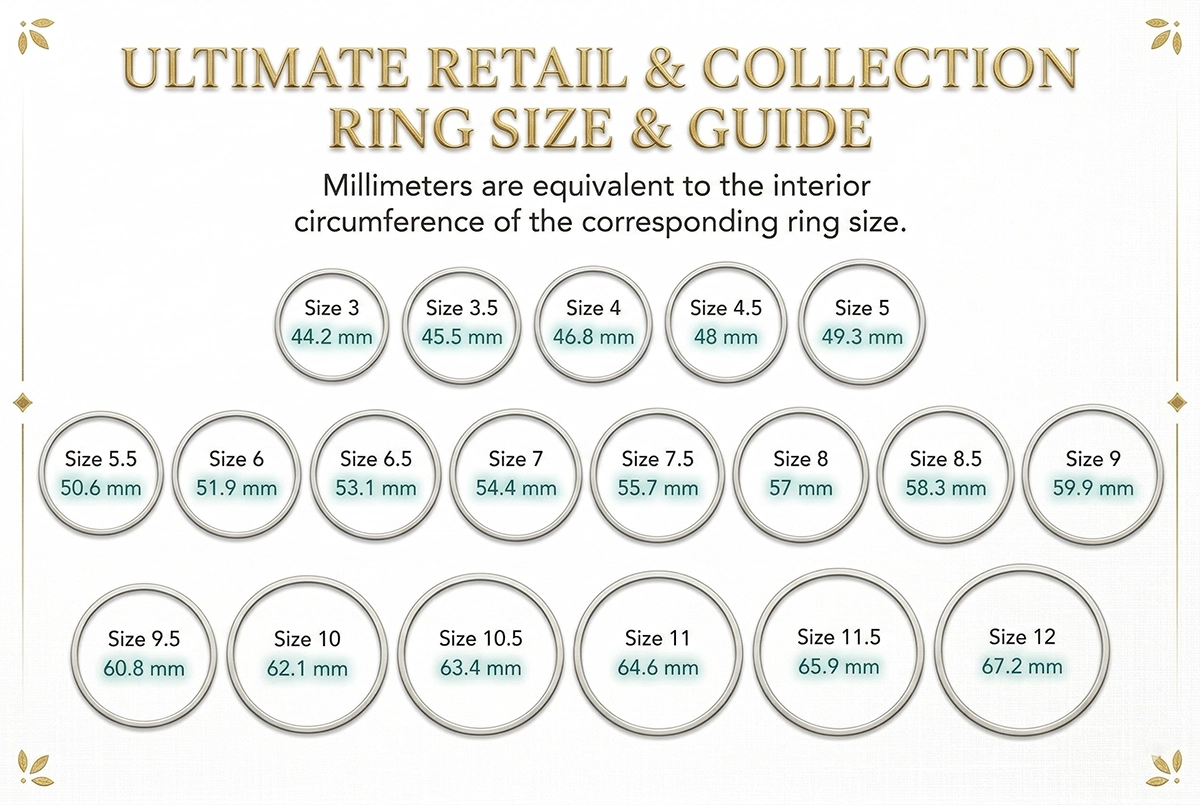
Un guide des tailles de bague à imprimer vous permet de mesurer votre taille facilement chez vous.
Si vous possédez déjà une bague bien ajustée, vous pouvez déterminer votre taille en mesurant le diamètre intérieur ou la circonférence.
La correspondance la plus proche indique votre taille de bague. Pour une précision optimale, confirmez votre mesure en utilisant plusieurs méthodes.
Les tailles de bague sont basées sur la circonférence intérieure ou le diamètre intérieur de la bague, généralement mesurés en millimètres (mm).
Étant donné que les systèmes de tailles varient à l'échelle mondiale, l'utilisation d'un tableau de conversion est essentielle pour comparer les tailles internationales.
Vous pouvez mesurer votre doigt à l'aide d'outils simples :
Pour une meilleure précision :
Les méthodes les plus précises sont :
Pour une mesure à domicile, combiner deux méthodes (par ex. ficelle + mesure de bague) offre le résultat le plus fiable.
Un tableau de tailles de bague indique les tailles avec leurs mesures de diamètre et de circonférence correspondantes.
Pour l'utiliser :
Exemple :
Si votre doigt mesure 54,4 mm, cela correspond environ à une taille US 7.
Si votre mesure se situe entre deux tailles, il est recommandé de choisir la taille supérieure pour plus de confort.
Non, les tailles de bague ne sont pas standardisées à l'échelle mondiale.
Différentes régions utilisent des systèmes différents :
Cependant, aux États-Unis, les tailles sont généralement cohérentes d'un bijoutier à l'autre, ce qui rend les tableaux de tailles américains fiables pour la plupart des achats.
Si votre mesure se situe entre deux tailles :
La taille du doigt peut fluctuer en raison de :
Pour un résultat plus précis, mesurez lorsque vos mains sont chaudes et détendues.
Oui, mais les millimètres (mm) sont fortement recommandés pour une plus grande précision.
La plupart des tableaux de tailles de bague professionnels sont basés sur des mesures en mm, qui offrent un dimensionnement plus précis par rapport aux pouces.
Si vous hésitez :
En cas de doute, choisir une taille légèrement plus grande est généralement plus sûr et plus confortable.
LA PROMESSE ORLEONE
Du premier croquis au polissage final, chaque bague Orleone est façonnée avec intention et entourée d'un soin attentif.

Soigneusement emballé, suivi de bout en bout et livré par des transporteurs internationaux de confiance.
Un an d'assistance pour les défauts de fabrication éligibles.
Des pierres et des métaux soigneusement sélectionnés et issus de sources responsables.
Paiements sécurisés via des prestataires mondiaux de confiance.