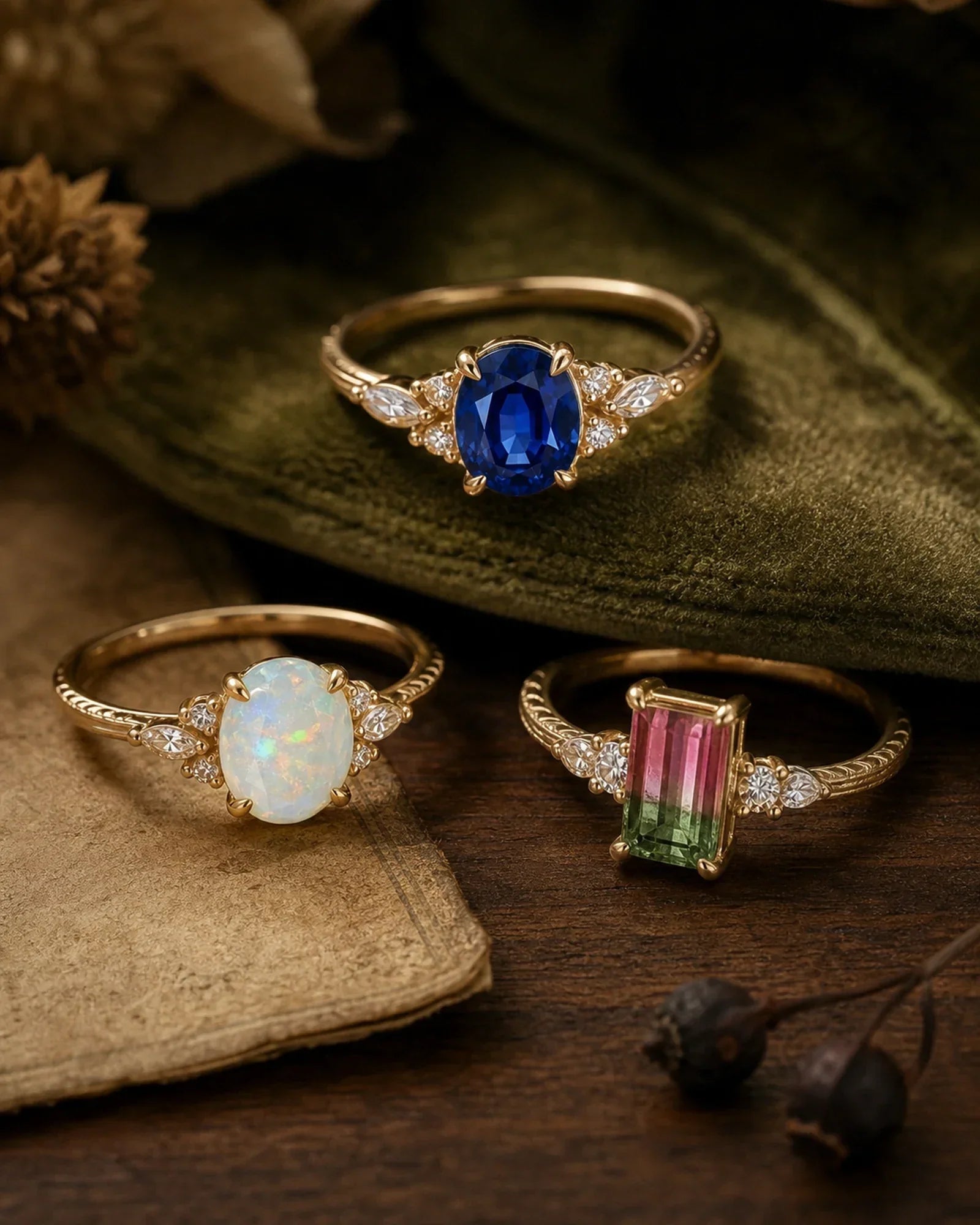

Il momento peggiore per scoprire che una gemma non si adatta alla tua vita è dopo che l'anello è diventato emotivamente importante. Non dovresti dover scoprire, dopo sei mesi che lo indossi, che il profumo può opacizzare la superficie, una riparazione di routine può alterare un trattamento, o un semplice urto contro un piano di lavoro può danneggiare una punta esposta.
| Gemma | Durezza Mohs | Il punto debole meno evidente | Categoria d'uso realistica | Prima richiesta di montatura consigliata |
|---|---|---|---|---|
| Opale | Circa 5–6,5 | Tenuità da scarsa a discreta; calore e sbalzi termici possono causare crepe o incrinature | Uso delicato o a rotazione | Castone basso a giorno, punta protetta, nessuna tensione |
| Perla | Circa 2,5 | La madreperla si graffia e reagisce ad acidi, cosmetici e calore | Uso occasionale o molto consapevole | Cavità profonda con perno e protezione bassa circostante |
| Smeraldo | Circa 7,5–8 | Fessure naturali e frequenti riempimenti di fratture complicano urti, pulizia e riparazione | Uso quotidiano attento | Angoli rinforzati, castone ampio, profilo basso |
| Agata muschiata | Circa 6,5–7 | Tagli sottili e appuntiti e inclusioni interne possono creare concentratori di stress | Uso quotidiano attento | Castone a fascia su misura o protezioni per punte larghe |
| Pietra di luna | Circa 6–6,5 | Due direzioni di sfaldatura e scarsa tenacità | Uso delicato o a rotazione | Cabochon basso in castone continuo |
Opale: la bellezza è reale, e così la manutenzione
L'opale conquista rapidamente. Il suo gioco di colori può passare attraverso verde, arancione, blu e rosso senza comportarsi come una pietra sfaccettata. Sembra vivo. Il rammarico arriva solitamente dal trattare quella magia visiva come prova di resistenza. La durezza dell'opale varia da circa 5 a 6,5, mentre la sua tenacità può variare da molto scarsa a discreta. Il GIA avverte anche che calore intenso e sbalzi di temperatura improvvisi possono causare fratture o sottili linee note come crazing. La sua guida ufficiale alla cura dell'opale raccomanda acqua calda e sapone come metodo di pulizia sicuro.
La prima domanda d'acquisto non è solo "naturale o creato in laboratorio?" Chiedi se la pietra centrale è opale solido, un doppietto o un tripletto. Un doppietto lega un sottile strato di opale a un supporto; un tripletto aggiunge una calotta trasparente. Queste gemme assemblate possono essere attraenti e convenienti, ma gli strati adesivi creano ulteriori motivi per evitare ammollo prolungato, vapore, pulizia a ultrasuoni e solventi. Il venditore dovrebbe rivelare la costruzione prima che la montatura venga progettata.
Cosa dovrebbe fare la montatura
- Scegli un castone pieno o un castone parziale sostanziale che si alzi abbastanza da incontrare il bordo dell'opale, non un bordo decorativo che si trova al di sotto.
- Per forme a pera, a marquise e a kite, chiedi un V-cap o metallo continuo attorno a ogni punta. Un griffa che tocca appena la punta tiene la pietra, ma non la protegge necessariamente.
- Mantieni la pietra centrale bassa. Un cestello aperto alto aumenta il rischio di impigliamento e dà più leva agli urti.
- Evita montature a tensione. Il design dovrebbe sostenere la gemma su un sedile uniforme piuttosto che dipendere dalla pressione su un corpo vulnerabile.

Questo è uno schema d'impatto comune, non una storia di un singolo cliente. Una punta a pera esposta può subire tutta la forza di un colpo anche quando l'anello non ha perso un griffo. La correzione pratica non è semplicemente "più griffi". È un cappuccio sulla punta, un profilo più basso e abbastanza metallo circostante per ricevere per primo il contatto laterale.
Quando si confrontano anelli di fidanzamento con opale, guardate il profilo laterale prima della vista dall'alto. Per la personalizzazione, richiedete prima le dimensioni esatte in millimetri dell'opale scelto, poi costruite il castone attorno a quella pietra. Gli opali non sono parti calibrate intercambiabili; una montatura disegnata su un contorno presunto può premere in modo irregolare o lasciare uno spazio vulnerabile.

Anello con Opale a Pera e Foglie
Direzione di design: spalle a foglia romantica e una punta a pera definita. Per un uso frequente, chiedete se la punta può essere aggiornata a un V-cap più pieno e se il cestello può essere mantenuto basso. Lo stile esistente è un punto di partenza visivo, non una promessa che l'opale diventi senza pensieri.
Vedi il design con opalePerla: non fragile come ci si aspetta
Una perla di solito non si danneggia perché un griffo si rompe. Più spesso, la superficie racconta lentamente la storia: graffi sottili, lucentezza appiattita, residui cosmetici o danni attorno all'area del foro. La perla si classifica circa 2.5 sulla scala di Mohs. La sua madreperla è vulnerabile all'abrasione e agli acidi presenti in profumo, lacca per capelli, cosmetici e persino sudore. La guida alla cura e pulizia delle perle del GIA sconsiglia la pulizia a vapore e a ultrasuoni e raccomanda di pulire le perle con un panno morbidissimo dopo l'uso.
Anche gli anelli di perla presentano un problema costruttivo che gli anelli con gemme sfaccettate non hanno. Una perla coltivata viene solitamente forata e montata su un perno con adesivo, idealmente supportata da una coppa. La sicurezza dell'anello dipende dal rapporto tra la lunghezza del perno, il diametro del foro, il profilo della coppa, l'adesivo e l'impatto laterale che la perla subisce. Una base minuscola e piatta con un perno corto può sembrare delicata, ma offre alla perla un supporto meccanico inferiore.
Cosa dovrebbe fare il castone
- Utilizzare un gruppo coppa-e-perno adeguatamente montato. La coppa deve contattare la parte inferiore della perla in modo uniforme, senza un bordo tagliente che graffi la madreperla.
- Posizionare petali, un alone basso o dettagli sulle spalle leggermente al di sotto del punto più largo della perla. Dovrebbero intercettare il contatto laterale senza sfregare la superficie.
- Evitare design a "perla fluttuante" alti e senza supporto per l'uso quotidiano. L'altezza fa sì che la perla sia il primo oggetto a incontrare una scrivania, una porta o il manico di una borsa.
- Rendere possibile la manutenzione futura. Un gioielliere potrebbe dover rimuovere e riattaccare la perla prima di lavorare a caldo sul metallo.

Può essere del tutto credibile. Il contatto ripetuto con lozione, disinfettante, profumo, tessuti e gioielli più duri può alterare la lucentezza senza un singolo incidente drammatico. La lezione è che il rischio per la perla è cumulativo. Metti l'anello dopo i cosmetici, rimuovilo prima di lavarti le mani o pulire, asciugalo dopo l'uso e conservalo da solo in un compartimento morbido.
Quando esamini gli anelli di fidanzamento con perla, chiediti se l'inserzione identifica il tipo e la dimensione della perla, se è forata e come sono costruiti la coppa e il perno. Una perla di ricambio potrebbe non corrispondere esattamente all'originale in tonalità, riflesso, lucentezza o diametro, quindi la possibilità di manutenzione futura è più importante di quanto gli acquirenti spesso realizzino.

Anello con Perla Akoya e Foglie
Indicazione di design: le foglie circostanti integrano visivamente la perla meglio di un semplice solitario su perno. Per la personalizzazione, assicurati che il fogliame si trovi al di sotto della madreperla e non la sfreghi, e richiedi un castone profondo e sagomato anziché affidarti a griffe decorative.
Vedi l'anello con perlaSmeraldo: la durezza rassicura, le fratture sono il vero tema
Lo smeraldo è la pietra più plausibile per l'uso quotidiano in questa guida, ma è anche quella che più spesso viene semplificata. Con un valore tra 7,5 e 8 sulla scala di Mohs, resiste ai graffi meglio di opale, perla o pietra di luna. Tuttavia, lo smeraldo naturale contiene comunemente fratture, e quelle che raggiungono la superficie sono spesso riempite con olio, resina o polimeri per migliorarne l'aspetto. Il GIA, nelle sue linee guida per la cura dello smeraldo, segnala che il calore può allargare le fratture esistenti e che la pulizia a ultrasuoni o a vapore è rischiosa per le pietre con fratture riempite.
Ecco perché due smeraldi delle stesse dimensioni potrebbero non meritare la stessa pressione di incastonatura o lo stesso metodo di pulizia. Prima dell'acquisto, chiedi se lo smeraldo è naturale o creato in laboratorio, se è presente un trattamento, quanto miglioramento della limpidezza è dichiarato e se un rapporto di laboratorio accompagna una pietra naturale significativa. Lo smeraldo creato in laboratorio ha la stessa identità materiale essenziale ma spesso meno fratture naturali gravi; non è automaticamente immune a scheggiature, specialmente agli angoli.
Cosa dovrebbe fare il castone
- Posizionare le griffe su aree sane del cintino, non direttamente sopra una frattura visibile che raggiunge la superficie. La pressione di incastonatura deve essere distribuita, non concentrata.
- Proteggere gli angoli. I tagli a gradino rettangolari necessitano di griffe angolari rinforzate, doppie griffe o un bordo sottile; gli smeraldi a taglio principessa, aquilone ed esagonale richiedono ancora più attenzione ai vertici.
- Costruire un sedile continuo e livellato sotto il cintino. La pietra non deve oscillare né creare un ponte su metallo irregolare.
- Lasciare un accesso sicuro per la pulizia sotto la pietra, ma non confondere un'apertura con una gabbia alta ed esposta.

Ridimensionamento, rifacimento delle punte o saldatura possono introdurre calore e fasi di pulizia. Uno smeraldo naturale può anche avere più di una sostanza di riempimento da trattamenti precedenti. Prima di qualsiasi riparazione, il gioielliere ha bisogno dell'identità della pietra, delle informazioni sul trattamento e di un piano per rimuovere o proteggere la gemma. L'ipotesi pericolosa è che una pietra dura possa rimanere al suo posto durante ogni normale processo di laboratorio.
Tra gli anelli di fidanzamento con smeraldo, le forme ovali arrotondate e a cuscino riducono la vulnerabilità degli angoli, mentre i tagli a gradini offrono l'aspetto architettonico classico ma richiedono sedi e griffe precise. Un ordine personalizzato dovrebbe registrare le misure esatte della pietra, l'origine naturale o di laboratorio, la dichiarazione dei trattamenti, le posizioni previste per le griffe e il metodo di pulizia previsto prima della produzione.

Anello Foglia con Smeraldo di Laboratorio Taglio Principessa
Direzione del design: uno smeraldo geometrico netto con spalle botaniche. Gli angoli a taglio principessa sono la priorità tecnica. Per una versione personalizzata più protettiva, richiedi griffe angolari più grandi o un bordo di contorno sottile e conferma che nessuna fede nuziale urti il padiglione o il castone della pietra.
Vedi il design con smeraldoAgata muschiata: il rischio è spesso il taglio, non il nome
L'agata muschiata è una varietà di calcedonio, della famiglia del quarzo microcristallino, con inclusioni dendritiche o simili a muschio che creano il suo effetto paesaggistico. La sua durezza è comunemente intorno a 6,5–7, il che sembra rassicurante. Il problema pratico è che molti anelli di fidanzamento in agata muschiata sono tagliati come aquiloni sottili, esagoni allungati, pere o rose cut per mostrare le inclusioni frontalmente. Queste forme possono avere punte acuminate, bordi sottili e ampie facce trasparenti. Il design può rendere il materiale più vulnerabile di quanto suggerisca il numero di durezza.
Le inclusioni dall'aspetto naturale richiedono anche un'ispezione attenta. Un bel motivo ramificato non è automaticamente una crepa strutturale, e una crepa non è automaticamente innocua perché assomiglia a un ramo. Usa ingrandimento e illuminazione laterale. Chiedi se qualche fessura raggiunge la superficie, se la pietra è stata tinta o impregnata e se il taglio ha una cintura uniforme. La discussione generale del GIA sui trattamenti delle gemme e la loro dichiarazione è rilevante perché tinture e impregnazioni possono cambiare quali prodotti chimici e processi di riparazione sono appropriati.
Cosa dovrebbe fare il castone
- Per tagli ad aquilone, scudo, esagono e pera, usa un bezel sagomato o cappucci larghi su ogni punta. Unghiette minuscole lasciano troppo bordo esposto.
- Sostieni i rose cut sottili su un ripiano uniforme. Evita un castone che pizzichi solo due punti opposti.
- Se il retro è chiuso per approfondire il contrasto, includere un'apertura pratica per la pulizia e assicurarsi che l'umidità non possa rimanere intrappolata indefinitamente.
- Tenere foglie e rami decorativi lontani dalla superficie della pietra. I dettagli in metallo dovrebbero proteggere il perimetro senza creare nuovi punti di abrasione.

Quando si confrontano anelli di fidanzamento con agata muschiata, richiedere un video della pietra centrale reale alla luce diurna diffusa e alla luce laterale. Cercare il motivo, la trasparenza, le caratteristiche che raggiungono la superficie, lo spessore del giro e la simmetria delle punte. Per un anello personalizzato, approvare la singola pietra prima dell'inizio del CAD. L'incastonatura dovrebbe essere costruita sul suo contorno, non selezionata da una tabella di misure generica.

Anello con Agata Muschiata Ovale e Foglie
Direzione di design: la forma ovale evita i rischi maggiori delle punte e le spalle a foglia incorniciano visivamente la pietra centrale. Per un uso attivo, richiedere un cestello basso e considerare di sostituire i griffe aperti con un bezel sottile o un bezel parziale più robusto sui lati lunghi.
Vedi il design in agata muschiataPietra di luna: proteggere la sfaldatura, preservare la luminosità
La pietra di luna è un feldspato apprezzato per l'adularescenza, la luce blu o bianca fluttuante che sembra muoversi su un cabochon. La sua durezza è di circa 6-6,5, ma la tenacità è scarsa. Ancora più importante, la pietra di luna ha due direzioni di sfaldatura. Un colpo duro in una direzione sfavorevole può spaccare la pietra anche se la sua superficie non sembrava gravemente graffiata. La guida alla cura della pietra di luna del GIA raccomanda acqua calda e sapone e sconsiglia la pulizia a vapore e a ultrasuoni.
Il taglio cabochon non è un compromesso; è ciò che rivela l'effetto ottico. Ma una cupola alta su griffe elevate può diventare il primo punto di contatto. L'obiettivo è preservare abbastanza cupola per una forte adularescenza, abbassando al contempo la spalla all'interno di una protezione in metallo. Una pietra piatta o mal orientata può sembrare più sicura, ma risulta visivamente deludente, quindi l'acquisto richiede sia giudizio ottico che strutturale.
Cosa dovrebbe fare la montatura
- Utilizzare un castone continuo con bordo interno liscio. Una pressione irregolare da griffe isolate può creare punti di stress.
- Posizionare il cabochon in basso, con il castone che raggiunge la spalla anziché toccare appena la base.
- Un alone scanalato può fungere da paraurti solo se si trova leggermente al di sotto della zona più larga della pietra di luna. Un alone decorativo molto al di sotto della gemma aggiunge brillantezza, ma poca protezione.
- Evitare sbalzi termici improvvisi, vapore, pulizia a ultrasuoni e impatti violenti. Rimuovere l'anello prima di transizioni da freddo a caldo, come indossarlo all'aperto in inverno seguito da acqua molto calda.

All'interno degli anelli di fidanzamento con pietra di luna, privilegiate una forte iridescenza blu o bianca visibile mentre l'anello si muove, non una foto prodotto permanentemente blu elettrico. Richiedete un breve video sotto più di una fonte luminosa. Per lavori su misura, orientate la migliore iridescenza verso il normale angolo di visione frontale e progettate il castone dopo aver fissato quell'orientamento.

Anello con Pietra di Luna Rotonda e Foglie
Direzione del design: il profilo rotondo elimina gli angoli vivi e si adatta a spalle botaniche. Per un uso più frequente, richiedete un castone basso continuo e verificate che la pietra di luna sia un cabochon con genuina iridescenza in movimento, non un sostituto sfaccettato.
Vedi il design con pietra di lunaLa scheda d'ordine senza rimpianti: cosa mettere per iscritto
Un bel bozzetto non basta per una pietra centrale tenera o inclusa. Prima di approvare un anello personalizzato, registra le decisioni che influenzeranno l'usura futura e le riparazioni. Questo è particolarmente importante quando il design utilizza un opale singolo o un'agata muschiata, piuttosto che una pietra calibrata facile da sostituire.
Se la protezione è la priorità, inizia confrontando gli anelli con castone. Il castone deve comunque essere ben realizzato: deve contattare la gemma in modo uniforme, coprire abbastanza del bordo per essere efficace, evitare pressione eccessiva e lasciare una struttura pulibile. "Castone" è una categoria di design, non una prova automatica di artigianalità.
Una routine di cura pratica che le persone possano effettivamente seguire
I piani di cura complicati falliscono. Una routine utile ha solo poche regole ripetibili. Indossa gli anelli delicati dopo profumo, prodotti per capelli e lozioni. Rimuovili prima di doccia, nuoto, allenamenti, giardinaggio, cucina, pulizie domestiche e sonno. Conserva ogni anello nel suo scomparto imbottito, non sciolto accanto a diamanti o catene metalliche. Pulisci con acqua tiepida, sapone neutro e una spazzola o panno estremamente morbido solo quando quel metodo è appropriato per la pietra e la costruzione. Risciacqua in una ciotola piuttosto che sopra uno scarico aperto.
Ispeziona l'anello sotto una buona luce ogni mese. Cerca una pietra che si muove, un nuovo spazio sotto un castone, una griffe sollevata, una linea di residui torbidi, una scheggiatura su una punta o una perla che ruota sul suo perno. Smetti di indossarlo se qualcosa cambia. Una piccola riparazione è solitamente più facile prima che il movimento ingrandisca il danno.
La frequenza dell'ispezione professionale dipende dall'uso, ma da sei a dodici mesi è un intervallo di partenza sensato per un anello con gemma delicata indossato frequentemente. L'ispezione non significa pulizia automatica a vapore o a ultrasuoni. Il gioielliere deve prima identificare la pietra e il trattamento, poi scegliere il processo.
Quando la risposta onesta è scegliere un'alternativa
Se ami la luce dell'opale ma sai che non toglierai mai l'anello, considera lo zaffiro bianco o la moissanite per l'anello quotidiano e usa l'opale in un gioiello per anniversari o occasioni speciali. Se ami la morbidezza della perla, un ciondolo o degli orecchini di perla evitano gran parte degli urti che una mano subisce. Se il verde smeraldo è la priorità ma le fessure naturali ti preoccupano, confronta lo smeraldo coltivato in laboratorio, lo zaffiro verde o un centro verde durevole con accenti di smeraldo. Se ami il paesaggio dell'agata muschiata, un ciondolo permette di apprezzare una pietra larga e sottile con meno impatto. Se la pietra di luna è il sogno, un ciondolo a castone o un anello rotante possono preservare l'effetto meglio di un solitario alto da indossare tutti i giorni.
Non si tratta di accontentarsi. Si tratta di separare il compito emotivo di una gemma dal compito meccanico di un anello quotidiano. Alcune persone scelgono un anello di fidanzamento durevole per l'uso quotidiano e un anello cerimoniale delicato per le occasioni significative. Questo può produrre più piacere che forzare un bel materiale a sopravvivere a una vita per cui non è mai stato adatto.
FAQ: le domande che prevengono il rimpianto delle gemme
Quale di queste cinque gemme è la migliore per l'uso quotidiano?
Lo smeraldo è generalmente il candidato più forte quando è integro, correttamente dichiarato e protetto, seguito dall'agata muschiata per chi lo indossa con cura. Entrambi richiedono comunque più attenzione dello zaffiro, del rubino, del diamante o della moissanite. L'opale e la pietra di luna sono migliori per un uso delicato o a rotazione. La perla richiede la manutenzione più attenta.
Un castone pieno rende l'opale o la pietra di luna sicuri per l'uso quotidiano?
Rende il bordo più sicuro, non il materiale invulnerabile. Un castone riduce l'impatto diretto e gli impigliamenti, ma non elimina la sensibilità al calore dell'opale o la sfaldatura della pietra di luna. Le abitudini di utilizzo rimangono parte del design.
Posso indossare un anello di fidanzamento con smeraldo tutti i giorni?
Sì, se "tutti i giorni" significa un uso quotidiano attento: toglilo per lavori pesanti, evita la pulizia a vapore e a ultrasuoni, dichiara lo smeraldo prima delle riparazioni e ispeziona la montatura. Il trattamento dello smeraldo naturale e la condizione delle fessure contano tanto quanto il numero di durezza.
L'agata muschiata è più durevole dell'opale?
Essendo un materiale della famiglia del quarzo, l'agata muschiata è generalmente più resistente ai graffi dell'opale. Ma un agata muschiata molto sottile a forma di aquilone con punte esposte può comunque essere un design rischioso per un anello. Confronta il taglio e l'incastonatura effettivi, non solo i nomi delle gemme.
Con quale frequenza dovrebbe essere sostituito un anello di perle?
Non esiste una tempistica universale. L'usura superficiale dipende dalla qualità della madreperla, dall'altezza dell'anello, dai cosmetici, dalla conservazione e dalla frequenza d'uso. Prevedi ispezioni, un possibile riattacco al perno e la possibilità che una perla centrale molto usurata possa eventualmente richiedere abbinamento e sostituzione.
Qual è la singola domanda più utile da fare prima dell'acquisto?
Chiedi: "Quale parte di questo design subisce il primo colpo se sbatto l'anello lateralmente?" Una risposta competente dovrebbe identificare il metallo, l'aureola, il castone o la protezione delle punte. Se la risposta onesta è "la gemma", il design potrebbe essere bello ma poco adatto a un uso frequente.
L'obiettivo di questa guida non è dissuaderti dalla pietra che ami. È assicurarsi che l'amore sopravviva alla proprietà. Un anello senza rimpianti non è sempre l'anello più duro. È l'anello di cui hai compreso la bellezza, la struttura, le esigenze di cura e il posto nella tua vita prima di prendere la decisione.