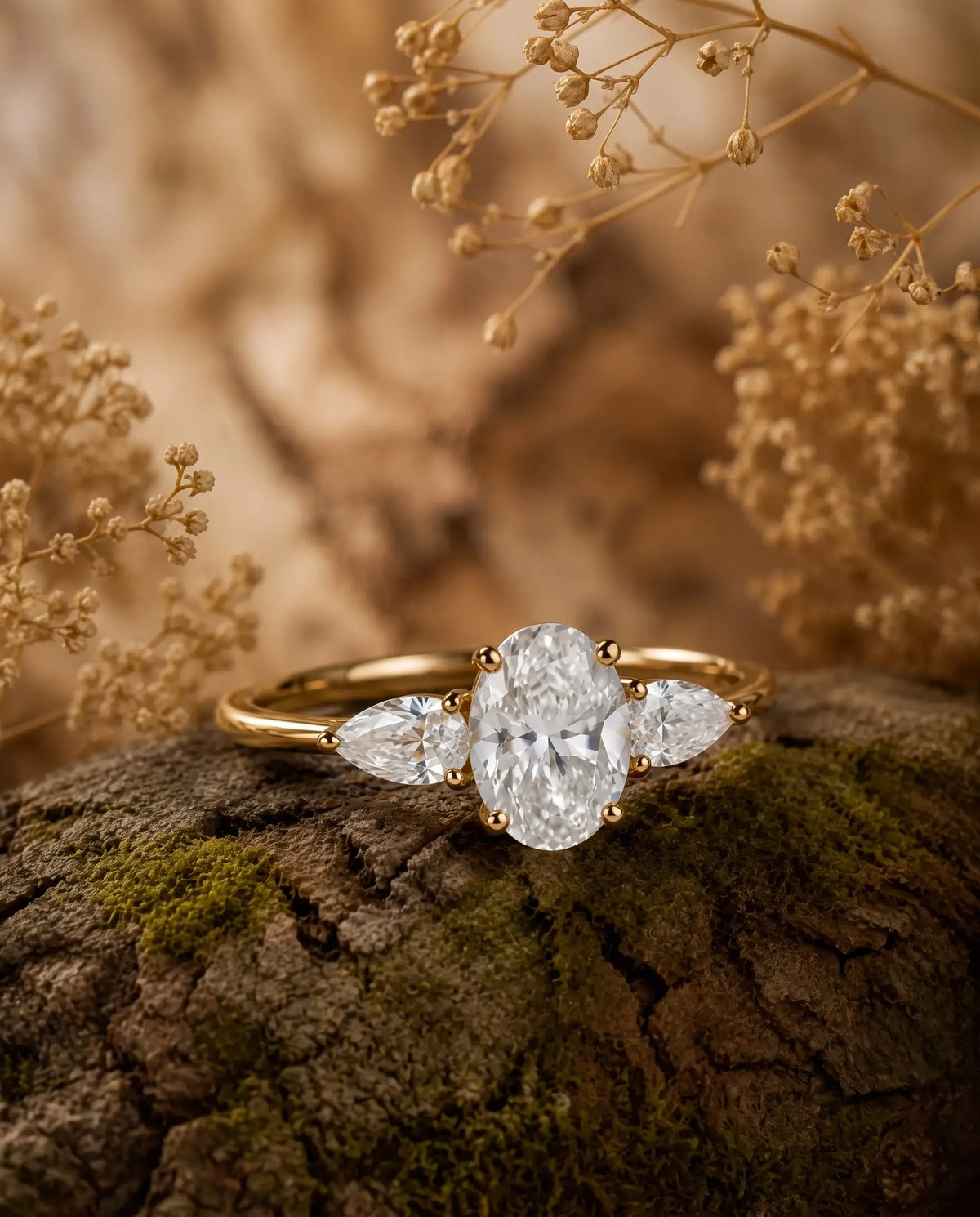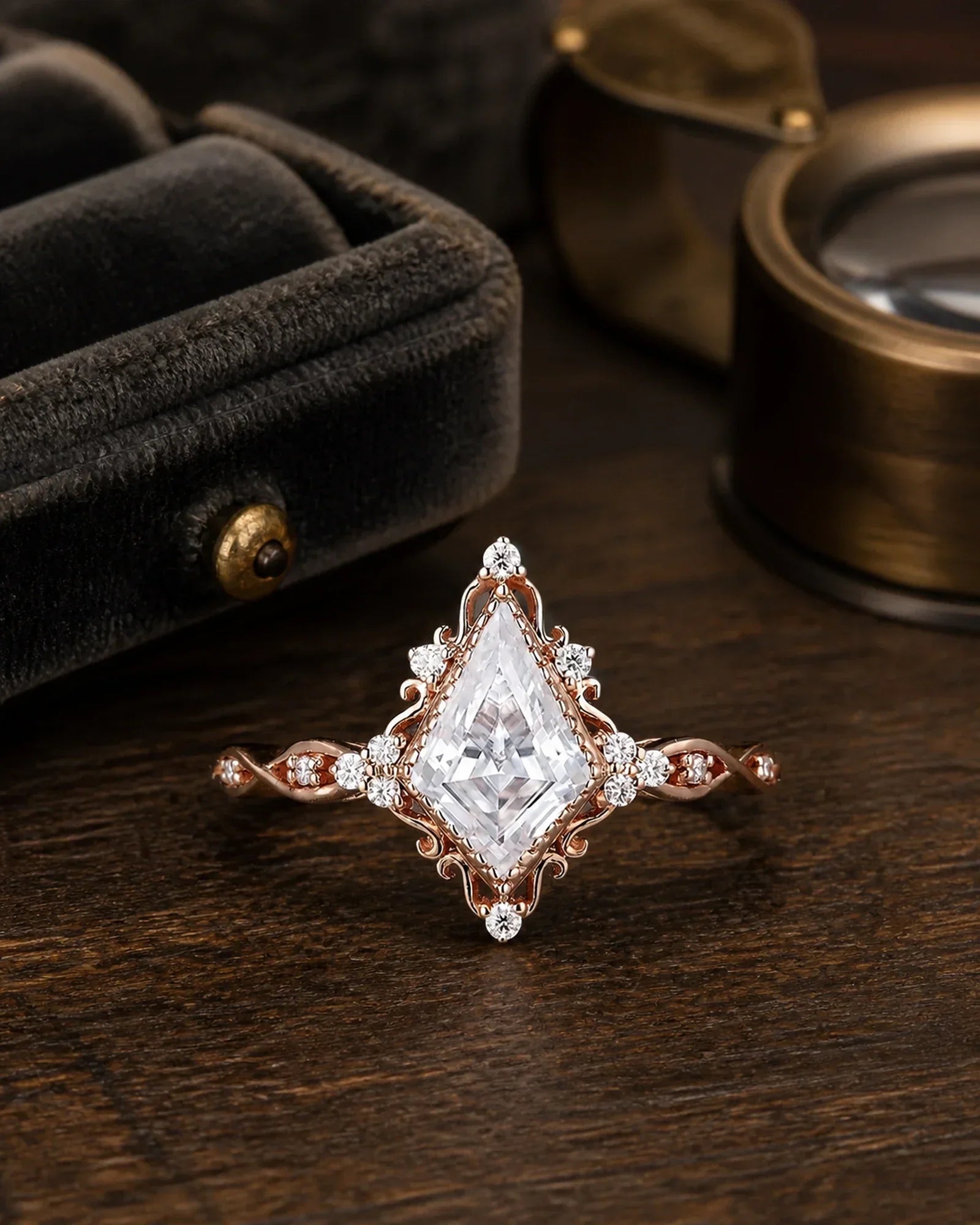

Um conjunto de alianças e anéis de noivado e casamento e dois anéis escolhidos separadamente podem parecer quase idênticos em uma foto. A diferença aparece depois: quando a aliança de casamento encontra a base do anel de noivado, quando o orçamento precisa cobrir as duas peças ou quando um anel precisa ser redimensionado sem alterar o outro.
A resposta curta é prática. Escolha conjuntos de anéis de noivado e casamento quando a silhueta final e o encaixe físico próximo forem o mais importante. Compre separadamente quando você valoriza gastos parcelados, escolhas de estilo independentes e mudanças futuras mais fáceis. Nenhum dos caminhos é universalmente melhor, e um conjunto combinando não é automaticamente mais barato ou mais confortável.
As duas rotas de compra
Rota 1: comprar o anel de noivado e a aliança como conjunto
Um conjunto de anel de noivado com aliança é desenvolvido ou apresentado como uma única composição. A aliança companheira pode acompanhar uma ponta em pera ou pipa, contornar uma base baixa, repetir um motivo de folhas ou emoldurar um agrupamento amplo. Você pode avaliar a largura total, o espaço negativo e os pontos de contato antes da compra.
Essa rota é mais indicada para engastes baixos, halos grandes, agrupamentos assimétricos, pontas alongadas e ombros esculturais. Também é útil quando você quer que os dois anéis pareçam intencionais desde o primeiro dia. A limitação é o compromisso: uma aliança com curva acentuada pode parecer incompleta sozinha e pode não funcionar com um futuro anel de noivado substituto.
Rota 2: comprar o anel de noivado e a aliança separadamente
A compra separada começa com um anel e adia a segunda decisão. Isso pode fazer sentido quando o pedido acontece bem antes do casamento, quando a pessoa que vai usar ainda não decidiu sobre a composição ou quando se prefere uma aliança lisa ao lado de um centro ornamentado. Também permite que duas pessoas escolham o anel de noivado juntas e retomem a decisão da aliança após meses de uso real.
O risco é que "mesmo metal, mesma largura" não significa compatível. Uma aliança reta pode parar na base, atritar uma pedra lateral baixa ou ficar em um nível vertical diferente. Se você quer anéis de noivado e aliança combinando sem comprá-los juntos, leve o anel de noivado real, um modelo tridimensional exato ou as medidas completas para a consulta da aliança.
Encaixe: olhe abaixo da pedra central
Fotos de cima mostram o estilo, não a folga. Vire o anel de noivado de lado e identifique a obstrução mais baixa: base, ponte, borda do halo, garra da pedra lateral ou ombro decorativo. Depois, compare esse ponto com a altura final da aliança. Uma ponte alta pode permitir que uma aliança reta passe por baixo. Uma base baixa pode exigir uma aliança contornada, em chevron ou aberta.
Um conjunto nupcial oferece uma relação definida para testar, mas ainda merece inspeção. Confirme que a aliança não pressiona as garras ou as bordas expostas das gemas quando os anéis giram. Verifique se a curva é direcional e se os dois anéis podem ser usados independentemente. Nosso detalhado guia de encaixe rente e espaçamento intencional explica as diferenças entre alianças retas, curvas, contornadas, abertas e espaçadoras.
O conforto também depende da largura combinada. Dois aros de 1,8 mm nem sempre parecem um anel de 3,6 mm, porque são quatro bordas e dois círculos que se movem. Experimente o conjunto completo depois que o dedo estiver aquecido, feche a mão de forma relaxada e segure uma caneca. Um par que parece perfeitamente alinhado ainda pode apertar ou parecer justo na região do nó do dedo.
Orçamento: compare a especificação total, não a palavra "conjunto"
Muitas pessoas perguntam se um conjunto de alianças de noivado e casamento custa menos. Às vezes custa, mas o rótulo por si só não prova nada. Compare o peso total do metal, a gema central, as gemas de acento, o acabamento, as garantias e os serviços inclusos. Um conjunto de duas peças com bastante cravejamento pode custar mais do que um solitário comprado agora e uma aliança lisa depois.
A verdadeira diferença de orçamento costuma estar no momento da compra. Um conjunto antecipa a despesa completa e protege contra a necessidade de ajustar uma aliança sob medida mais tarde. Comprar separadamente distribui o gasto em duas datas e permite que o orçamento da aliança de casamento mude. No entanto, uma aliança de contorno feita depois pode exigir medição, modelagem, protótipo ou produção personalizada. Considere essa possibilidade em vez de comparar apenas os totais do primeiro checkout.
Pense no valor como retrabalho evitado. Se um anel de noivado delicado com inspiração botânica claramente precisa de uma aliança em V ajustada, comprar o par já conhecido pode evitar a compra de uma aliança reta inadequada. Se o anel de noivado tem uma ponte alta e aberta e aceita muitas alianças padrão, adiar a escolha pode não custar nada estruturalmente e preservar mais liberdade.
Liberdade de design e upgrades futuros
Anéis separados oferecem a maior liberdade visual. Uma aliança polida pode acalmar um anel de noivado detalhado; uma textura diferente pode criar contraste; uma aliança de aniversário de casamento pode ser adicionada depois sem tentar reproduzir um motivo descontinuado. Você também pode usar a aliança de casamento sozinha durante viagens, trabalho ou atividades em que a gema central elevada pareça pouco prática.
Um conjunto oferece uma composição final mais harmônica. Formas de marquise repetidas, milgrain compartilhado ou curvas espelhadas podem fazer dois anéis parecerem um único design. Antes de decidir, imagine três situações futuras: o anel de noivado sozinho, a aliança de casamento sozinha e um empilhamento de três anéis de aniversário de casamento. Se apenas o arranjo original de dois anéis parecer coerente, decida se essa perda de flexibilidade é aceitável.
Ajuste de tamanho e reparo: dois anéis criam dois históricos de manutenção
A maioria dos conjuntos não soldados pode ser reparada um anel de cada vez. Isso é útil quando o anel de noivado e a aliança de casamento precisam de ajustes de tamanho diferentes ou quando um deles precisa de reaperto de gemas. Também permite que a pessoa use um anel enquanto o outro está na bancada. Depois que os anéis são unidos permanentemente, o alinhamento melhora, mas a limpeza, o reparo, o ajuste de tamanho e o uso individual se tornam mais difíceis.
Redimensionar pode alterar sutilmente o encaixe. Aumentar ou reduzir um anel modifica seu círculo, e um contorno profundo pode deixar de encontrar o anel de noivado exatamente nos mesmos pontos. Pedras em eternidade completa, cravação pavé extensa, gravação e milgrain repetido podem limitar a área disponível para ajuste de tamanho. Pergunte quantos números cada peça pode razoavelmente variar antes de fazer o pedido, não depois de uma mudança significativa no tamanho do dedo.
A complexidade do reparo acompanha o contato. Se a aliança roça uma garra do anel de noivado todos os dias, essa pequena área pode desgastar mais rápido que o restante. Se duas bordas com pavé se encontram, ambos os anéis podem precisar de inspeção. O vocabulário do guia de anatomia do anel de noivado ajuda você a identificar os componentes exatos envolvidos, em vez de relatar que “os anéis se tocam em algum lugar”.

Conjunto de noivado vs. anéis separados: comparação rápida
| Fator de decisão | Conjunto de noivado | Anéis separados |
|---|---|---|
| Encaixe inicial | Contorno conhecido e espaçamento pretendido podem ser avaliados em conjunto. | Devem ser medidos em relação ao anel de noivado finalizado. |
| Momento do orçamento | Normalmente paga pelas duas peças juntas. | Distribui as decisões e os gastos em duas datas. |
| Preço total | Pode ser eficiente, mas nenhum desconto automático deve ser presumido. | Pode começar mais baixo; ajustes personalizados posteriores podem acrescentar custo. |
| Liberdade de design | Visual unificado e marcante, menos combinações independentes. | Contraste máximo, mistura e opções de substituição futura. |
| Redimensionamento | Simples se não soldado e liso na parte de trás; contornos complexos podem se deslocar. | Cada anel pode ser ajustado independentemente, embora o encaixe precise ser reverificado. |
| Reparo | Áreas de contato conhecidas, mas detalhes combinados intricados podem exigir mais mão de obra. | Um anel pode ser reparado sozinho; bordas incompatíveis podem gerar desgaste. |
| Upgrade futuro | Melhor quando a composição original permanecerá central. | Melhor para trocar alianças, adicionar aniversários de casamento ou substituir uma peça. |
Seis designs atuais de conjunto e o que cada um ensina
Estes seis designs adicionados recentemente não estão em ordem de classificação. Cada um demonstra uma decisão diferente de encaixe ou de uso; compare as vistas laterais com o mesmo cuidado que dedica à pedra central.
 Conjunto Aura Moissanite OvalA aliança em V acomoda a pedra central oval e transforma o encaixe em parte da silhueta.14K a partir de $1,550
 Conjunto Rosavelle Rubi ClusterO milgrain e as engastes redondos repetidos tornam a inspeção e futuros reparos pontos importantes a considerar.14K a partir de $1,380
 Conjunto Celestelle Safira PeraA curva marquise emoldura a pedra central pontiaguda, algo que uma aliança reta comum não acompanharia.14K a partir de $1,430
 Conjunto Noctivra Moissanite PretaO corte kite direcional e os detalhes escuros valorizam a composição completa, mas vale conferir o visual da aliança sozinha.14K a partir de $1,580
 Conjunto Lumora Opala ClusterA aliança ajustada deve acomodar a opala mais delicada e seu cluster, sem pressioná-los para cima.14K a partir de $1,420
 Conjunto Serenvale Safira VintageO formato chevron garante o encaixe, enquanto as folhas em milgrain mantêm as duas peças visualmente conectadas.14K a partir de $1,280
Devo comprar um conjunto de alianças de noivado?
Escolha um conjunto quando você já gosta da silhueta completa das duas alianças, quando a cabeça do anel de noivado claramente precisa de uma aliança companheira com formato contornado e quando você se sente à vontade para aprovar a largura combinada agora. Escolha separadamente quando quiser usar o anel de noivado antes de decidir, preferir uma aliança lisa ou de contraste, precisar parcelar o investimento ou esperar que o empilhamento evolua com o tempo.
- Veja os dois anéis juntos de cima, de ambos os lados e pela parte interna da mão.
- Pergunte se o espaçamento é intencional no design e se alguma garra ou borda de gema se toca.
- Experimente cada anel sozinho e o conjunto completo por pelo menos dez minutos.
- Confirme a largura e a espessura finais das duas hastes.
- Pergunte qual é a variação prática de redimensionamento para cada anel antes de comprar.
- Decida se os anéis vão permanecer separados ou se poderão ser soldados no futuro.
- Simule uma aliança de aniversário de casamento futura antes de aprovar um contorno muito profundo.
Se o design for feito sob medida, a checklist de aprovação de anel personalizado explica quais dimensões e vistas laterais merecem confirmação por escrito. Para uma pesquisa mais ampla, compare aros de anel de noivado e perfis de aliança de casamento como estruturas físicas, não como estilos isolados.
Perguntas frequentes
O que está incluído em um conjunto de alianças de noivado?
Geralmente um anel de noivado e uma aliança de casamento coordenada. Alguns conjuntos incluem duas alianças companheiras, então confirme a quantidade de peças, as gemas, o metal e a numeração em cada anúncio.
Conjuntos de alianças de noivado são mais baratos do que comprar separadamente?
Não necessariamente. Compare as especificações completas e os serviços incluídos. Um conjunto pode evitar custos futuros de ajuste personalizado, enquanto a compra separada permite distribuir o gasto ao longo do tempo.
Os conjuntos de alianças de noivado precisam ser soldados juntos?
Não. Muitos são usados como dois anéis independentes. A solda pode estabilizar o alinhamento, mas reduz a flexibilidade de usar cada anel sozinho e pode complicar futuros redimensionamentos ou reparos.
Um conjunto de alianças de noivado pode ser redimensionado?
Muitas vezes sim, mas a variação prática depende da cobertura de pavê, gravação, pedras em eternidade completa, construção da haste e profundidade do contorno. Os dois anéis devem ser redimensionados e verificados novamente como um par.
Posso adicionar uma aliança de aniversário de casamento a um conjunto de alianças de noivado?
Normalmente sim, mas teste antes a largura e o alinhamento futuros dos três anéis. Um contorno direcional profundo pode ser difícil de espelhar, enquanto um empilhamento mais simples deixa mais opções em aberto.
A melhor escolha é a que protege sua próxima decisão
A melhor resposta para conjunto de alianças vs. anéis separados não está escondida no rótulo de um produto. Ela aparece na geometria da parte inferior das peças, na largura total da pilha, no plano de manutenção e na forma como você espera que os anéis acompanhem as mudanças da sua vida. Um conjunto elimina um problema futuro de combinação. Anéis separados preservam uma escolha futura. Decida qual desses benefícios importa mais para você antes de aprovar o design.