
O que significa um anel de promessa?
Um anel de promessa é uma joia ligada a um compromisso declarado. Para um casal, significa: “Estamos em um relacionamento sério e exclusivo.” Para outro, “Pretendemos construir um futuro, mas não estamos noivos.” Também pode representar sobriedade, amizade, fé ou uma promessa pessoal e íntima. Essa flexibilidade é a força da tradição, mas também é o motivo pelo qual um anel nunca deve ser entregue com uma mensagem vaga.
A distinção mais clara é verbal: um anel de noivado acompanha a decisão de se casar; um anel de promessa, não. Preço, pedra e dedo podem reforçar essa distinção, mas nenhum deles se sobrepõe ao que quem presenteia diz. Uma moissanite pequena ainda pode ser um anel de noivado. Uma safira valiosa ainda pode marcar uma promessa que não envolve casamento. Para um panorama mais amplo das joias de relacionamento, o guia sobre significados dos anéis de relacionamento explica como anéis de promessa, noivado, casamento e eternidade se diferenciam.

Quando você deve dar um anel de promessa?
Não existe um número certo de meses para esperar. Um teste melhor é verificar se as duas pessoas entendem o relacionamento da mesma forma. Anéis de promessa costumam combinar com casais que já conversaram sobre intenções de longo prazo, mas ainda não estão prontos para o casamento, com parceiros que entrarão em um período de distância ou com pessoas que querem marcar uma data significativa sem sugerir um casamento iminente.
Antes de comprar, faça a si mesmo uma pergunta direta: O estojo, o local ou as palavras podem fazer isso parecer um pedido de noivado? Um estojo de anel aberto durante um jantar à luz de velas pode transmitir uma mensagem diferente do mesmo anel entregue com um bilhete escrito explicando a promessa. Se não for um pedido de casamento, diga isso com carinho e clareza. A clareza não diminui o romantismo; ela o protege.
| Decisão | Anel de promessa | Anel de noivado |
|---|---|---|
| Propósito | Um compromisso definido pelas pessoas envolvidas | Um pedido de noivado ou decisão mútua de se casar |
| Momento | Quando a promessa é real e compreendida por ambos | Quando as duas pessoas estão prontas para planejar o casamento |
| Design | Costuma ser pessoal, simbólico, fino ou com destaque para a cor | Costuma ser projetado como o anel central da futura composição |
| Uso futuro | Pode mudar de mão, entrar em uma composição ou permanecer separado | Normalmente fica no dedo anelar esquerdo junto com a aliança de casamento |
Quanto deve custar um anel de promessa?
Ignore regras baseadas em salário. Um anel de promessa deve caber no orçamento atual de quem presenteia, sem criar dívidas ou pressão. Sua importância emocional não exige o gasto de um anel de noivado. Em joias finas, o custo geralmente é determinado pelo peso e pureza do metal, tipo e tamanho da pedra central, número de pedras de apoio, mão de obra da cravação e detalhes personalizados.
Uma forma prática de definir o orçamento
Comece pelo valor que pode ser pago com conforto. Depois, decida se o uso prolongado ou o impacto visual importa mais. Um anel de ouro maciço com uma pedra central menor pode envelhecer melhor do que um design grande e intricado feito para atingir o mesmo preço. Na faixa intermediária do mercado, o ouro 14K costuma equilibrar durabilidade, valor do metal precioso e cor. A comparação entre ouro 10K, 14K e 18K é útil quando ombros botânicos finos ou muitas cravações pequenas estão envolvidos.
Como referência prática, orçamentos mais baixos favorecem uma pedra pequena, ombros mais simples e menos pedras de apoio. Um orçamento intermediário pode comportar ouro maciço, um corte mais diferenciado ou um cluster cuidadosamente construído. Um orçamento mais alto é mais valioso quando compra melhor estrutura, proporção personalizada, uma gema mais difícil de encontrar ou acabamento manual especializado, e não apenas uma pedra central maior.
Qual gema faz o melhor anel de promessa?
A melhor gema não é simplesmente a mais romântica. É a pedra cuja aparência e cuidados combinam com quem vai recebê-la. Alguém que trabalha com as mãos precisa de uma resposta diferente de alguém que alterna joias e tira os anéis antes das tarefas domésticas.

Moissanita: brilho intenso e confiança para o dia a dia
Anéis de moissanita são uma escolha prática para uso frequente. A moissanita é dura, resiste bem a riscos e produz um intenso fogo arco-íris. Uma pedra central pequena, um corte incomum, ombros em folha ou um cluster baixo podem manter os anéis de promessa de moissanita pessoais, sem parecerem um pedido de noivado. Quem prefere um visual mais discreto deve comparar as dimensões da pedra, não apenas as descrições de quilate equivalente, e assistir a vídeos sob luz comum.
Safeira e rubi: cor durável
O coríndon, família mineral que inclui a safira e o rubi, é bastante adequado para o uso diário. O azul é clássico, enquanto o azul-petróleo, o rosa e outras cores de safira podem ter um toque mais pessoal. As garras de proteção continuam importantes nos cantos pontiagudos, e materiais com muitas inclusões ainda merecem uma inspeção cuidadosa. Essas pedras funcionam especialmente bem para anéis de promessa de pedra de nascimento e para quem quer cor sem a superfície mais macia da opala.
Ágata musgo: uma paisagem única
Um anel de promessa de ágata musgo é escolhido por suas inclusões verdes ramificadas, e não por um brilho uniforme. Cada pedra é diferente, por isso a foto da pedra exata é tão importante. A ágata pode ser usada com cuidado, mas é menos resistente a riscos do que a safira ou a moissanita. Uma base mais baixa, garras seguras ou uma borda tipo engaste bezel podem reduzir a exposição das arestas. A linha atual de anéis de ágata musgo também mostra como os formatos pera, oval e kite mudam a direção visual do padrão.
Alexandrita: mudança de cor com uma ressalva técnica
A alexandrita pode passar do verde-azulado na luz do dia mais fria para tons arroxeados ou avermelhados sob iluminação mais quente. A alexandrita natural de alta qualidade é excepcionalmente rara; muitos designs acessíveis usam material cultivado em laboratório. O anúncio deve informar a origem com clareza. Peça fotos da mesma pedra sob luz do dia e luz quente, porque uma única imagem de estúdio não consegue demonstrar com honestidade uma pedra de mudança de cor.
Opala, pedra da lua e pérola: belas, mas não descomplicadas
Esses materiais oferecem um brilho suave em vez do fulgor convencional, mas exigem hábitos mais delicados. Eles riscam com mais facilidade e podem ser danificados por impactos ou limpeza descuidada. Escolha um perfil mais discreto, metal mais protetor e uma pessoa disposta a tirar o anel para praticar exercícios, limpar a casa e fazer trabalhos pesados. O guia de durabilidade de pedras preciosas para uso diário traz uma comparação mais completa.
E os conjuntos de anel de promessa?
A expressão conjuntos de anel de promessa pode descrever três produtos diferentes: anéis combinando para dois parceiros, um anel estilo noivado com uma aliança ajustada, ou uma pilha coordenada vendida em conjunto. Leia o anúncio em vez de confiar apenas no título. Se o conjunto incluir uma aliança de contorno, decida se as duas peças serão usadas agora. Uma pilha de dois anéis visivelmente nupcial pode comunicar noivado mesmo quando quem presenteia pretende algo mais reservado.
Para conjuntos de casal, a combinação visual exata é opcional. Cor de metal compartilhada, gravação, textura ou uma pequena pedra repetida costuma parecer mais usável do que dois anéis idênticos. Confirme que cada anel tem sua própria escolha de tamanho e que um ajuste futuro não vai comprometer as pedras ou uma gravação contínua.
Em qual dedo se usa um anel de promessa?
Não existe uma regra universal para em qual dedo usar um anel de promessa. O dedo anelar da mão direita é uma escolha padrão sensata quando o casal quer evitar suposições de noivado. O dedo anelar da mão esquerda também é aceitável quando os dois se sentem à vontade com suas associações culturais. Um dedo médio, indicador ou um colar com o anel no pescoço podem ser igualmente significativos.

Como acertar o tamanho
Meça tarde o suficiente no dia para que as mãos não estejam excepcionalmente frias, mas evite medir logo após exercício, exposição ao calor ou uma refeição salgada. Um anel deve passar pelo nó do dedo com leve resistência e assentar sem apertar. Meça a mão e o dedo exatos, pois os dedos da mão dominante podem ser ligeiramente maiores. Aros mais largos costumam parecer mais apertados do que hastes finas, então a largura final importa.
Se o anel for uma surpresa, pegue emprestado um anel usado no dedo pretendido e meça seu diâmetro interno. Não contorne a borda externa nem presuma que um anel usado na outra mão seja equivalente. Para uma haste dividida, aro estilo eternidade ou pedras que se estendem bastante ao redor do dedo, pergunte quantos ajustes futuros de tamanho são viáveis antes de fazer o pedido.
Seis Estilos Recentes de Anel de Promessa para Comparar
Estes designs publicados recentemente são pontos de comparação, e não uma definição única de anel de promessa. Eles mostram como uma promessa pode ser expressa por meio de um conjunto ajustado, moissanite de alto brilho, ágata de padrão natural, jogo de cores da opala, trabalho em metal floral ou alexandrita que muda de cor.

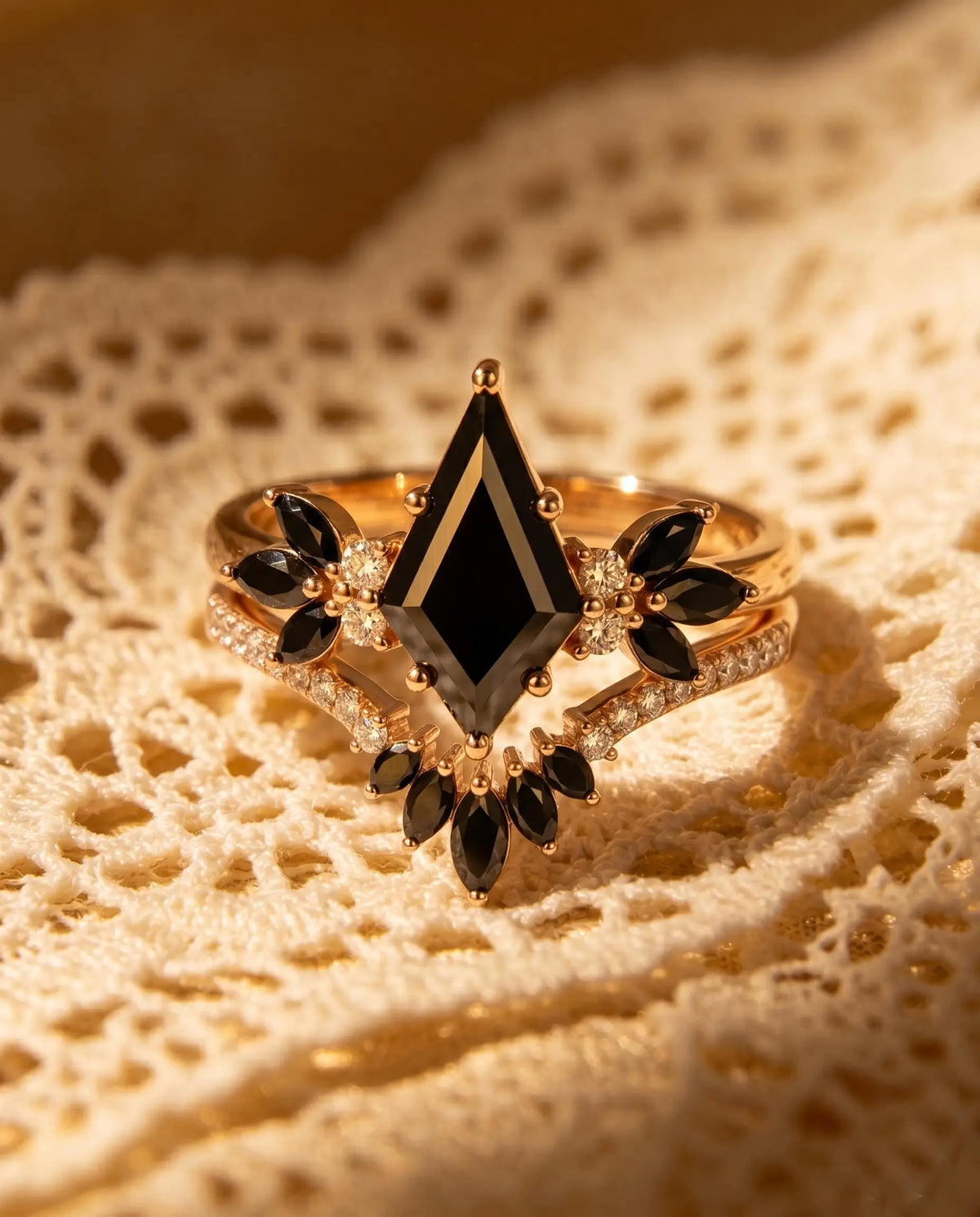
Conjunto Aurelisse Kite Leaf
Um conjunto coordenado para quem quer a segunda aliança planejada desde o início.

Cluster Aeloria Ágata Musgo
Uma escolha de padrão natural com custo mais acessível, em que a pedra individual se torna o significado.

Elara Opala Cluster
Jogo de cores dos sonhos para quem usa com cuidado e valoriza emoção acima de praticidade.

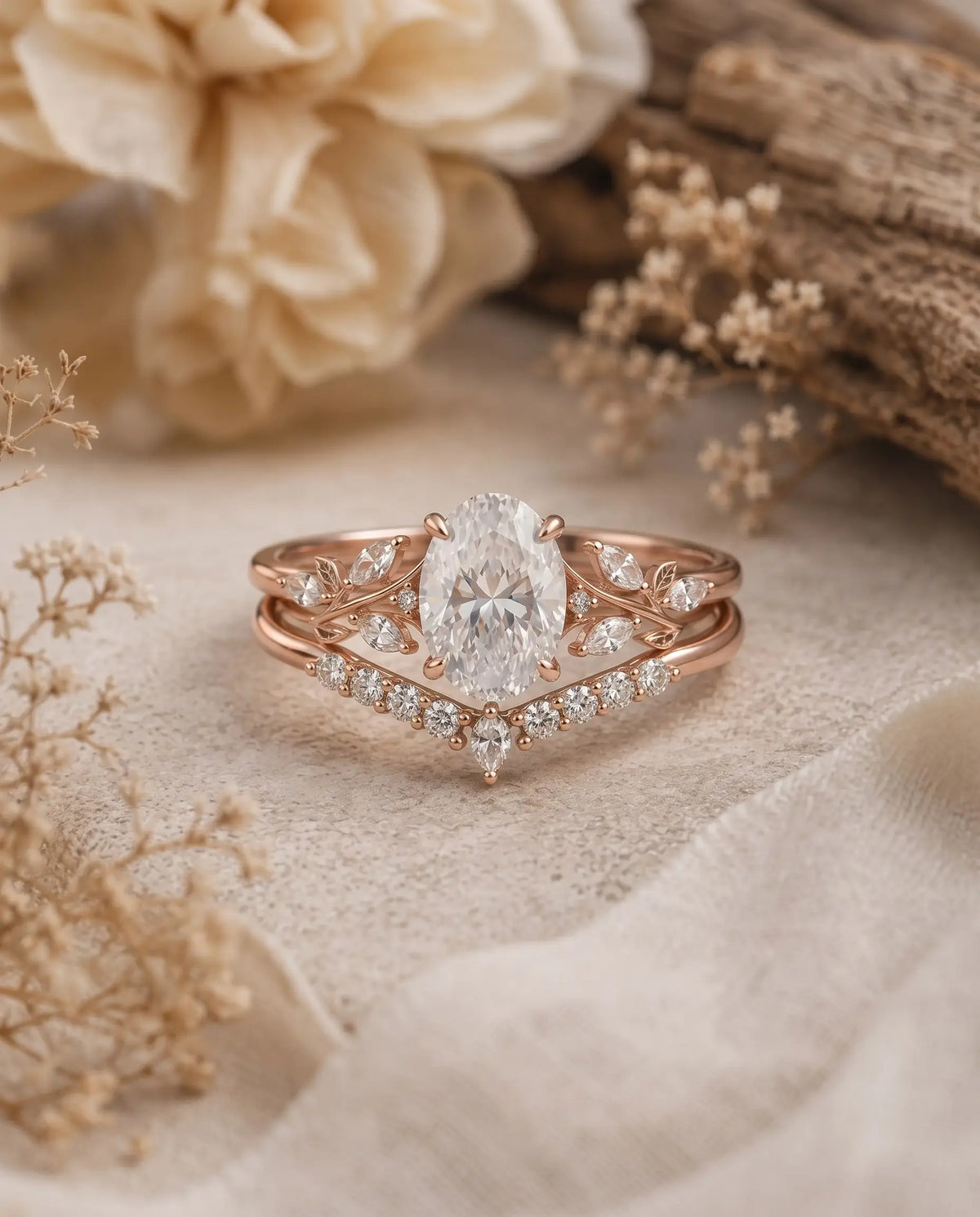
Sylvara Anel Folha Pera
Simbolismo de crescimento em uma pedra paisagem em formato pera com ombros botânicos.

Elowen Anel Flor de Rosa
Uma direção floral mais expressiva para uma promessa ligada a simbolismo pessoal.

Florielle Anel Folha Alexandrita
Uma peça central que muda de cor para uma promessa associada a crescimento ou transição.
Antes de Fazer Seu Pedido
- Defina a promessa em palavras antes de escolher o design.
- Estabeleça um orçamento total sem dívidas, incluindo a configuração mostrada nas fotos.
- Combine o cuidado com a gema à rotina real de quem vai usar a joia.
- Verifique as dimensões em milímetros e o perfil lateral, não apenas a linguagem de quilates.
- Confirme se "conjunto" significa alianças para dois parceiros ou anéis para empilhar.
- Meça exatamente a mão e o dedo onde o anel será usado.
- Pergunte quanto o aro e a disposição das gemas permitem de ajuste de tamanho.
- Deixe claro se o presente é ou não um pedido de noivado.
Perguntas frequentes sobre anel de promessa
Devo comprar um anel de promessa?
Compre quando as duas pessoas valorizam um símbolo tangível de compromisso e entendem o que ele significa. Ele não é necessário para provar um relacionamento sério e não deve ser usado para adiar uma conversa honesta sobre casamento.
Em qual dedo se usa um anel de promessa?
Qualquer dedo pode ser correto. O dedo anelar da mão direita é o padrão mais claro quando se quer evitar simbolismo de noivado. Se o dedo anelar da mão esquerda for escolhido, conversem sobre se o anel mudará de dedo após um futuro pedido.
Um anel de promessa pode parecer um anel de noivado?
Sim, mas a aparência afeta as expectativas. Um solitário grande e incolor ou um conjunto nupcial tem mais chance de ser interpretado como anel de noivado. Uma gema menor, pedra de nascimento, motivo decorativo ou uso na mão direita podem comunicar a distinção com mais facilidade.
Anéis de promessa de moissanite são duráveis?
A moissanite é uma ótima opção para uso frequente porque é dura e resistente a riscos. Ainda assim, as garras, a espessura do aro e a altura do anel importam, então um material durável não justifica uma construção frágil ou hábitos de uso descuidados.
A ágata musgo é adequada para um anel de promessa?
Sim, para quem ama variações naturais e consegue usá-la com cuidado. A ágata musgo é menos resistente a riscos do que a moissanite ou a safira. Escolha uma cravação segura e relativamente baixa e retire o anel para tarefas com risco de impacto.
Um anel de promessa pode se tornar um anel de noivado depois?
Pode, se as duas pessoas redefinirem isso de forma deliberada. Ele também pode passar para a mão direita, fazer parte de uma composição empilhada ou continuar como uma lembrança à parte. Não presuma uma troca ou mudança de significado sem conversar sobre isso.
Um bom anel de promessa não é uma imitação menor do anel de noivado de outra pessoa. É uma expressão clara e usável de um compromisso específico. Quando significado, orçamento, material e caimento estão em sintonia, o anel parece intencional agora e continua relevante mesmo que a história de joias do relacionamento mude depois.