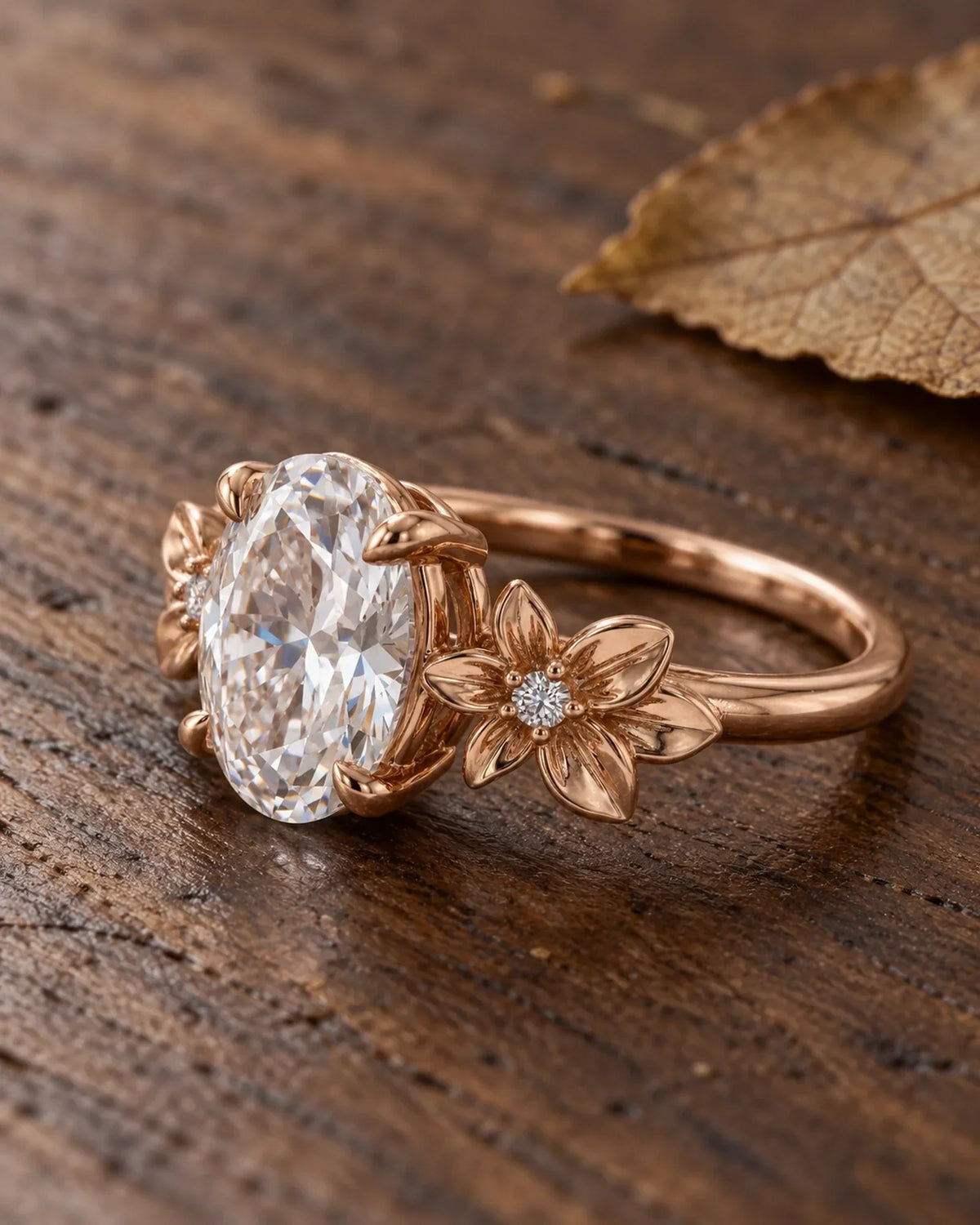

You may have chosen the ring before you knew what to call its stone. There was a cool green flash in the morning photograph, a purple one in the evening video, and something about that change felt personal. Then the listing said "lab alexandrite," the supplier's description said "alexandrite sapphire," and a third page called it "simulated." It is reasonable to wonder whether those are three ways of describing the same thing.
They are not interchangeable. Lab-grown alexandrite is synthetic chrysoberyl; color-change sapphire is corundum, which can be natural or laboratory-grown. A lab-grown color-change sapphire can imitate alexandrite's appearance while remaining sapphire. Both can make beautiful rings. The distinction matters because it determines which material you are paying for, how its properties should be described, and what evidence would confirm the purchase.
A thoughtful comparison of lab alexandrite vs color change sapphire begins with two questions: What is this mineral? and Was this particular stone grown in a laboratory or formed naturally? The color-change video comes after those questions, not in place of them.
Read the name before reading the romance
A familiar gemstone name carries a lot of expectations. "Alexandrite" evokes June birthdays, rarity and a green-to-red transformation. Adding "lab-grown" changes the growth origin; it does not give permission to substitute an unrelated mineral. Adding "sapphire" changes the material being discussed. When several names appear together, ask the seller to replace the marketing shorthand with a complete mineral description.
| Name in a listing | What it should tell you | What still needs confirmation |
|---|---|---|
| Natural alexandrite | A naturally formed color-change variety of chrysoberyl | The individual stone's identity, natural origin and disclosed treatments |
| Lab-grown / synthetic alexandrite | Laboratory-grown alexandrite, with chrysoberyl as its mineral identity | Whether the seller is using the term accurately; evidence tied to your stone |
| Color-change sapphire | A sapphire displaying color change; its mineral is corundum | Natural or laboratory-grown origin, and any relevant treatments |
| "Alexandrite sapphire" | Ambiguous trade shorthand, generally used for lab-grown color-change sapphire | Ask explicitly whether it is corundum or chrysoberyl |
| Simulated alexandrite | A material used to resemble alexandrite, rather than lab-grown alexandrite itself | The actual substance, growth origin and care requirements |
If you searched for alexandrite sapphire meaning, GIA's explanation of "alexandrite sapphire" is particularly useful. It says the term generally refers to laboratory-grown sapphire made with trace elements that produce an alexandrite-like color-change effect. It also notes that natural sapphires can change color. The wording is a reason to seek clarification, rather than a way to identify a stone from its title.
Chrysoberyl and corundum are different crystals
Alexandrite belongs to chrysoberyl, with the chemical formula BeAl2O4. Sapphire belongs to corundum, Al2O3. The names describe different crystal materials, even when a faceted stone in each family shows a similar purple or teal appearance. Growing corundum in a laboratory does not turn it into chrysoberyl.
There are measurable differences. Typical refractive-index reference ranges are approximately 1.746-1.755 for alexandrite and 1.762-1.770 for sapphire. Their Mohs hardnesses are about 8.5 and 9 respectively. These figures help explain why trained gemologists can separate the materials; they are not instructions for identifying your mounted ring at home. A diamond tester, a phone photograph or a scratch experiment cannot answer this mineral question reliably.
Chromium is central to alexandrite's characteristic color change. Vanadium can produce an alexandrite-like change in synthetic sapphire. The crystal absorbs some parts of visible light more strongly than others; the balance of wavelengths supplied by the light source affects the color reaching your eye. The stone has not become a different mineral when you move it from a window to a lamp.
Do not turn that explanation into a simplistic color rule. "Green means alexandrite" and "purple means sapphire" are both unreliable shortcuts. Color ranges overlap, saturation varies, and a camera may reproduce the same gem differently from your eye. The material must be established through appropriate examination, not a preferred pair of colors.
Synthetic and simulated answer different questions
This is the part of the terminology that can feel unnecessarily hurtful. A buyer hears "synthetic" and worries the ring is somehow less meaningful. Gemologically, the word describes manufacture: a synthetic counterpart shares essentially the chemical, physical and optical properties of the natural material. It does not tell you how much you will love wearing it.
For synthetic alexandrite vs simulated alexandrite, the dividing line is mineral identity. Synthetic alexandrite is laboratory-grown alexandrite. A simulant is another material selected to resemble it. A laboratory-grown color-change sapphire can therefore be synthetic sapphire and an alexandrite simulant at the same time. Those descriptions are consistent: one names its material and origin; the other describes what it is imitating.
Simulated does not automatically mean glass, fragile or badly made. Corundum is a substantial jewelry material. Conversely, the word "lab" by itself does not mean a stone is alexandrite. It tells you too little unless the mineral it qualifies is clear. "Created," "premium," "AAA" and "June birthstone" also cannot substitute for that information.
Growth-method names need the same care. True synthetic alexandrite can be made by processes including crystal pulling and flux growth. Sapphire can also be grown by more than one process. A familiar manufacturing term, a supplier brand or a claimed country of manufacture is supporting information, not a mineral identification. Ask for the material first, then the manufacturing details when available.
What a color-change video can actually show
A good video can help you decide whether you like the actual stone's appearance. It can show whether the center looks lively or nearly black indoors, how the shift reads at hand distance, and whether the mounted gem still has the colors that attracted you. It cannot by itself establish chrysoberyl versus corundum, natural versus laboratory-grown origin, or an absence of treatment.

Ask to see the same identified stone under daylight or a described daylight-equivalent source, then under a described warm source. Keep the background, viewing angle and distance comparable. Have the seller state whether the warm source is incandescent or LED: two lamps with similar color-temperature labels can have different spectral output. An ordinary warm LED may not reproduce the display seen under tungsten lighting.
Separate a change of light source from a change of viewing direction. Pleochroism is the appearance of different colors along different directions in a crystal. Tilting a gem also moves reflections and changes which facets look dark. A clip that rotates a stone under one lamp may be attractive, but it does not isolate the light-source change you want to evaluate.
Phones introduce another variable. Automatic white balance can partly cancel a change, or changing settings between shots can exaggerate one. Request unfiltered footage with camera adjustments disclosed and a neutral background visible. A continuous clip with a specimen label is helpful for continuity, although it remains a demonstration rather than an identification test. There is no need to demand spectacular red under every household lamp.
Most of all, include ordinary indoor light. A ring you wear for years will spend more time at a desk or over dinner than under a jeweler's brightest display. If you enjoy its quieter indoor color, the change can remain a lovely extra. If you only like the most dramatic frame, ask for more footage before approving the stone.
How to verify lab alexandrite without guessing
Start with a written answer to the mineral question. A seller's declaration should be specific enough to put on an invoice: for example, "laboratory-grown alexandrite, chrysoberyl" or "laboratory-grown color-change sapphire, corundum." These are examples of clear wording, not findings about a pictured product. A supplier specification establishes what was declared; it is not equivalent to an independent examination of your individual gem.
For independent confirmation, request a gemstone identification report from a competent laboratory, with its scope agreed beforehand. An appropriate report can address material identity, natural or synthetic origin, and detectable treatments. Ask whether it concerns your center stone, a group of stones, or a representative sample. A batch document may support sourcing, but cannot automatically prove the identity of every gem supplied later.

Standard examination may include refractive index, microscopic features and, where appropriate, specific gravity. More advanced spectroscopy can help resolve identity or growth origin when simpler observations are insufficient. Mounted settings can limit measurements, and a stone's lack of obvious inclusions does not settle the question. The laboratory should choose the necessary tests; a buyer should request a clear conclusion and understand any stated limitations.
There is a concrete example in GIA's Spring 2025 laboratory note on synthetic sapphire. A 1.70 ct stone submitted as alexandrite produced a refractive index of 1.760-1.768 and specific gravity of 3.99, consistent with corundum; further analysis supported synthetic origin. The case involved an unusual ultraviolet response, rather than a typical daylight-to-lamplight demonstration. Its relevance here is straightforward: the submitted name was corrected by examination.
Read the report's identification and comments, not just the logo. GIA identifies colored stones but does not give them a universal quality grade like the diamond grading scale. A seller's "AAA" label therefore does not answer the mineral question or imply a GIA grade. Equally, a treatment statement such as "no indications of heating" is not the same field as natural or laboratory-grown origin.
A report number is only half the connection
Verify the report through the issuing laboratory's own lookup service or contact channel. Then match its description to the stone being offered: shape, measurements, recorded weight where available, photograph and specimen reference. A genuine report number can still be shown beside the wrong stone. Two commercial 8 x 6 mm ovals can share an outline, so dimensions alone are a weak link.
Ask how the loose stone was tracked from examination to setting. Save the labeled stone-selection images and the seller's written confirmation that this is the center allocated to your order. For a mounted gem, check whether the reported weight is measured, estimated or not stated; the ring's total weight is not the center's loose carat weight. Recutting or replacing a stone may also require an updated record. The useful paper trail follows the individual gem through those changes.
Once the material is clear, choose the ring you want to live with
If you specifically want alexandrite's mineral identity, insist on confirmed laboratory-grown chrysoberyl when choosing the synthetic option. If you mainly want an appealing color shift within a particular budget, clearly disclosed color-change sapphire may satisfy you. If natural rarity is central to the gift, synthetic chrysoberyl will not meet that requirement either. Decide which promise matters before comparing prices.
Compare complete quotes: center material, dimensions, cut, metal, accent stones, workmanship and any report fee. A higher whole-ring price does not identify the center, and a low price is not a laboratory result. Spend on the stone and design you actually intend to buy. Avoid paying a natural-rarity premium merely because the description borrows the language of rare natural alexandrite.
For daily wear, both chrysoberyl and corundum have strong scratch resistance, but hardness does not make a pointed gem or delicate setting immune to impact. A marquise or pear needs suitable protection at its tips. Check the side profile, prong finish and wedding-band clearance. Known treatments and the condition of the individual stone affect appropriate cleaning and repair; give the jeweler the material record before heat or ultrasonic work.
A solitaire makes the center's indoor color easy to judge. A bright cluster can make a dark center appear quieter by contrast. A leafy bridal set brings another question: if more than one colored stone is used, are the center and matching-band accents the same disclosed material, and have they been reviewed together in both lights? Matching one studio photograph is easier than matching the actual pair throughout your day.
The alexandrite ring collection provides design starting points, while lab-grown gemstone rings offer a broader range of shapes and colors. Use collection names for browsing and the written order specification for material confirmation. For custom gemstone ring design, resolve identity and the approval process before choosing the final mounting.
Three design contexts to compare after stone confirmation
The following catalog examples are listed as Lab Alexandrite. Their photographs illustrate ring design; this guide has not independently identified their stones. Request the mineral identity and available material documentation for the center allocated to your order.

Vaelith five-stone ring
Compare the oval's ordinary indoor brightness beside its angular accents. Ask to see the actual center at this hand-wearing scale.
14K solid gold options from $890 USD.

Aurora marquise cluster
Confirm the center material and review the pointed ends, their protection and the side height before approving a slender silhouette.
14K solid gold options from $860 USD.

Foliage oval leaf set
Ask whether the colored stones in both rings share the same disclosed material and how their appearance will be matched.
14K solid gold options from $1,680 USD.
Available 14K variant prices reviewed October 4, 2026. Metal, accent and customization choices can change the final quote.
The specification to agree before you say yes
You should not have to become a gemologist to commission a ring. A short record can preserve the decisions that matter, especially when the ring will mark an engagement or a significant birthday. Ask for the answer in writing while changes are still possible.
Your stone and document confirmation sheet
- Material and growth origin
- Record the mineral and variety, plus natural or laboratory-grown origin. If a substitute is offered, record its actual substance and that it is an imitation of alexandrite.
- The individual stone
- Record its specimen ID, shape, dimensions and loose weight when known. Attach the labeled images used for selection.
- Color review
- Keep the daylight-type, warm-light and ordinary indoor views, with light sources described. Confirm whether they show your allocated center or a sample.
- Treatments and care
- Record disclosed treatments, what is known or undetermined, and any cleaning or repair restrictions.
- Evidence and its scope
- Record the issuing laboratory, report number and date, identification result, lookup method and whether the document covers this stone individually. Keep supplier declarations separate from independent findings.
- The completed order
- Record center and accent materials, gold fineness, setting, final price, approval deadline and what happens if the delivered material does not match the written specification.
A message like this is enough to start a useful conversation:
"I love the color-change look. Before I approve the ring, please confirm whether its center is laboratory-grown alexandrite/chrysoberyl or color-change sapphire/corundum. What material document is available, and does it cover my individual stone? Please label the actual center in its daylight and warm-light views, and include the mineral identity in my written order specification."
If the response only repeats "it changes color beautifully," the material question remains unanswered. If a report is unavailable, ask about independent testing, its cost and timing, and the terms for handling a different identification result. You can also choose to buy a clearly disclosed color-change sapphire. What deserves a pause is an unresolved name being treated as a confirmed identity.
The evening color can still be the part of the ring you treasure. Clear disclosure gives that pleasure a secure foundation: you know what the stone is, you understand the evidence, and the promise written on your order is the one you intended to keep.