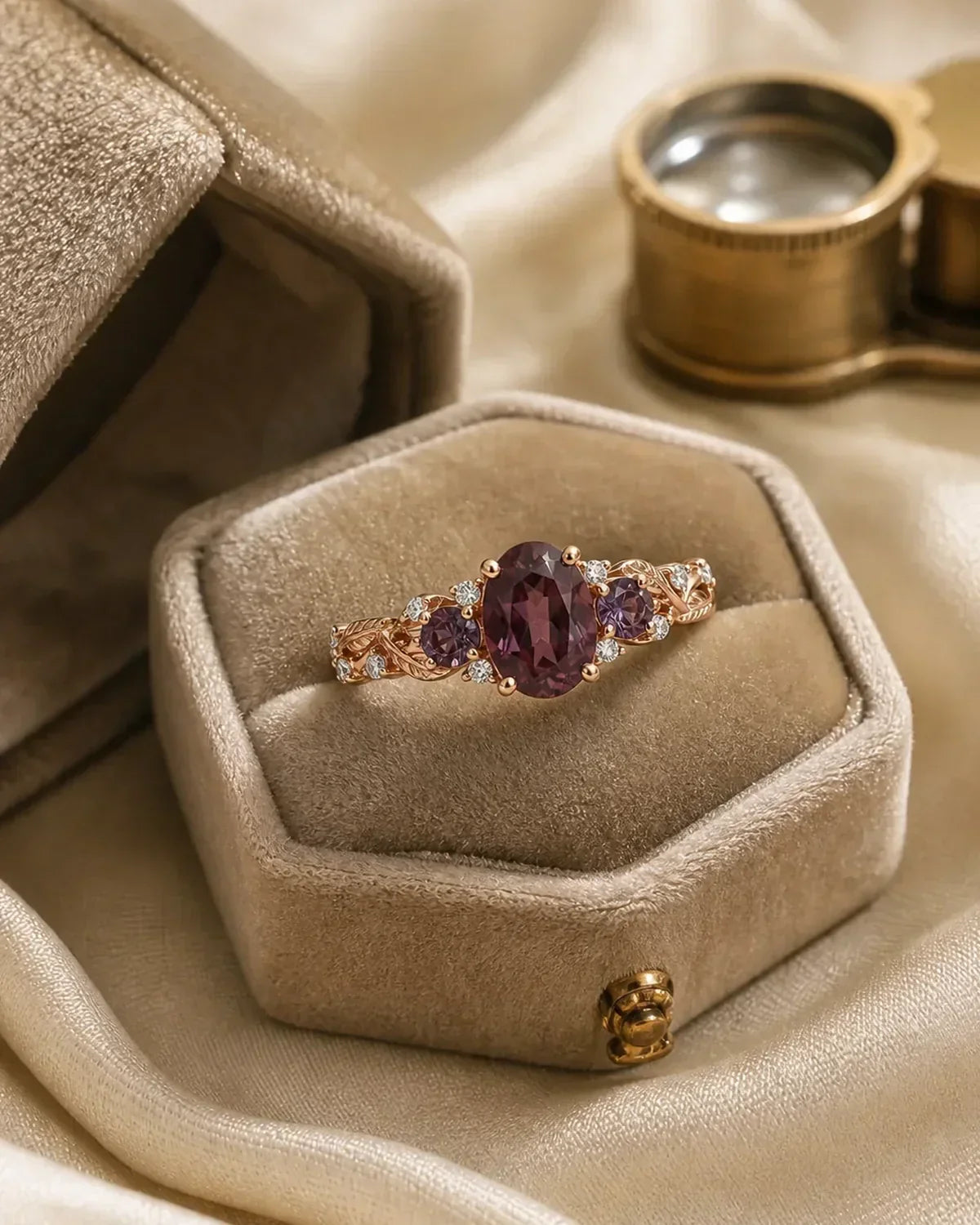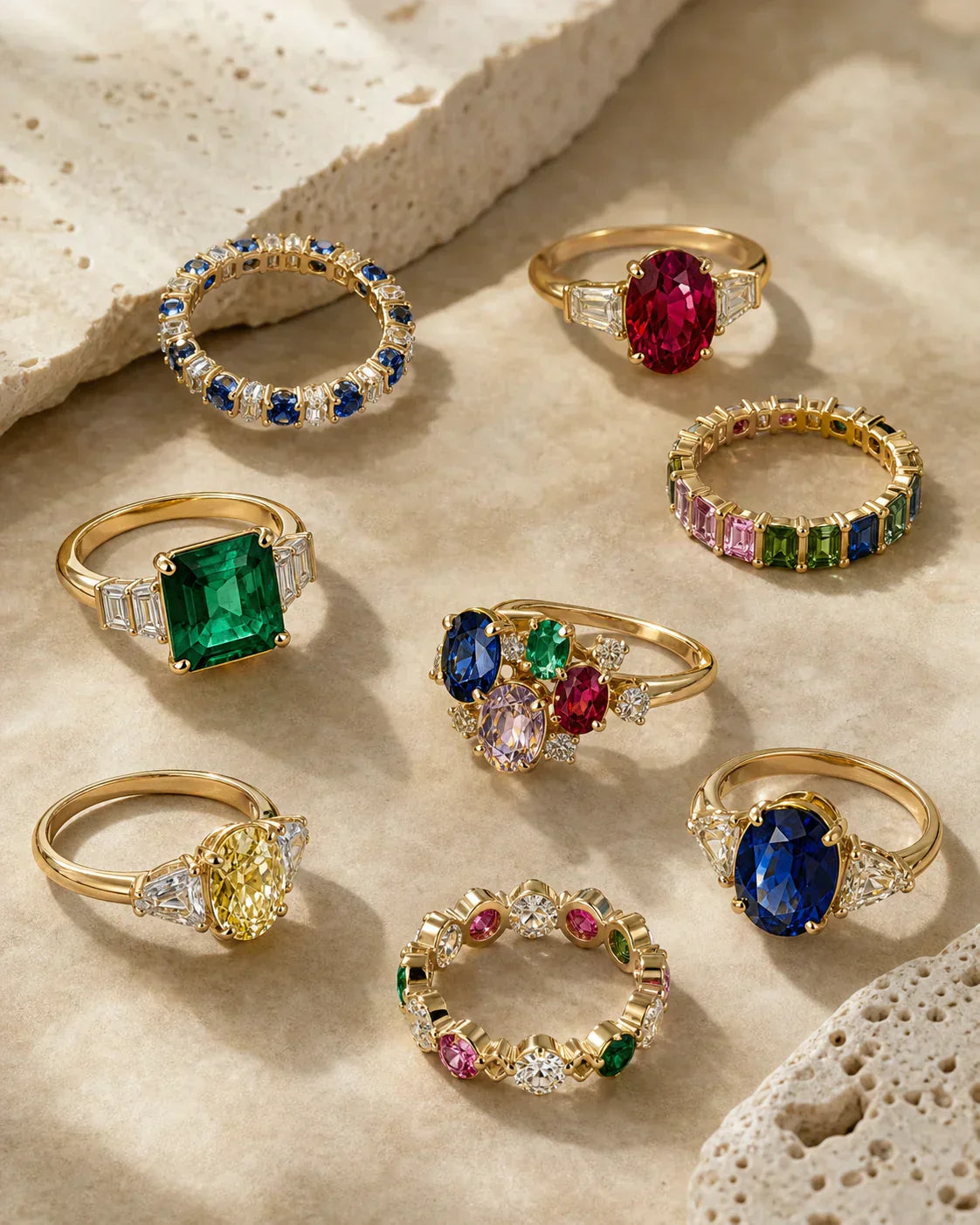

Les tendances des bagues de fiançailles vintage évoluent vers un style plus raffiné et collectionneur. Les looks les plus forts ne sont pas simplement des bagues « à l'ancienne ». Ce sont des bagues au caractère visible : diamants de taille ancienne, facettes plus douces, couleur chaude du diamant, or jaune, proportions à trois pierres et montures d'inspiration géorgienne qui semblent personnelles plutôt que produites en série.
C'est pourquoi les tailles anciennes, les tailles européennes anciennes et les diamants chauds attirent tant l'attention des acheteurs qui veulent une bague qui ne ressemble pas à celle de tout le monde. Un solitaire ovale moderne peut être magnifique, mais l'orientation vintage offre un luxe différent. Il s'agit moins de symétrie parfaite que d'ambiance, d'histoire et du sentiment que la bague ne pourrait appartenir qu'à une seule personne.

Pourquoi les bagues de fiançailles vintage semblent à nouveau fraîches
Le retour des bagues de fiançailles vintage est en partie une réaction à l'uniformité. De nombreux acheteurs ont vu des années de formes de solitaires similaires, des photos de mains identiques sur les réseaux sociaux et des diamants blancs ultra-brillants présentés comme le seul idéal de luxe. Le nouveau goût haut de gamme est plus nuancé. Il valorise la beauté irrégulière, la lumière plus douce, les proportions inhabituelles et les montures qui révèlent l'artisanat.
Cela ne signifie pas que chaque acheteur a besoin d'un véritable diamant ancien. Cela signifie que le langage de la joaillerie ancienne façonne les préférences modernes. Un acheteur peut vouloir un véritable diamant de taille ancienne, une pierre de style ancien nouvellement taillée, un diamant de laboratoire chaud, une bague en moissanite avec une structure vintage ou une bague en pierre de couleur avec une ambiance géorgienne ou édouardienne. Le désir commun est l'individualité.
Pour une navigation de niveau collection, les bagues de fiançailles vintage sont le point de départ le plus naturel car elles rassemblent les détails qui comptent pour cette tendance : bords millegrain, halos, protection de type bezel, pierres latérales florales, montures en couronne, formes en grappe et or qui semble intentionnel plutôt que neutre.
Tailles anciennes : le coussin antique romantique
Les tailles anciennes sont souvent décrites comme des diamants de style coussin antique. Elles ont généralement un contour carré ou légèrement rectangulaire, des coins arrondis, une couronne plus haute, des facettes plus épaisses et souvent une colette ouverte visible. Le look est romantique et imparfait de la meilleure façon. Au lieu de l'éclat vif et pétillant de nombreuses pierres modernes, une taille ancienne donne des éclats plus larges et une lueur de bougie.
Cette taille séduit les acheteurs qui veulent que la pierre centrale ressemble à un héritage. Elle n'a pas l'air parfaite comme une machine. Le contour coussin peut sembler moelleux, doux et profondément vintage, surtout dans l'or jaune ou une monture à bezel plus lourde. Le compromis est que les tailles anciennes doivent être jugées à l'œil, pas seulement par un certificat. La proportion, la beauté de face, le motif des facettes et la personnalité de la couleur comptent autant que les grades numériques.
Si vous aimez les tailles anciennes mais ne trouvez pas la pierre exacte que vous voulez, recherchez les mêmes indices de design dans la monture : contours de type coussin, montures fermées ou semi-fermées, épaules de style antique et métal chaud. Le but n'est pas d'imiter l'histoire à la lettre. Le but est de capturer la présence plus douce qui rend la bague rare. Pour une référence de grading neutre, la page des facteurs de qualité du diamant du GIA est utile car elle sépare la taille, la couleur, la pureté et le poids en carats au lieu de traiter la « beauté » comme un seul chiffre.
Tailles européennes anciennes : rondes, douces et à la lueur des bougies
Les diamants de taille européenne ancienne sont la direction ronde de la taille antique. Ils sont importants car ils offrent une alternative vintage au brillant rond moderne. Une taille européenne ancienne a souvent une table plus petite, une couronne plus haute, des facettes plus grandes et parfois une colette ouverte. Sur la main, l'éclat peut sembler plus lent, plus large et plus atmosphérique.

Les meilleures bagues de taille européenne ancienne sont élégantes sans être simples. Elles fonctionnent magnifiquement dans les bagues à trois pierres car le centre rond a assez d'histoire pour retenir le regard, tandis que les pierres latérales peuvent ajouter du symbolisme et de la largeur. Elles conviennent également aux montures à bezel, aux montures de type bouton d'or, aux galeries en forme de couronne et aux anneaux en or jaune à profil bas.
Pour l'acheteur qui aime les diamants ronds mais veut quelque chose de moins attendu, une taille européenne ancienne est souvent la réponse. Elle conserve le contour rond familier mais change le comportement de la lumière. Ce petit changement peut rendre toute la bague plus intime.
Les diamants chauds deviennent le choix de luxe
Les diamants chauds sont l'un des éléments les plus importants de cette tendance. Pendant longtemps, de nombreux acheteurs ont été incités à rechercher la couleur de diamant la plus glaciale possible. Les acheteurs à l'esprit vintage remettent cela en question. Un diamant avec un ton doux crème, champagne ou lueur de bougie peut sembler plus riche dans l'or jaune qu'une pierre très blanche, surtout lorsque la monture est intentionnellement d'inspiration antique.
La chaleur ne doit pas être confondue avec une mauvaise qualité. C'est un choix de design. Un diamant chaud dans la bonne bague peut sembler plus doux, plus romantique et plus personnel. Il peut également rendre les facettes de taille ancienne plus faciles à apprécier car la pierre n'essaie pas de se comporter comme un projecteur blanc moderne.
L'or jaune est le partenaire naturel. Il soutient la chaleur au lieu de la combattre. Le métal blanc peut faire paraître une pierre chaude plus teintée par contraste, tandis que l'or jaune rend la couleur délibérée. L'or rose peut aussi fonctionner, mais il pousse la bague plus romantique et parfois plus moderne. Pour l'ambiance antique la plus classique, l'or jaune l'emporte généralement.
L'or jaune donne à la bague sa voix historique
L'or jaune n'est pas seulement un choix de métal dans cette tendance. Il fait partie de l'histoire. La chaleur de l'or rend les tailles anciennes, les tailles européennes anciennes, les diamants champagne, la moissanite, les diamants sel et poivre et les pierres de couleur plus semblables à des héritages. Il rend également la gravure, le millegrain, les épaules en feuille et les bords de bezel plus faciles à lire visuellement.
Pour les acheteurs qui veulent une bague de fiançailles non standardisée, l'or jaune est souvent le détail qui empêche le design de paraître trop standard. Une pierre simple dans l'or jaune peut sembler plus intentionnelle que la même pierre dans un métal blanc très poli. Une bague à trois pierres en or jaune peut ressembler à une pièce de famille, même lorsqu'elle est nouvellement fabriquée.
La praticité compte toujours. De nombreuses montures de joaillerie fine sont proposées en or 10K, 14K, 18K et platine, et chaque choix modifie l'équilibre entre la couleur, la durabilité, le prix et le poids. Pour un port quotidien en tant que bague de fiançailles, l'or 14K est souvent un bon compromis car il offre la chaleur du métal précieux avec une bonne durabilité pour une bague qui sera portée souvent.
Bagues à trois pierres : symbolisme sans prévisibilité
Les bagues à trois pierres gagnent en popularité car elles résolvent deux problèmes à la fois. Elles offrent plus de couverture du doigt qu'un simple solitaire et créent un look plus travaillé sans avoir besoin d'un grand halo. Les trois pierres peuvent symboliser le passé, le présent et le futur, mais même sans cette signification, la disposition semble équilibrée et substantielle.
La clé est la proportion. Une bague à trois pierres vintage ne doit pas ressembler à trois pierres sans rapport placées en rangée. Les pierres latérales doivent soutenir la pierre centrale, soit en faisant écho à sa forme, soit en contrastant gracieusement. Les pierres latérales poire, marquise, rondes, en cerf-volant et ovales peuvent toutes fonctionner lorsque l'échelle est contrôlée.
Pour les acheteurs qui comparent de vrais styles, les bagues de fiançailles à trois pierres sont particulièrement utiles car elles montrent comment différents choix de pierres latérales changent toute l'ambiance. Un centre rond avec des côtés ronds semble classique. Un centre marquise avec des côtés poire semble plus directionnel. Un centre coloré avec des pierres latérales blanches semble personnel mais toujours nuptial.
Montures d'inspiration géorgienne et le renouveau du bezel
Les bagues de fiançailles d'inspiration géorgienne ne sont pas toujours des reproductions littérales. Dans le langage actuel des tendances, la référence signifie souvent une sensation de dos fermé, des bordures de type bezel, des silhouettes à dos de bouton, une texture d'or antique, des profils bas et un sentiment d'intimité artisanale. Ces détails donnent à une bague un aspect réfléchi plutôt qu'assemblé à partir d'une formule de catalogue standard.
Le renouveau du bezel s'intègre parfaitement à cela. Un bezel peut donner à un diamant chaud ou à une pierre de style ancien un aspect encadré, protégé et plus substantiel. Il peut également réduire le tranchant des griffes et rendre la bague plus lisse pour un port quotidien. Le look est particulièrement fort lorsqu'il est associé à de l'or jaune et une pierre centrale qui a de la personnalité.
Pour les acheteurs qui aiment l'ambiance antique mais ont besoin de praticité au quotidien, les bagues à monture bezel valent la peine d'être comparées car l'architecture de la monture peut protéger les bords, adoucir le profil et rendre le design plus intentionnel sur la main.
Comment choisir une bague d'inspiration antique sans en faire trop
La meilleure bague de fiançailles vintage a un point de vue clair. Cela peut être la taille, la couleur, le métal, la monture ou la structure des pierres latérales. Si chaque détail est dramatique à la fois, la bague peut commencer à ressembler à un costume. Si un détail domine et que les autres le soutiennent, la bague semble raffinée.
Si le diamant est la star, gardez la monture assez simple pour montrer le motif des facettes. Si la monture est la star, choisissez une pierre centrale qui ne combat pas le design. Si la chaleur est la star, penchez pour l'or jaune et évitez les pierres d'accent glacées qui donnent l'impression que le centre est mal assorti. Si l'unicité est la star, assurez-vous que la bague reste portable avec de vrais vêtements, pas seulement belle sur une photo en gros plan.
Les acheteurs intéressés par de véritables options de diamants peuvent comparer les bagues de fiançailles en diamant aux côtés des bagues en moissanite d'inspiration vintage et en pierres de couleur. Le bon chemin dépend de si la priorité est le caractère antique naturel, la précision du diamant de laboratoire, la brillance de la moissanite ou un langage de design qui semble d'un autre monde sans nécessiter une pierre antique.
Styles d'inspiration vintage qui valent la peine d'être comparés
Tous les acheteurs à l'esprit vintage n'ont pas besoin du même type de pierre. Certains veulent le caractère du diamant, d'autres la brillance de la moissanite, et d'autres encore l'ambiance d'une monture antique plus qu'un diamant antique littéral. Les styles ci-dessous sont des points de comparaison utiles car ils montrent différentes façons d'obtenir la bonne sensation : encadrement en halo, protection bezel, équilibre à trois pierres, détail de feuille, formes de diamant inhabituelles et caractère visible.

Bague Aurelia ovale vintage avec halo
Or 14K à partir de 960,00 $
Un style halo inspiré d'une couronne pour les acheteurs qui veulent une présence vintage avec un éclat brillant de la pierre centrale.

Bague Luna cinq pierres avec bezel
Or rose 14K à partir de 890,00 $
Une option encadrée de bezel qui reflète la tendance des montures protectrices d'inspiration antique.

Bague Calanthe trois pierres avec feuille
Or 14K à partir de 990,00 $
Une silhouette à trois pierres avec détail de feuille pour une alternative plus douce de style héritage.

Bague Radiance marquise trois pierres
Or rose 14K à partir de 780,00 $
Une bague trois pierres fine pour comparer la forme vintage allongée sans un look de solitaire standard.

Ensemble Stellar diamant de laboratoire cerf-volant
Or rose 14K à partir de 3 080,00 $
Une option en diamant avec un contour distinctif en cerf-volant pour les acheteurs recherchant un ensemble nuptial moins commun.

Ensemble Celestia diamant sel et poivre
Or rose 14K à partir de 2 800,00 $
Un ensemble en diamant riche en caractère pour les acheteurs qui préfèrent une unicité visible à un look de diamant blanc standard.

FAQ
Quelle est la différence entre les diamants de taille ancienne et de taille européenne ancienne ?
Les tailles anciennes ont généralement un contour de type coussin avec des facettes épaisses et une douce lueur antique. Les tailles européennes anciennes sont des diamants ronds antiques avec des facettes plus grandes et un motif d'éclat à la lueur des bougies. Les deux semblent moins parfaites mécaniquement que les tailles brillant modernes.
Les diamants chauds sont-ils bons pour les bagues de fiançailles ?
Oui, lorsque la chaleur est choisie intentionnellement. Les diamants crème, champagne ou légèrement teintés peuvent être particulièrement beaux dans l'or jaune et les montures vintage. La clé est de faire de la couleur une partie du design plutôt que de la traiter comme un compromis.
Les bagues de fiançailles vintage doivent-elles être de véritables antiquités ?
Non. Une bague de fiançailles vintage peut être une antiquité originale, une bague nouvellement fabriquée avec des détails d'inspiration antique ou une bague moderne utilisant le langage du design vintage. Les détails les plus importants sont la taille, la monture, le métal, la proportion et l'ambiance générale.
Les montures à bezel sont-elles pratiques pour un usage quotidien ?
Les montures à bezel peuvent être pratiques car elles encadrent le bord de la pierre et créent un profil plus lisse. Elles sont particulièrement utiles pour les acheteurs qui aiment les bagues d'inspiration antique mais veulent une monture qui semble sécurisée pour un port régulier.
À retenir
Les tendances les plus fortes en matière de bagues de fiançailles vintage ne consistent pas à copier exactement le passé. Elles consistent à choisir des détails avec une texture émotionnelle : la douceur de la taille ancienne, la lueur de la taille européenne ancienne, la couleur chaude du diamant, l'or jaune, l'équilibre à trois pierres et l'encadrement d'inspiration géorgienne.
Pour les acheteurs qui veulent une bague qui ne ressemble pas à celle de tout le monde, cette direction a un réel pouvoir de longévité. Elle offre une beauté spécifique plutôt que générique. La meilleure bague dans cette catégorie doit sembler réfléchie sous tous les angles : la pierre, le métal, la monture, le profil latéral et la façon dont elle s'accorde avec la vie réelle de celle qui la porte.