
Un anello di fidanzamento con moissanite non si sceglie con una sola decisione. La disposizione delle pietre determina dove si posa lo sguardo. L'incastonatura influisce sul comfort e sullo spazio per la fede nuziale. La forma modifica la dimensione percepita. La lavorazione decorativa del metallo stabilisce se l'anello appare minimalista, botanico o vintage. Considerare tutte queste scelte come un'unica etichetta è il modo in cui un anello splendido diventa l'anello sbagliato per la vita di tutti i giorni.
Questa guida parte dalle decisioni che influenzano la portabilità, per poi passare allo stile. È pensata per chi sta confrontando gli attuali anelli di fidanzamento con moissanite, non per chi ha bisogno dell'ennesima lista generica di promesse di brillantezza.
Stili di anelli con moissanite in 60 secondi
| La tua priorità | Punto di partenza migliore | Compromesso principale |
|---|---|---|
| Una pietra centrale pulita e facile da pulire | Solitaire | Meno ampiezza visibile e meno dettagli decorativi |
| Un contorno centrale più luminoso e ampio | Halo | Più pietre piccole, griffe e canali di pulizia |
| Simbolismo equilibrato e copertura orizzontale | Tre pietre | Le giunzioni delle pietre laterali possono influire sul comfort e sulla vestibilità della fascia |
| Una composizione insolita con ampio scintillio | Cluster | Ispezione, pulizia e riparazione più complesse |
| Un anello di fidanzamento e una fede che si accordano già | Set nuziale | Meno libertà di sostituire in seguito una fede completamente diversa |
| Lavorazione organica del metallo invece della simmetria convenzionale | Ispirato alla natura | Foglie in rilievo e punte dei rami richiedono un controllo dei possibili impigli |
| Milgrain, corone e ornamenti formali | Vintage | I dettagli fini mostrano usura e residui più precocemente |
| Copertura allungata del dito | Ovale | Il rapporto e l'aspetto a farfalla devono essere valutati pietra per pietra |
Scegli su quattro livelli, non otto caselle separate
Il 30 agosto 2026, un'analisi dell'attuale collezione di 76 design ha rilevato 41 anelli presenti in almeno due delle sue otto collezioni di stile. Quattordici comparivano in tre, e due in quattro. Questa sovrapposizione è utile: un anello ovale può essere anche vintage, halo e parte di un set nuziale. Le categorie rispondono a domande diverse.
Disposizione delle pietre
Solitaire, halo, tre pietre e cluster descrivono come le pietre centrali e di contorno formano la composizione superiore.
Formato di acquisto
Un set nuziale significa che l'anello di fidanzamento e la fede sono progettati in relazione tra loro, non semplicemente venduti insieme.
Linguaggio del design
Ispirato alla natura e vintage descrivono il vocabolario della lavorazione del metallo. Entrambi possono essere applicati a diverse disposizioni delle pietre.
Forma centrale
Ovale è una scelta di forma. Può inserirsi in un solitaire, halo, cluster o tre pietre e apparire comunque diverso in ciascuno.

Passo 1: scegli la disposizione delle pietre
Solitaire: chiarezza visiva e manutenzione più semplice
I modelli solitaire in moissanite non lasciano scampo al taglio. È proprio questo il loro punto di forza. Un round, un oval o un pear ben tagliato può esprimere luminosità bianca e fuoco colorato senza accenti che competono. Meno castoni di solito significano meno spazi stretti dove si accumulano crema e sapone, anche se la base e la parte inferiore richiedono comunque pulizia.
Un solitaire non è automaticamente a profilo basso o compatibile con la fede. Una testa a perno può stare alta ma lasciare un ingombro stretto; una base integrata bassa può essere comoda ma bloccare una fede dritta. Esaminate il profilo laterale, il ponte e l'ingombro della base invece di fidarvi della parola "solitaire".
Halo: più contorno, non semplicemente più carati
Gli anelli halo in moissanite circondano il centro con pietre piccole o una cornice decorativa. Un halo ravvicinato e uniforme può aumentare l'ampiezza apparente vista dall'alto, mentre un halo floreale o a corona cambia la silhouette in modo più marcato. Poiché la moissanite ha una forte dispersione, un halo denso può apparire particolarmente vivace in luce diretta. Chi preferisce bagliori bianchi più contenuti può orientarsi su un halo più sottile, una fascia semplice o un centro leggermente più piccolo.
Verificate la simmetria, lo spazio tra centro e halo, i prong condivisi e l'accesso per la pulizia sotto la cornice. Un halo che dall'alto sembra preciso può comunque avere pietre laterali basse che toccano la fede.
Three-stone: una composizione, non un solitaire con extra
Gli anelli three-stone in moissanite funzionano al meglio quando le pietre laterali sostengono il centro invece di competere con esso. I pear affusolati allungano il contorno centrale; i round creano una transizione più morbida; gli accenti marquise possono introdurre un ritmo a forma di foglia. Controllate l'altezza e l'angolo di tutte e tre le pietre. Se le basi laterali scendono sotto la base centrale, possono diventare i primi punti di contatto con le dita vicine o con la fede.
Cluster: scintillio distribuito e più libertà di design
Gli anelli di fidanzamento cluster in moissanite possono incorniciare un centro riconoscibile o costruire una composizione più ampia senza un unico contorno dominante. Sono utili per forme a kite, asimmetrie, disposizioni celestiali e pietre scure di accento. Creano anche più punte di prong, giunzioni tra pietre e spazi riparati. Scegliete il cluster per la sua composizione, non perché si presume sia più resistente o automaticamente più grande.
Passo 2: decidere se risolvere subito la questione della fede
I set da sposa coordinati in moissanite sono più preziosi quando la testa dell'anello di fidanzamento ha un contorno appuntito, una base bassa, un halo ampio o un cluster sporgente. Una fascia sagomata può seguire quell'ingombro. Una fascia a V può accogliere una punta pear, marquise o kite. Una fascia aperta può creare spazio locale attorno a una testa larga.
L'abbinamento decorativo è secondario rispetto all'abbinamento geometrico. Confronta l'anello di fidanzamento e la fede dall'alto, di lato e dal lato del palmo. Verifica che la fede non prema sui griffes della pietra centrale, che le pietre di contorno non si sfregino tra loro e che l'insieme finito sia comodo su tutta la nocca. La guida dettagliata sulle fedi a filo e con spazio spiega perché un piccolo spazio intenzionale può essere più sicuro di un contatto forzato.

Passo 3: scegli il linguaggio del design
Gli anelli in moissanite ispirati alla natura usano il gambo e i griffes come parte del motivo. Le foglie possono diventare punte dei griffes, un gambo diviso può comportarsi come due rami e gli accenti marquise possono leggersi come fogliame. Le versioni più indossabili mantengono questi dettagli integrati nel metallo portante. I rametti sottili sporgenti possono sembrare delicati in un rendering, ma possono impigliarsi nella maglia o perdere definizione dopo ripetute lucidature.
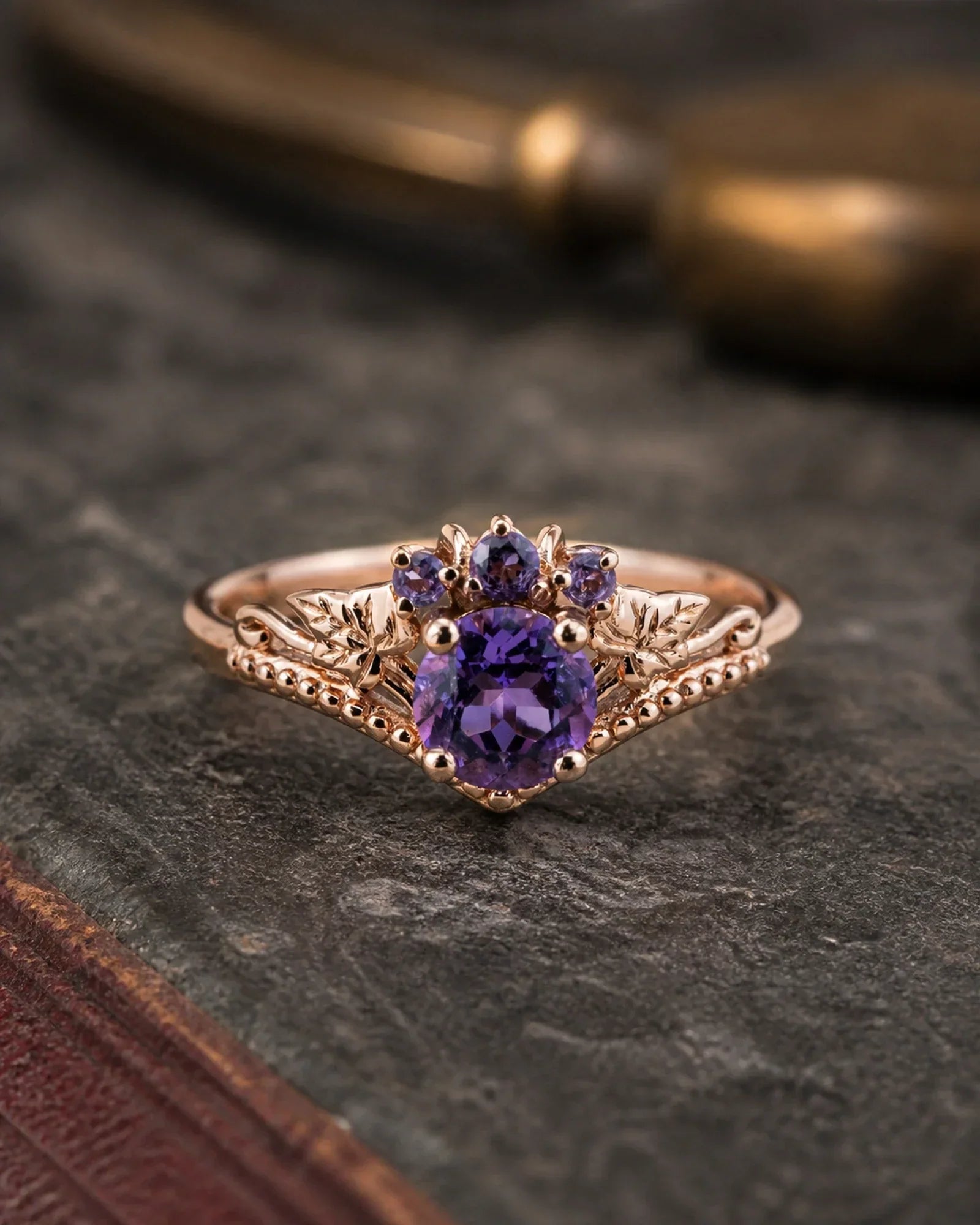
Gli anelli in moissanite vintage si affidano a una disciplina diversa: simmetria formale, milgrain, spalle incise, profili a corona, geometria Art Deco o riferimenti a tagli antichi. "Vintage" dovrebbe descrivere una costruzione visibile, non solo un filtro caldo in una fotografia. La granatura fine richiede ispezioni periodiche perché residui e usura compaiono prima sulle superfici texturizzate che su un gambo liscio e lucido.

Passo 4: decidi se l'ovale fa per te
Gli anelli di fidanzamento in moissanite ovale offrono una copertura nord-sud maggiore rispetto a una pietra rotonda di peso simile, ma "ovale" non è un aspetto unico e fisso. Un ovale più pieno risulta classico e stabile. Un rapporto più snello allunga maggiormente il dito, ma può rendere più facile notare il contrasto a cravatta. Il risultato visibile dipende dal motivo delle sfaccettature, dall'illuminazione, dalla profondità della pietra e dalla larghezza dell'incastonatura.
Valutate un ovale in luce diurna diffusa, in luce ambientale interna e in luce diretta. Ruotatelo lentamente invece di affidarvi a una sola fotografia frontale. Una banda scura che si sposta al centro può essere un normale contrasto; un'ampia zona morta persistente è diversa. Confrontate anche le dimensioni in millimetri, non solo il linguaggio equivalente in carati. Le forme a pera, marquise e kite possono dare una direzione più marcata; le pietre rotonde di solito offrono un profilo più uniforme.
La moissanite cambia l'equazione del design
La moissanite sintetica è carburo di silicio, non un tipo di diamante. La sua elevata dispersione produce un fuoco colorato pronunciato, e la sua doppia rifrazione può far apparire raddoppiate le giunzioni delle faccette da alcune angolazioni. Ha inoltre una durezza Mohs di circa 9,25 e una tenacità eccellente, che la rendono adatta a un uso frequente quando l'incastonatura è solida. Queste proprietà sono documentate nella panoramica del GIA sulla moissanite sintetica.
Queste proprietà ottiche influenzano il design. Un grande centro brillante, un gambo pavé e un halo denso possono essere entusiasmanti alla luce del sole ma visivamente caotici nelle stanze di tutti i giorni. Tagli a gradini o allungati possono mostrare lampi più ampi e un contrasto più visibile. Le pietre grigie e nere spostano l'attenzione verso la silhouette e la lavorazione del metallo. Per un confronto più completo, consultate la guida alla moissanite bianca, grigia, nera e colorata.
Cinque percorsi di design reali

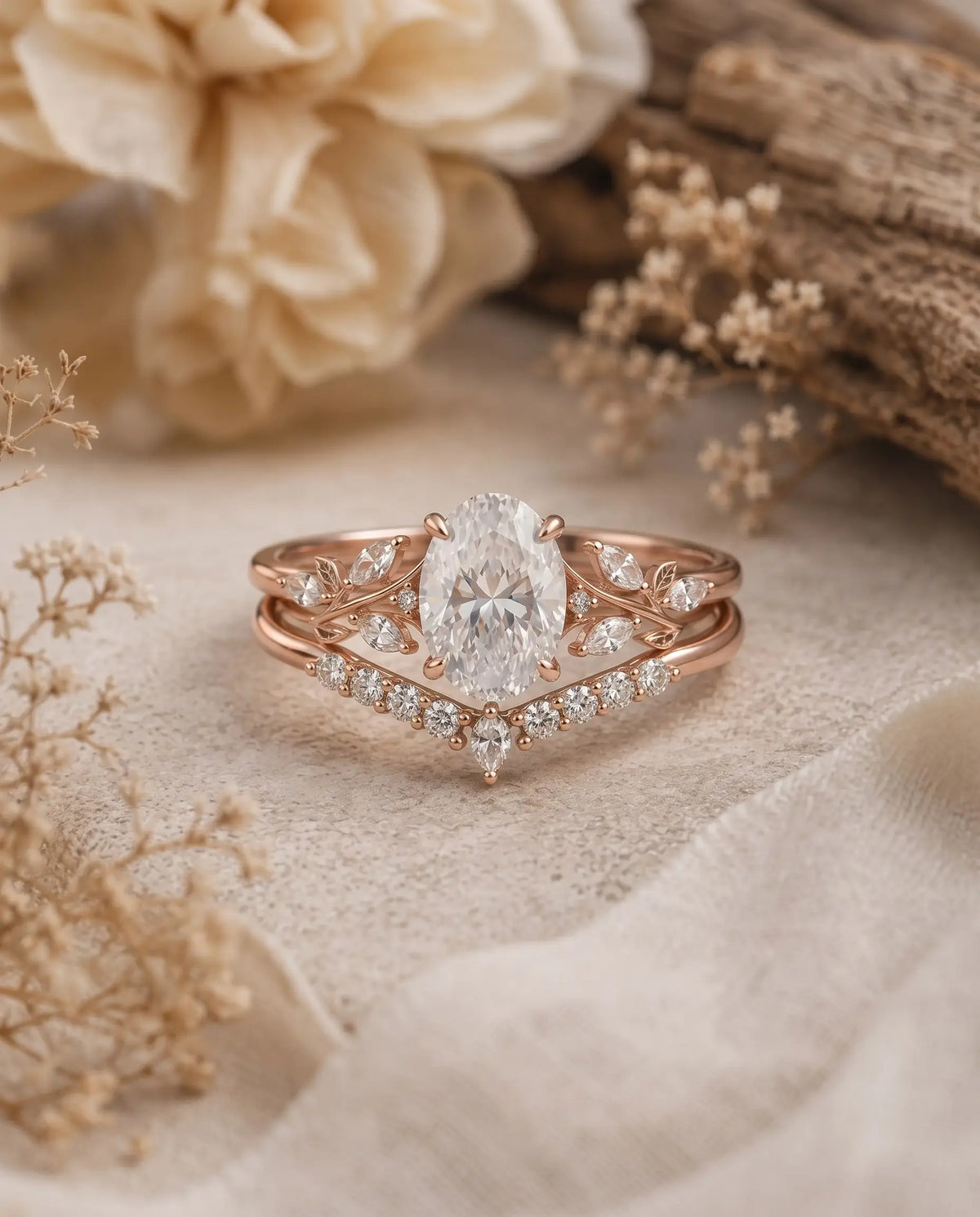
Solitaire a pera più una fede abbinata
Questo design separa il centro a pera pulito dell'anello di fidanzamento dalla fede decorativa a V. È una soluzione utile per chi desidera la chiarezza di un solitaire ma non vuole risolvere in seguito lo spazio della fede a punta. Verificate che la V abbia sufficiente spazio sia sulla punta della pera sia sul griffa inferiore.
Scoprite lo stack nuziale minimalista a pera
Opzione in 14K da $1.060 al momento della recensione.

Ovale, halo e vintage in un'unica architettura
La forma ovale determina la copertura del dito, l'alone della corona controlla la silhouette esterna e le pietre marquise sulle spalle rafforzano il linguaggio antiquato. Questo dimostra perché i filtri di stile si sovrappongono. La domanda d'acquisto è se le piccole pietre dell'alone superiore rimangono protette e se il castone inferiore lascia spazio per la fascia desiderata.
Esamina l'alone della corona Aurelia
Opzione 14K da $960 al momento della recensione.

Larghezza tre pietre senza il classico trio di rotondi
La pietra centrale marquise dona lunghezza mentre gli accenti affusolati creano una transizione delicata verso le spalle. Questa è una composizione tre pietre più discreta rispetto a tre rotondi uguali. Ispeziona le punte della marquise, i griffes delle pietre laterali e il punto più stretto della giunzione dello shank diviso, invece di giudicare la durabilità solo dal profilo superiore.
Scopri la struttura tre pietre Radiance
Opzione 14K da $780 al momento della recensione.

Un cluster che richiede la sua fascia abbinata
La pear grigia, gli accenti marquise scuri e il cluster inferiore incastonato creano un campo di luce volutamente asimmetrico. Una fascia dritta generica interromperebbe quella composizione e potrebbe incontrare i griffes bassi degli accenti. Questa soluzione si adatta a chi desidera un contrasto drammatico e accetta una pulizia più dettagliata.
Esamina il set cluster Stardust
Opzione 14K da $1.360 al momento della recensione.

Un ovale sostenuto da una struttura a rami
Qui l'ovale rimane visivamente semplice, mentre spalle incrociate, griffe a foglia e piccoli accenti asimmetrici forniscono il linguaggio naturale. I punti di ispezione utili sono dove i rami incontrano il castone, se le punte delle foglie sono abbastanza a filo da evitare impigliamenti e se una futura fede possa seguire il profilo inferiore irregolare.
Scopri l'anello ovale con rami incrociati
Opzione in oro 14K da 820 $ al momento della recensione.
Domande costruttive che contano più dei nomi degli stili
- Tutte le punte appuntite delle pietre sono protette da una griffe, una griffe a V o dal metallo circostante?
- La barra della galleria collega le griffe senza bloccare l'accesso per la pulizia?
- Dove si trova la misura più stretta del gambo finito?
- Le pietre dell'alone o del cluster sporgono sotto il castone centrale?
- Una fede diritta può passare sotto il ponte, o è necessario un profilo sagomato?
- Le punte delle foglie, i punti della corona o le perline possono impigliarsi in un polsino lavorato a maglia?
- L'anello rimane visivamente equilibrato alla misura effettiva del dito?
- Le misure delle pietre di accento di ricambio sono documentate per la futura manutenzione?
Il riferimento sull'anatomia dell'anello di fidanzamento fornisce il vocabolario necessario per esaminare questi dettagli nelle fotografie laterali o in un disegno personalizzato. Gli acquirenti che cercano foglie, viti e lavorazioni floreali in metallo possono consultare anche la guida più specifica ai design botanici in moissanite.
Chi dovrebbe evitare ciascuna direzione?
Scegli qualcos'altro se il compromesso sulla manutenzione ti disturba già. Un alone o un cluster è poco adatto a chi non è disposto a spazzolare sotto le pietre piccole e a organizzare ispezioni periodiche. I rami sottili sporgenti non sono ideali per l'uso frequente dei guanti. Un ovale molto allungato può sembrare sproporzionato su un dito corto, anche quando appare elegante in una fotografia ritagliata. Un set coordinato può frustrare chi si aspetta di alternare molte fedi nuziali non abbinate.
Al contrario, un solitario può risultare visivamente troppo sobrio per chi desidera un'ampia copertura del dito, e una fede semplice e diritta può far sembrare irrisolto un anello di fidanzamento elaborato. Non esiste una categoria universalmente superiore. Il design giusto è quello i cui compromessi corrispondono alla routine reale di chi lo indossa.
Domande frequenti
Quale stile di anello in moissanite sembra il più grande?
Gli aloni e i cluster ampi di solito creano il profilo complessivo più esteso visto dall'alto. Un ovale allungato, una goccia o un marquise possono sembrare più grandi di un rotondo di peso simile perché coprono più lunghezza del dito. Confronta le dimensioni in millimetri e la larghezza totale dell'incastonatura, non solo la dicitura del carato equivalente.
È più facile da mantenere un solitario o un alone?
Un solitario ha normalmente meno pietre piccole e canali stretti, quindi la pulizia e l'ispezione di routine sono più semplici. La struttura portante conta comunque. Un halo compatto con aperture accessibili può essere più facile da pulire rispetto a un solitario elaborato con una galleria decorativa chiusa.
Ogni moissanite ovale ha un bow-tie?
Le pietre allungate con sfaccettature mostrano comunemente un certo contrasto centrale. La sua ampiezza e persistenza variano in base al taglio, al rapporto e all'illuminazione. Guarda il video e diverse condizioni di luce; non scartare il normale contrasto in movimento, ma evita una larga banda scura che rimane dominante.
Gli anelli moissanite trilogy sono comodi?
Possono esserlo, a condizione che le pietre laterali non si estendano troppo tra le dita e che le loro strutture portanti siano posizionate in modo uniforme. Controlla la larghezza totale della testa, la sporgenza delle griffe laterali e come le spalle si raccordano al gambo.
Dovrei acquistare un set da sposa in moissanite completo?
È particolarmente utile per strutture basse, forme appuntite, halo, cluster e spalle decorate. Un set coordinato elimina gran parte delle incertezze, ma verifica che ti piaccia la larghezza totale dell'insieme e che gli anelli possano comunque essere sottoposti a manutenzione separatamente.
Un anello può appartenere a più collezioni di stile?
Sì. Un anello può avere forma ovale, disposizione ad halo, dettagli vintage e far parte di un set da sposa. Usa ogni categoria come filtro per una singola decisione, invece di aspettarti che un anello rientri in una sola etichetta.
Parti dall'architettura, non dagli aggettivi: scegli la disposizione delle pietre, verifica il rapporto con la fede nuziale, decidi il linguaggio del design e poi affina forma, colore e proporzioni. Questa sequenza lascia spazio alla personalità proteggendo le parti dell'anello che devono funzionare ogni giorno.