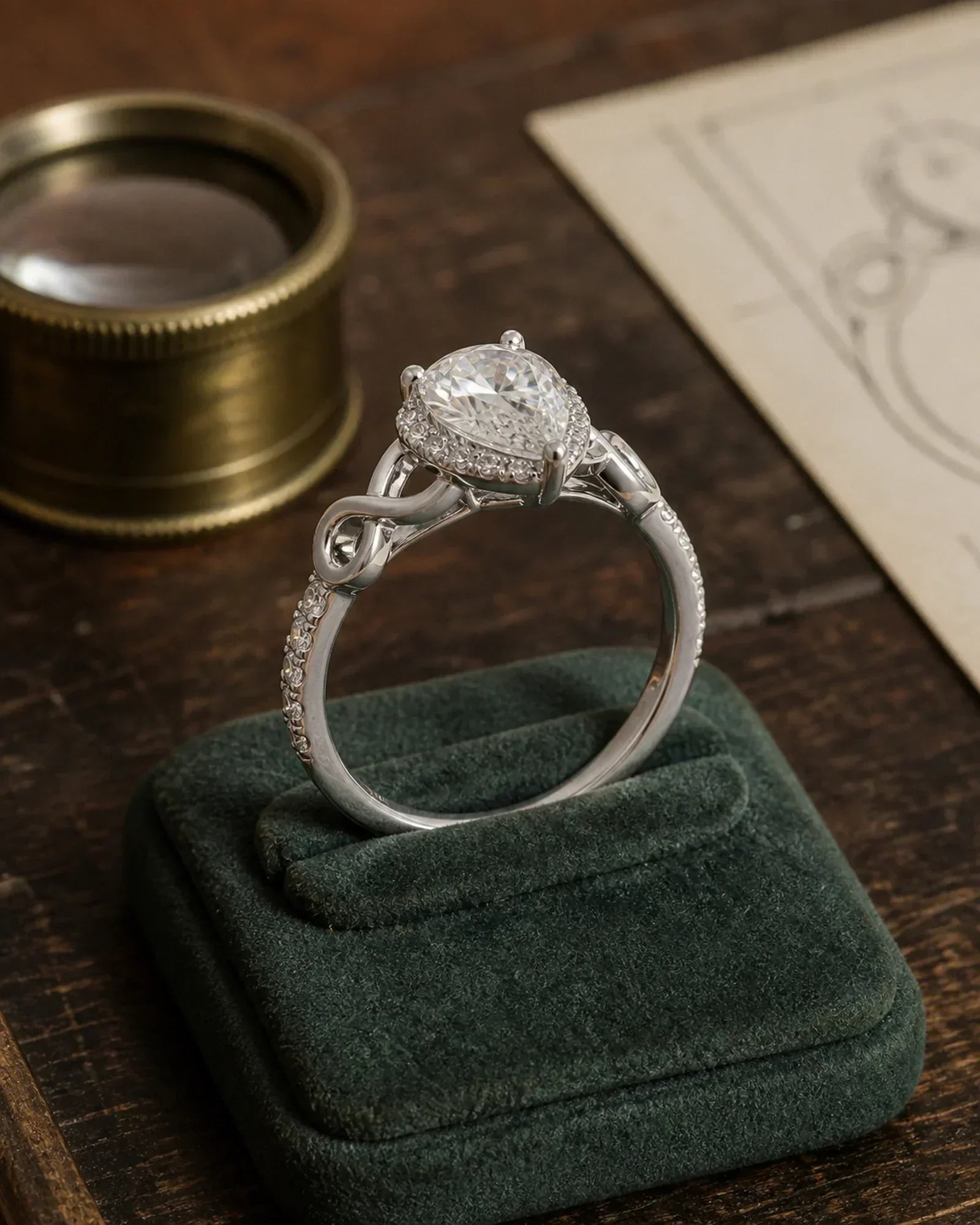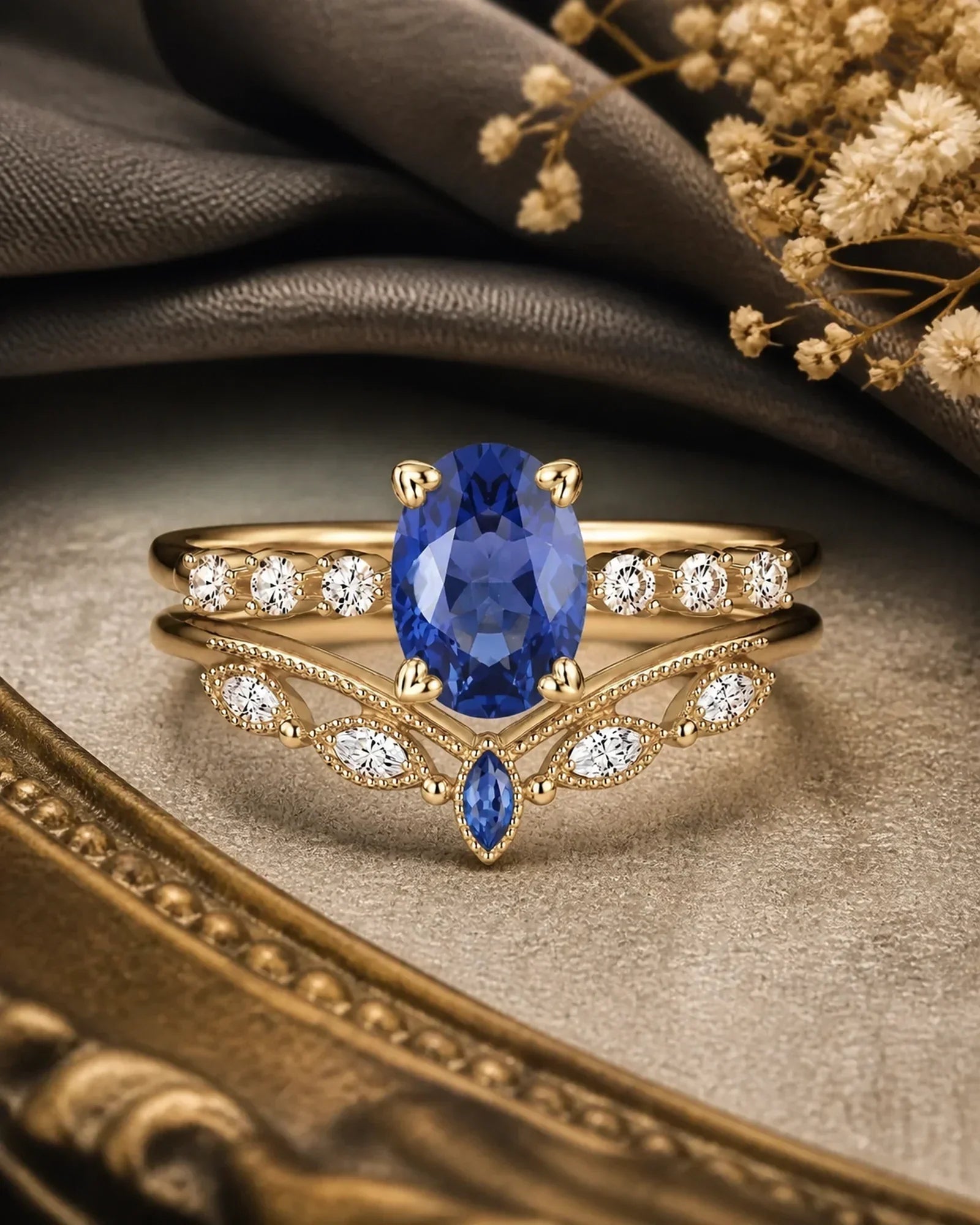

Une bague de fiançailles cluster peut offrir un rendu large et lumineux sans reposer sur une seule pierre centrale surdimensionnée. Plusieurs gemmes captent la lumière sous différents angles : la bague paraît souvent plus vivante en mouvement et plus détaillée de près. Cette beauté s'accompagne d'un compromis pratique : plus de pierres signifie généralement plus de griffes, plus d'interstices étroits à nettoyer et un contour plus large à prendre en compte au moment de choisir une alliance.
Comparatif d'une bague cluster en 60 secondes
| Question | Atout d’une bague cluster | Ce qu’il faut vérifier |
|---|---|---|
| Éclat | Plusieurs pierres créent de nombreux reflets sur une surface plus étendue. | Recherchez des tailles de pierres équilibrées et l’absence de zones ternes entre les sertis. |
| Taille visuelle | Un cluster bien réparti peut couvrir une plus grande largeur de doigt qu’une pierre unique de poids total comparable. | Vérifiez les dimensions vues de dessus, pas seulement le carat ou le nombre de pierres. |
| Durabilité | L’endommagement d’une pierre d’accent peut être réparable sans remplacer une grande pierre centrale. | Les pierres extérieures et les griffes partagées sont les plus exposées. |
| Nettoyage | Des pierres propres peuvent sembler exceptionnellement lumineuses ensemble. | L’huile et le savon s’accumulent sous les pierres serrées les unes contre les autres. |
| Adaptation à l’alliance | Les anneaux courbes et ouverts peuvent reprendre joliment le contour du cluster. | Un cluster bas ou large peut gêner une alliance droite. |
Pourquoi les bagues de fiançailles cluster scintillent autant
Une grande pierre unique produit de larges éclats issus d’un seul système optique. Un cluster produit de nombreux éclats plus petits provenant de plusieurs pierres, souvent dans des orientations légèrement différentes. L’effet peut sembler plus vivant, surtout lorsque des accents ronds, poires ou marquises entourent une pierre centrale. Les accents blancs créent aussi un contraste autour des gemmes de couleur, ce qui rend une pierre centrale saphir, rubis, alexandrite ou agate mousse plus définie.
Les bagues cluster peuvent également paraître plus grandes vues de dessus. C’est une question d’étalement, pas de magie : les pierres et le métal occupent un contour plus large sur le doigt. Un cluster floral utilise des pétales pour étendre la silhouette ; un cluster asymétrique s’étire dans une direction ; un cluster Art déco peut gagner en largeur grâce à des pierres latérales étagées. Les acheteurs qui comparent des bagues de fiançailles cluster doivent donc vérifier les mesures en millimètres et les photos portées plutôt que de supposer que le nombre de pierres prédit la taille.
Plus d’éclat ne signifie pas automatiquement un meilleur design. Si chaque accent a le même poids visuel, le centre peut disparaître. Les clusters réussis présentent généralement une hiérarchie : une pierre focale évidente, un groupe intérieur de soutien et des accents extérieurs plus petits. Cette organisation garde la bague détaillée sans paraître surchargée.
Les bagues cluster sont-elles assez durables pour un port quotidien ?
Elles peuvent l’être, mais un cluster comporte plus de points de contact potentiels qu’un solitaire. Chaque accent a besoin de suffisamment de métal pour rester bien maintenu, mais des griffes trop massives peuvent écraser les petites pierres. Les zones les plus vulnérables sont généralement le bord extérieur, les pointes de marquises surélevées, les minuscules griffes partagées et les pierres situées là où une autre bague peut les frotter.
Le choix des pierres compte aussi. Le diamant, le saphir, le rubis et la moissanite tolèrent généralement bien un port fréquent lorsqu’ils sont correctement sertis. L’émeraude, l’opale, la pierre de lune, l’aigue-marine et l’agate mousse avec inclusions nécessitent une protection plus réfléchie. Une structure métallique durable ne peut pas rendre une gemme délicate insensible aux chocs.
Demandez comment les plus petits accents sont fixés. Les griffes individuelles facilitent généralement l'entretien d'une pierre, tandis que les griffes partagées créent un aspect plus fin et moins métallique, mais rendent les pierres voisines plus dépendantes des mêmes petits points de métal. Les accents sertis en grains peuvent être compacts et lisses lorsque la surface environnante leur offre un bon support. Aucune solution n'est automatiquement supérieure : la vraie question est de savoir s'il reste suffisamment de métal autour des pierres exposées après le polissage, la mise à taille et des années de port.

Passez le bout du doigt légèrement sur le cluster dans plusieurs directions. Un accrochage net, une pierre qui cliquette ou une griffe soudainement rugueuse méritent votre attention. Comparez également des photos actuelles avec un gros plan plus ancien ; une griffe qui s'est déplacée peut être plus facile à repérer visuellement. Pour les bagues portées fréquemment, une inspection professionnelle périodique est judicieuse, surtout après un choc violent.
Comment nettoyer une bague cluster sans oublier les zones cachées
Les bagues cluster perdent souvent de leur éclat parce que la crème, les huiles cutanées et le film de savon s'accumulent sous les pierres. Une bague peut sembler propre vue du dessus alors que la zone du pavillon reste recouverte. Pour l'entretien courant, utilisez de l'eau tiède, une petite quantité de liquide vaisselle doux et une brosse très souple. Tenez la bague au-dessus d'un bol plutôt qu'au-dessus d'un drain ouvert, brossez délicatement sous le cluster, rincez abondamment et séchez en tapotant avec un chiffon non pelucheux.
Ne partez pas du principe qu'un nettoyeur à ultrasons convient à tous les clusters. Il peut être inadapté aux pierres fracturées, fortement incluses, traitées ou délicates, et les vibrations peuvent révéler un sertissage déjà desserré. La vapeur exige également de la prudence. Lorsque le cluster contient de l'opale, de l'émeraude, de la perle, de la pierre de lune ou un traitement méconnu, demandez des instructions d'entretien spécifiques à ce matériau.
Évitez le dentifrice, les poudres abrasives et les brosses rigides. Ils ne résolvent pas le vrai problème sous le sertissage et peuvent rayer les finitions du métal. Si des résidus restent coincés entre les pierres, ou si une griffe semble tordue, arrêtez le nettoyage et faites inspecter la bague par un bijoutier avant d'appliquer davantage de pression.
Quelle alliance accompagne une bague de fiançailles cluster ?
La réponse dépend du dessous de la bague, pas seulement de sa vue du dessus. Un pont surélevé peut permettre à une alliance droite de passer sous le cluster et de s'aligner parfaitement. Un panier bas ou une tête florale large peut bloquer ce passage. Dans ce cas, une alliance courbe, en chevron, à contour ou ouverte est généralement plus réaliste que de forcer deux bagues à s'emboîter.

Une alliance contour doit suivre le cluster sans toucher les pierres d'accent exposées. Une alliance ouverte nécessite des pierres d'extrémité qui restent dégagées lorsque les bagues tournent. Un espace étroit délibéré est également valable : il peut préserver le contour d'un cluster vintage et réduire les frottements. Les parures de mariage coordonnées facilitent l'évaluation de cette relation, car les deux pièces sont conçues ensemble.
Portez les deux bagues pendant plusieurs minutes lors d'un essayage plutôt que de juger sur une photo statique. Ouvrez et fermez la main, laissez l'ensemble se placer naturellement, puis vérifiez à nouveau après rotation des bagues. Une association qui ne fonctionne que parfaitement centrée risque de frotter lors des mouvements ordinaires.
Lors d'un achat séparé, testez les bagues de côté et de dessus. Vérifiez si les griffes touchent l'alliance, si la largeur combinée est confortable au niveau de l'articulation et si l'alliance peut être ajustée sans modifier sa courbure. Comparez les alliances dédiées seulement après avoir déterminé la géométrie nécessaire à votre bague de fiançailles.
Six modèles de clusters à comparer
Ces six bagues montrent comment différentes structures de cluster modifient l'éclat, l'entretien et l'association avec une alliance. L'objectif n'est pas d'identifier un gagnant universel, mais de repérer l'architecture qui correspond à vos habitudes quotidiennes.


Les grappes florales et feuillues conviennent naturellement aux bagues de fiançailles d'inspiration naturelle, tandis que le milgrain, les accents étagés et les associations de pierres inhabituelles appartiennent souvent aux bagues de fiançailles vintage. Le style compte, mais la face inférieure détermine toujours le confort et l'ajustement de l'anneau.
Une liste de contrôle d'achat concise
- Confirmez les dimensions globales de la face visible et la hauteur de la tête de bague.
- Identifiez quelles pierres forment le bord extérieur exposé.
- Demandez si les accents utilisent des griffes individuelles, partagées ou à grains.
- Adaptez les méthodes de nettoyage à la pierre la plus délicate de la grappe.
- Observez la bague de profil avant de choisir un anneau de mariage.
- Décidez si l'objectif réel est un ajustement affleurant ou un espace délibéré.
FAQ sur la bague de fiançailles à grappes
Les bagues de fiançailles à grappes paraissent-elles plus grandes ?
Elles paraissent souvent plus imposantes vues de dessus, car plusieurs pierres occupent une plus grande surface sur le doigt. Comparez les dimensions en millimètres plutôt que de vous fier au seul poids total en carats.
Les petites pierres d'une grappe risquent-elles de se détacher ?
Non, lorsque la bague est bien fabriquée et bien entretenue, mais chaque pierre supplémentaire ajoute des points de sertissage à vérifier. Les pierres d'accent extérieures et les griffes partagées méritent la plus grande attention.
À quelle fréquence faut-il nettoyer une bague à grappes ?
Nettoyez-la dès qu'un voile commence à réduire son éclat, plutôt que de frotter selon un calendrier rigide. Un nettoyage doux et régulier vaut mieux que d'attendre que les résidus s'accumulent sous les pierres.
Une alliance droite peut-elle se porter à côté d'une bague à grappes ?
Oui, si la bague de fiançailles dispose d'un dégagement suffisant au niveau du pont. Les grappes basses et larges nécessitent souvent une alliance courbe, contournée ou ouverte, ou un espacement volontaire.
Une bague à grappes est un excellent choix pour celles et ceux qui privilégient le détail, la couleur et le mouvement à la simplicité d'un solitaire. Achetez l'architecture, pas seulement l'éclat : inspectez les pierres extérieures, comprenez les besoins d'entretien et choisissez l'alliance comme faisant partie du même système physique.