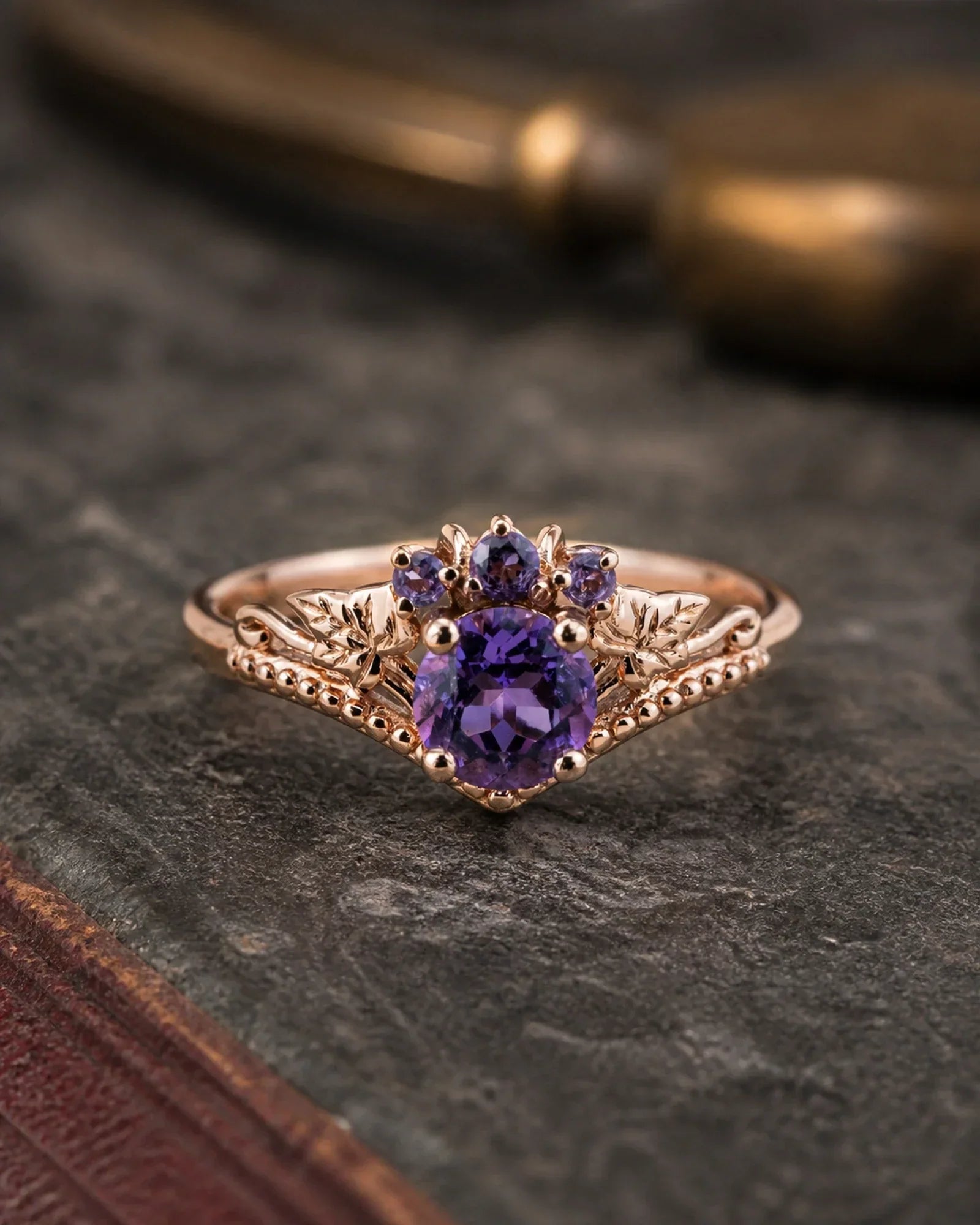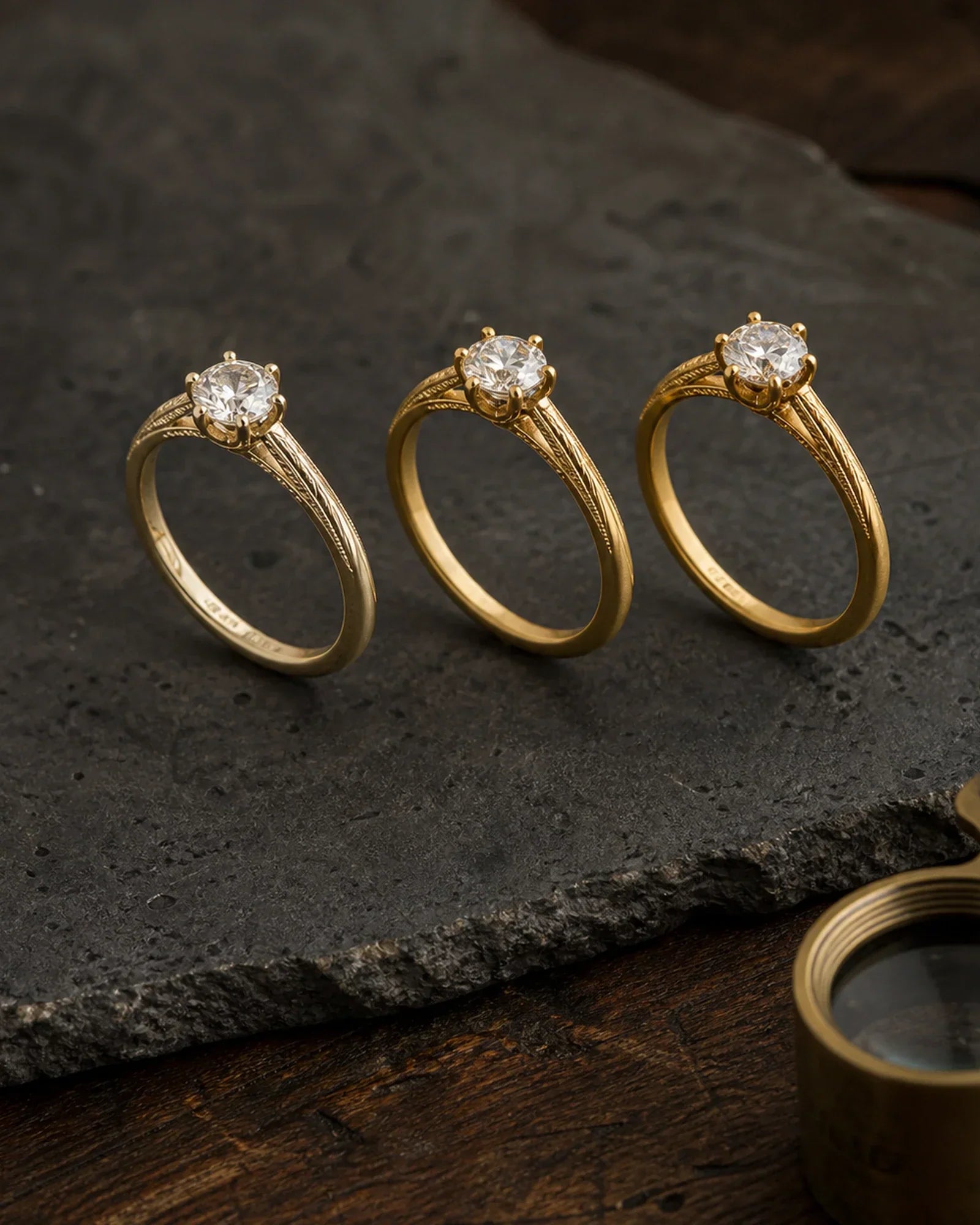

Scegliere l'agata muschiata è spesso la parte facile. La difficoltà arriva cinque minuti dopo, quando un anello viene descritto allo stesso tempo come foglia, botanico, goccia, grappolo e da sposa. Queste etichette non sono necessariamente descrizioni in contrasto tra loro. Descrivono livelli diversi dello stesso oggetto: la forma della pietra centrale, la lavorazione del metallo, la disposizione delle pietre di contorno e se è inclusa una fede nuziale coordinata.
Questa guida è pensata per aiutarti a leggere questi livelli nell'ordine giusto. Confronta le categorie più utili all'interno delle anelli di fidanzamento in agata muschiata, spiega dove gli stili si sovrappongono e mostra quali dettagli costruttivi meritano attenzione prima di approvare un anello.
Guida rapida: quale stile di anello in agata muschiata fa per te?
| Famiglia di stile | Sceglila per | Da esaminare prima dell'acquisto | Può sovrapporsi a |
|---|---|---|---|
| anelli in agata muschiata a foglia | Foglie riconoscibili e un motivo romantico ispirato alla natura | Punte affilate, spazi aperti e bordi che possono impigliarsi | Botanico, goccia, tre pietre |
| modelli botanici in agata muschiata | Tralci, fiori, rami e dettagli floreali più ampi | Se la decorazione valorizza o sovrasta la pietra | Foglia, cluster, vintage |
| anelli in agata muschiata in stile vintage | Milgrain, proporzioni antiche e lavorazione ornamentale del metallo | Accesso per la pulizia e veridicità delle descrizioni d'epoca | Halo, cluster, set nuziale |
| anelli in agata muschiata a goccia | Un profilo allungato con un movimento naturale simile a una foglia | Protezione della punta, simmetria e orientamento | Foglia, halo, set nuziale |
| anelli in agata muschiata con halo | Un perimetro più luminoso e un contorno centrale più definito | Spaziatura continua delle pietre ed esposizione dei bordi | Vintage, floreale, halo nascosto |
| anelli di fidanzamento in agata muschiata cluster | Asimmetria, disposizione floreale o una silhouette più artistica | Grif per le pietre esterne e fessure che trattengono residui | Botanico, vintage, set nuziale |
| anelli in agata muschiata tre pietre | Un centro ben definito con due pietre laterali intenzionali | Altezza delle pietre laterali ed equilibrio proporzionale | Foglia, goccia, halo nascosto |
| set nuziali in agata muschiata | Una fede nuziale progettata intorno all'anello di fidanzamento | Comfort, punti di contatto e aspetto di ciascun anello da solo | Tutti gli stili visivi sopra indicati |
Scegli in quattro livelli, non in otto caselle separate
Una sequenza d'acquisto utile è pietra, forma, linguaggio del design, struttura. Inizia dall'ágata muschiata singola, perché il suo disegno crea più personalità di un piccolo dettaglio sulla fascia. Poi scegli il profilo, come goccia, ovale, aquilone o esagono allungato. Quindi decidi se la lavorazione del metallo debba risultare fogliosa, floreale, boschiva, minimalista o vintage. Infine scegli la disposizione delle pietre e il rapporto con la fede nuziale.
Chiaro e arioso, nebbioso e morbido, oppure denso e simile a una foresta?
Arrotondata e familiare, allungata, appuntita o geometrica?
Foglia, botanico più ampio, vintage o moderno essenziale?
Halo, cluster, tre pietre, anello singolo o set coordinato?
Il disegno del muschio viene prima dell'incastonatura
L'ágata muschiata non si sceglie con la stessa logica visiva di un diamante incolore. La limpidezza non è automaticamente l'obiettivo. Alcuni acquirenti preferiscono zone aperte e traslucide con un ramo scuro che attraversa la pietra; altri desiderano un disegno denso che ricorda una volta di foglie. Le zone nuvolose possono creare atmosfera, ma un centro opaco può nascondere i riflessi delle sfaccettature. Un disegno marcato vicino al bordo può anche far apparire una punta sottile visivamente più pesante del lato opposto.
Chiedi di vedere la pietra centrale effettiva ogni volta che l'annuncio consente la selezione della pietra. Controllala in luce diurna diffusa, in luce diretta e contro la pelle, non solo su uno sfondo espositivo luminoso. Una pietra pallida può sembrare scenografica sul nero e quasi sparire su una mano. Per lavori personalizzati, approva la singola pietra prima che l'incastonatura finale venga costruita attorno a essa.

Foglia e botanico sono correlati, ma non identici
Un anello a foglia utilizza una forma di foglia riconoscibile. Può essere intagliata nel gambo, delineata in metallo lucido, costruita con pietre d'accento marquise o usata per accogliere la pietra centrale. Botanico è la categoria più ampia: comprende fiori, boccioli, viticci, rami e grappoli simili a petali anche quando non appare una foglia letterale. In termini pratici, ogni anello a foglia può essere botanico, ma non ogni anello botanico è un anello a foglia.
I dettagli a foglia funzionano al meglio quando guidano lo sguardo verso la pietra centrale. Una spalla a foglia liscia e bassa può essere comoda e relativamente facile da mantenere. Foglie profondamente separate e punte di viticcio molto sottili creano più ombre e carattere, ma creano anche più bordi che possono impigliarsi nella maglieria. La più ampia guida al design con motivo a foglia spiega la differenza tra gambi a foglia, fasce a viticcio e montature a ramo senza limitare la pietra centrale all'agata muschiata.
Gli anelli botanici consentono maggiore libertà visiva. Un centro a goccia può diventare il cuore di un fiore; una pietra kite può sedersi tra boccioli asimmetrici; un cluster può diffondersi come un piccolo ramo. La disciplina sta nel sapere quando fermarsi. Se l'agata contiene già un denso paesaggio in miniatura, accenti contenuti di solito preservano più del suo carattere rispetto a un altro strato completo di pietre decorative.
Lo stile vintage dovrebbe descrivere la costruzione, non solo l'atmosfera
Un anello di nuova produzione è di ispirazione vintage, non antico. La descrizione diventa utile quando indica prove concrete di design: bordi milgrain, spalle incise, accenti a grani, spaziatura geometrica Art Deco, cluster floreali o un profilo in metallo caldo che richiama un'epoca precedente. Un halo generico non diventa vintage solo perché nella fotografia c'è un vecchio libro.
L'agata muschiata risponde bene ai dettagli vintage perché la pietra ha una brillantezza più morbida rispetto al diamante o alla moissanite. Una texture fine del metallo può dare più definizione a quel centro discreto. Il rischio è la densità. Milgrain, accenti colorati, un grande halo e una fede nuziale ornata possono competere per la stessa piccola area. Alla normale distanza di osservazione della mano, un segnale storico dominante è di solito più convincente di cinque riferimenti in miniatura.
Perché l'agata muschiata a goccia richiede regole d'acquisto proprie
La goccia è sia una forma sia un gesto direzionale. Con la punta verso l'alto allunga il dito e appare tradizionale; con la punta verso il basso può sembrare più simile a un pendente o non convenzionale. L'estremità appuntita dovrebbe essere protetta da un griffa a V ben posizionata, da una griffa arrotondata sostanziosa o da una montatura a incastonatura su misura. Una punta decorativa vicina all'estremità non è automaticamente una protezione strutturale.
Verifica che le spalle incontrino la goccia in modo uniforme e che la pietra non penda da un lato. Valuta anche il profilo senza fissarti su un'unica proporzione. Una goccia larga lascia più spazio per inclusioni visibili e appare più morbida. Una goccia lunga è scenografica ma concentra maggiore attenzione visiva e fisica sulla punta. Se lavori con le mani e rimuovi raramente i gioielli, una goccia lunga ed esposta non è la scelta di agata muschiata più indulgente.
Halo vs cluster vs tre pietre
Questi termini descrivono come le pietre di accento si rapportano al centro. Un halo segue la maggior parte o l'intero perimetro della pietra centrale. Un cluster raggruppa gli accenti in una composizione più ampia o più irregolare. Un anello tre pietre dà a due pietre laterali sufficiente peso visivo per leggersi come un trio deliberato. Piccole pietre pavé lungo la fascia non trasformano un solitario in un anello tre pietre.
| Struttura | Effetto visivo | Vantaggio pratico | Compromesso |
|---|---|---|---|
| Halo | Perimetro definito e luminosità uniforme | Può attutire parte del bordo centrale | Molte pietre piccole e griffe da ispezionare |
| Cluster | Distribuzione organica, asimmetria o volume floreale | Può reindirizzare l'attenzione attorno a un profilo insolito | Le punte esterne possono impigliarsi e gli spazi richiedono una pulizia accurata |
| Tre pietre | Ritmo chiaro sinistra-centro-destra | Le pietre laterali possono sostenere visivamente le spalle centrali | Proporzioni errate possono far sembrare il centro sovraffollato |

Quando un set nuziale È il Punto di Partenza Migliore
Un set nuziale non è semplicemente composto da due anelli venduti insieme. Il suo valore è geometrico: la fede nuziale è già stata curvata, aperta o scalinata attorno all'incastonatura centrale. Questo conta per i design botanici e a cluster, dove le foglie o le pietre d'accento spesso si estendono oltre un gambo dritto. Un profilo pre-adattato può ridurre i contatti scomodi e far sembrare l'impilamento intenzionale.
Tuttavia, esamina entrambi gli anelli separatamente. Alcune fasce altamente scolpite hanno senso solo quando sono inserite nella composizione completa. Decidi se questo è importante per te prima di ordinare. Controlla dove gli anelli si toccano, se le pietre piccole sfregano contro le griffe opposte e se la larghezza combinata risulta comoda alla base del dito. Il confronto per un bridal stack comodo offre uno sguardo più approfondito su fasce dritte, curve, aperte e distanziatrici.

Domande sull'Artigianato da Porre Prima di Ordinare
Un design dall'aspetto naturale non significa costruzione improvvisata. Gli anelli botanici richiedono giunzioni particolarmente disciplinate perché foglie, pietre laterali e spalle spesso si incontrano in un'area ristretta. Un rendering rifinito può nascondere un supporto sottile o uno spazio di pulizia inaccessibile, quindi chiedi le viste che espongono la struttura.
- Approverò esattamente l'agata muschiata mostrata?
- Come viene protetta una punta a pera, aquilone o marquise?
- Le punte delle foglie sono arrotondate e mantenute vicine al gambo?
- Un pennello morbido riesce a raggiungere sotto la pietra centrale?
- La galleria sostiene ogni griffe principale?
- Qual è l'altezza del profilo laterale sopra il dito?
- Può entrare una fede diritta o serve una fascia sagomata?
- Dove si toccheranno l'anello di fidanzamento e la fede nuziale?
L'agata muschiata appartiene alla famiglia del quarzo ed è più vulnerabile ai graffi rispetto a zaffiro, diamante o moissanite. La durezza è solo una parte della durabilità; contano anche la tenacità e la stabilità, come spiegato nella panoramica GIA sulla durabilità delle gemme. Nessuna montatura decorativa rende una pietra indistruttibile. Rimuovi l'anello per lavori ad alto impatto, attrezzature da palestra, giardinaggio, prodotti chimici e situazioni in cui potrebbe essere premuto contro una superficie dura. Per un confronto più ampio tra materiali, consulta la guida all'usura quotidiana delle gemme.
Sei design reali che mostrano come le categorie si sovrappongono
Questi esempi sono utili perché ciascuno dimostra una diversa scelta progettuale. Il punto non è trovare l'anello con la lista più lunga di etichette. È capire quale elemento guida e quali elementi lo supportano.
 Verdanelle a tre pietre con foglia e gocciaFoglia + goccia + tre pietre. Le pietre laterali sono integrate nelle spalle botaniche anziché aggiunte come un alone separato.14K da $920
 Flora Wing grappolo botanicoBotanico + goccia + grappolo. Gli accenti di agata muschiata a marquise si leggono come petali e si estendono oltre un tradizionale profilo a tre pietre.14K da $860
 Everlune alone vintageIspirazione vintage + alone. Granitura, accenti colorati e un perimetro definito creano il carattere d'epoca.14K da $890
 Esagono allungato a tre pietreGeometrico + tre pietre. Due accenti scuri a aquilone sostengono il centro allungato senza trasformare la composizione in un grappolo.14K da $790
 Celestial Grove set a grappoloIspirazione vintage + grappolo + set nuziale. La fede sagomata completa la geometria ma resta visivamente distinta dall'anello di fidanzamento.14K da $1.460
 Lyara set nuziale a gocciaGoccia + set nuziale. La fascia inferiore sagomata risponde al centro appuntito senza affidarsi a decorazioni a foglia o vintage.14K da $1.360
Chi non dovrebbe scegliere l'agata muschiata per un anello da indossare ogni giorno?
L'agata muschiata non è la scelta migliore come pietra centrale per l'uso quotidiano se non vuoi mai togliere l'anello, se maneggi regolarmente utensili o pesi, o se ti aspetti che la superficie resista all'usura come uno zaffiro o un diamante. Una montatura a castone o un alone di supporto può ridurre l'esposizione dei bordi, ma non può cambiare la natura del materiale. In questa situazione, valuta una pietra centrale resistente e trasparente o verde e riserva l'agata muschiata a un anello per anniversario, un gioiello da indossare occasionalmente o un pendente.
Per chi indossa i gioielli con attenzione, la scelta è meno restrittiva. Scegli una dimensione della pietra moderata, evita punte inutilmente esposte, mantieni la montatura abbastanza bassa per la tua routine e accetta che l'ispezione e una pulizia accurata facciano parte del possesso. Lo stile migliore non è quello con la fotografia più scenografica. È quello la cui pietra, proporzioni e struttura continuano ad avere senso in un normale martedì.
Domande frequenti
Qual è la differenza tra un anello con foglia in agata muschiata e un anello botanico?
Un anello con foglia utilizza forme di foglie visibili. Botanico è un termine più ampio e può includere viticci, fiori, rami, boccioli o gruppi simili a petali. I design con foglie sono quindi una parte della categoria botanica.
Un alone è la stessa cosa di un cluster?
No. Un alone segue il perimetro della pietra centrale. Un cluster raggruppa le pietre di contorno in una composizione più ampia, floreale o asimmetrica e può lasciare aperte alcune parti del perimetro centrale.
Quale stile in agata muschiata è più facile da indossare ogni giorno?
Una pietra centrale rotonda o ovale di dimensioni moderate in una montatura bassa e ben supportata è generalmente più facile da indossare rispetto a una grande pietra esposta a goccia, aquilone o marquise. Le spalle con foglie levigate possono essere pratiche; rami molto separati e punte esterne del cluster richiedono maggiore attenzione.
Un'agata muschiata a goccia ha bisogno di un griff speciale?
La punta necessita di una protezione studiata, comunemente un griff a V, un griff sostanziale su misura o un castone. Chiedi di vedere l'alloggiamento della pietra e la punta di lato invece di giudicare solo dalla vista dall'alto.
Dovrei acquistare prima l'anello di fidanzamento e aggiungere la fede nuziale in seguito?
Puoi farlo quando la montatura centrale consente a una fede diritta di passare sotto. Gli anelli botanici, a cluster e a profilo basso spesso richiedono una fede curva o aperta, quindi pianificare la coppia insieme riduce l'incertezza.
Un anello può appartenere a più collezioni di agata muschiata?
Sì. Un singolo design può avere una pietra centrale a goccia, spalle con foglie, costruzione a tre pietre e una fede nuziale coordinata. Queste etichette descrivono aspetti separati dell'anello, non categorie mutuamente esclusive.